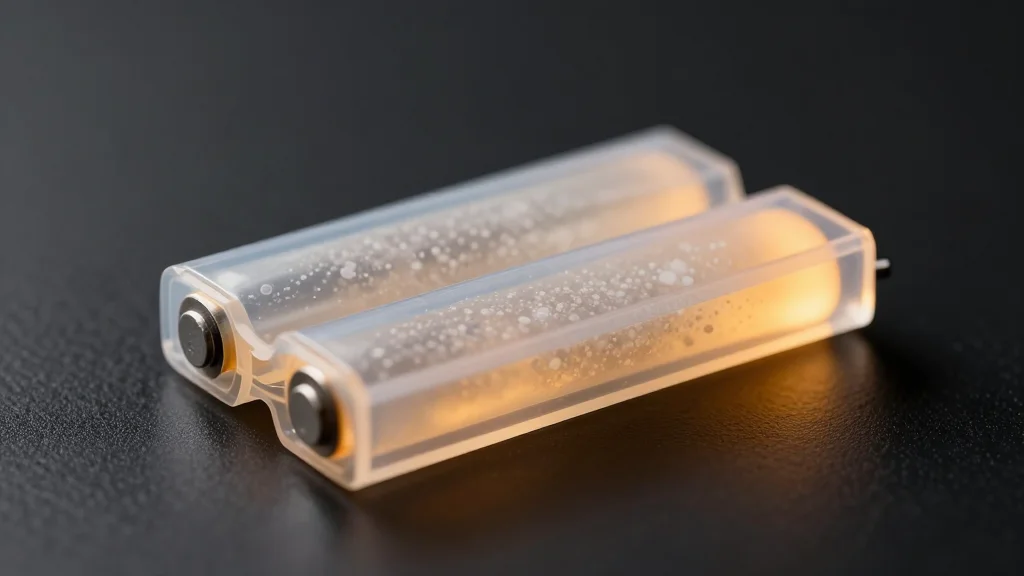
Advancements in Thermal Adhesives: Enhancing Battery Cell-to-Pack and Cell-to-Ribbon Performance for EVs
Why It Matters
Thermal adhesives that balance strength and conductivity enable lighter, more reliable EV battery packs, directly influencing vehicle range and manufacturing cost. As cell‑to‑pack designs replace traditional modules, Parker Lord’s solutions address a critical bottleneck in high‑volume EV production.
Key Takeaways
- •TC-850 offers four‑times higher elongation than prior adhesive
- •Optimized 100 µm bondline cuts thermal resistance dramatically
- •Adhesive bonds nickel‑plated steel to powder‑coated aluminum
- •Tailorable strength supports both structural and reworkable packs
- •Reduces need for mechanical fixturing in cylindrical modules
Pulse Analysis
Effective thermal management is a linchpin of modern electric‑vehicle battery design. As lithium‑ion cells charge and discharge, they generate heat that must be swiftly transferred to cooling plates or ribbons. Traditional gap fillers and mechanical fixtures add weight, increase assembly steps, and can leave air pockets that impede heat flow. By using polymeric resins loaded with ceramic fillers, manufacturers can displace air, improve conductivity, and maintain structural cohesion across diverse cell formats—pouch, cylindrical, and prismatic—each presenting unique bonding challenges.
Parker Lord’s CoolTherm line exemplifies the next generation of thermal adhesives. The original TC‑2002 combined two‑component acrylic chemistry with high thermal conductivity, enabling room‑temperature cures and strong bonds to nickel‑plated steel and aluminum. Its successor, TC‑850, pushes the envelope further: four‑times greater elongation accommodates the thermal expansion of large prismatic cells, while enhanced adhesion to plastics and coatings expands design flexibility. Crucially, the adhesive’s optimal 100 µm bondline delivers lower thermal resistance than a thicker 250 µm layer, even when the material’s intrinsic conductivity is modest. This balance of mechanical strength and heat transfer efficiency reduces reliance on heavy fixturing, shortens cycle times, and supports high‑throughput production lines.
The industry impact is immediate. As automakers shift toward cell‑to‑pack architectures—eliminating intermediate modules—the demand for adhesives that can simultaneously secure cells and conduct heat spikes. Parker Lord’s solutions provide a scalable path to lighter packs, lower manufacturing costs, and improved vehicle range. Designers should evaluate bond strength thresholds, cure schedules, and bondline thickness when selecting adhesives, ensuring compatibility with existing cooling infrastructure while future‑proofing for emerging battery chemistries. The continued evolution of thermally conductive structural adhesives will likely become a standard design lever in next‑generation EV platforms.
Advancements in thermal adhesives: enhancing battery cell-to-pack and cell-to-ribbon performance for EVs
Comments
Want to join the conversation?
Loading comments...