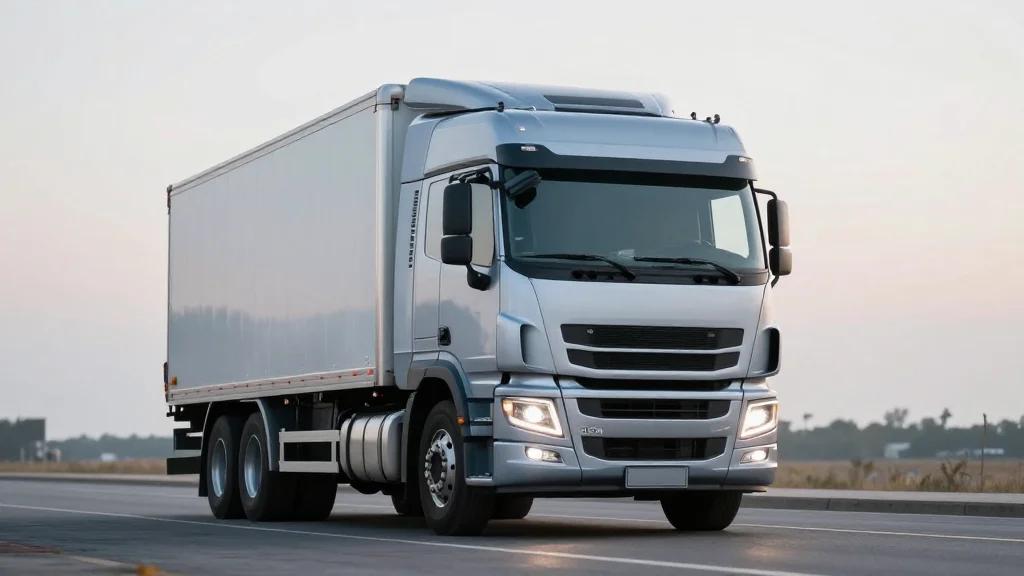
Ashok Leyland Targets Higher Profitability over Volume Expansion
Why It Matters
Prioritising higher‑margin premium trucks and digital after‑sales lets Ashok Leyland lift earnings and set a new competitive benchmark in India's recovering commercial‑vehicle market.
Key Takeaways
- •Ashok Leyland targets premium M&HCV segment, prioritizing profit over volume.
- •Taurus tippers and Hippo tractors to launch Q1 FY27 as premium offerings.
- •No new capex; ₹400‑500 cr (~$50‑60 M) battery‑pack plant announced.
- •Project Dhruv adds AI‑driven uptime centre monitoring all BS6 vehicles.
- •Truck volume rose 27% H2 FY26; bus demand remains flat.
Pulse Analysis
India’s commercial‑vehicle (CV) market is emerging from a three‑year stagnation, with FY25‑26 truck volumes climbing 27% in the second half after the GST 2.0 reforms. While overall unit growth remains modest, manufacturers are eyeing profitability over sheer scale. Ashok Leyland’s decision to pivot toward premium medium‑ and heavy‑duty trucks reflects a broader industry trend: capturing higher margins by offering differentiated, higher‑horsepower platforms that command better price realizations.
The firm’s product roadmap underscores this premium push. The Taurus tipper and Hippo tractor families, slated for Q1 FY27 delivery, sit at the top of the price ladder, targeting fleet owners who value productivity and earnings per vehicle. Subsequent launches include a multi‑axle truck and new bus variants, all positioned to leverage the recently announced ₹400‑500 crore ($48‑60 million) battery‑pack facility that strengthens Leyland’s electric‑vehicle ecosystem. By avoiding fresh capacity spend and instead channeling funds into advanced power‑train components, the company aims to improve cost structures while staying ahead of the EV transition.
Equally critical is Leyland’s aftermarket overhaul through Project Dhruv. An AI‑driven uptime centre staffed by 100 specialists monitors the entire BS6 fleet, offering predictive maintenance, remote diagnostics and streamlined service bookings. This digital layer not only reduces downtime for operators but also deepens customer loyalty, a key driver of lifecycle profitability. As competitors scramble to match these capabilities, Leyland’s integrated premium‑product and service strategy could reshape profitability dynamics across India’s commercial‑vehicle sector.
Ashok Leyland targets higher profitability over volume expansion
Comments
Want to join the conversation?
Loading comments...