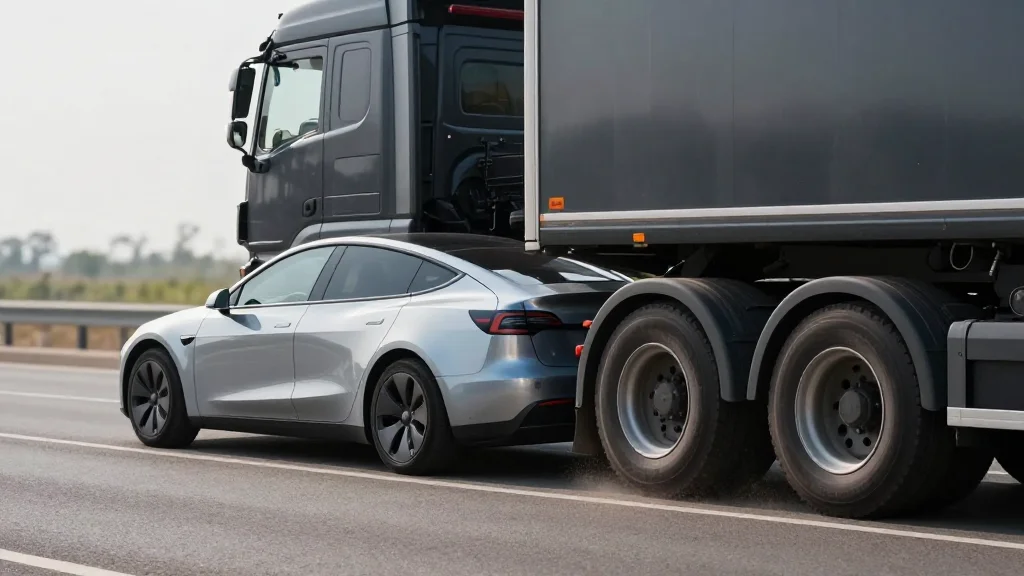
Australian EV Body Calls for “Universal Levy” On Vehicles Rather than a “Lazy Tax” On Electric Cars
Why It Matters
A universal levy would spread infrastructure costs more equitably and protect EV market growth, supporting Australia’s net‑zero transport targets.
Key Takeaways
- •AEVA proposes mass‑×‑distance levy for all vehicles.
- •Flat fuel excise of AU$0.53/L (~US$0.35) remains key revenue source.
- •EV‑specific charge could deter lower‑income adoption, says study.
- •Mining industry receives AU$100‑300 M in fuel‑excise rebates.
- •Industry backs private charger rollout with targeted government support.
Pulse Analysis
Australia’s rapid EV uptake is colliding with a looming shortfall in transport‑funding as the traditional fuel excise—AU$0.53 per litre (about US$0.35)—has been partially suspended. Policymakers face a dilemma: replace lost revenue without stifling the clean‑vehicle transition. The Australian Electric Vehicle Association (AEVA) argues that a vehicle‑type‑agnostic levy, calculated on mass and distance travelled, would more accurately reflect road‑wear costs and avoid penalising low‑mass EVs that contribute little to infrastructure degradation.
A mass‑×‑distance charge mirrors schemes in Europe, where heavier trucks pay proportionally higher fees, while passenger cars face modest rates. By tying the levy to weight, the policy would target the vehicles that generate the most wear and safety externalities, such as large SUVs and commercial trucks. This approach also sidesteps equity concerns highlighted by the Electric Vehicle Council, which found that an EV‑only fee would disproportionately affect working families in outer suburbs, potentially slowing adoption and jeopardising Australia’s net‑zero timeline.
For industry, the proposal offers a clearer investment horizon. Private firms are already deploying chargers with limited government backing, and a stable, universal funding stream could accelerate network expansion without relying on ad‑hoc taxes. Moreover, maintaining the fuel excise for all vehicles preserves a proven, pollution‑linked revenue source while allowing the government to allocate funds to both charging infrastructure and broader road‑safety initiatives. A holistic, mass‑based levy therefore aligns fiscal sustainability with Australia’s climate ambitions, delivering a balanced path forward for motorists, policymakers, and the emerging EV ecosystem.
Australian EV body calls for “universal levy” on vehicles rather than a “lazy tax” on electric cars
Comments
Want to join the conversation?
Loading comments...