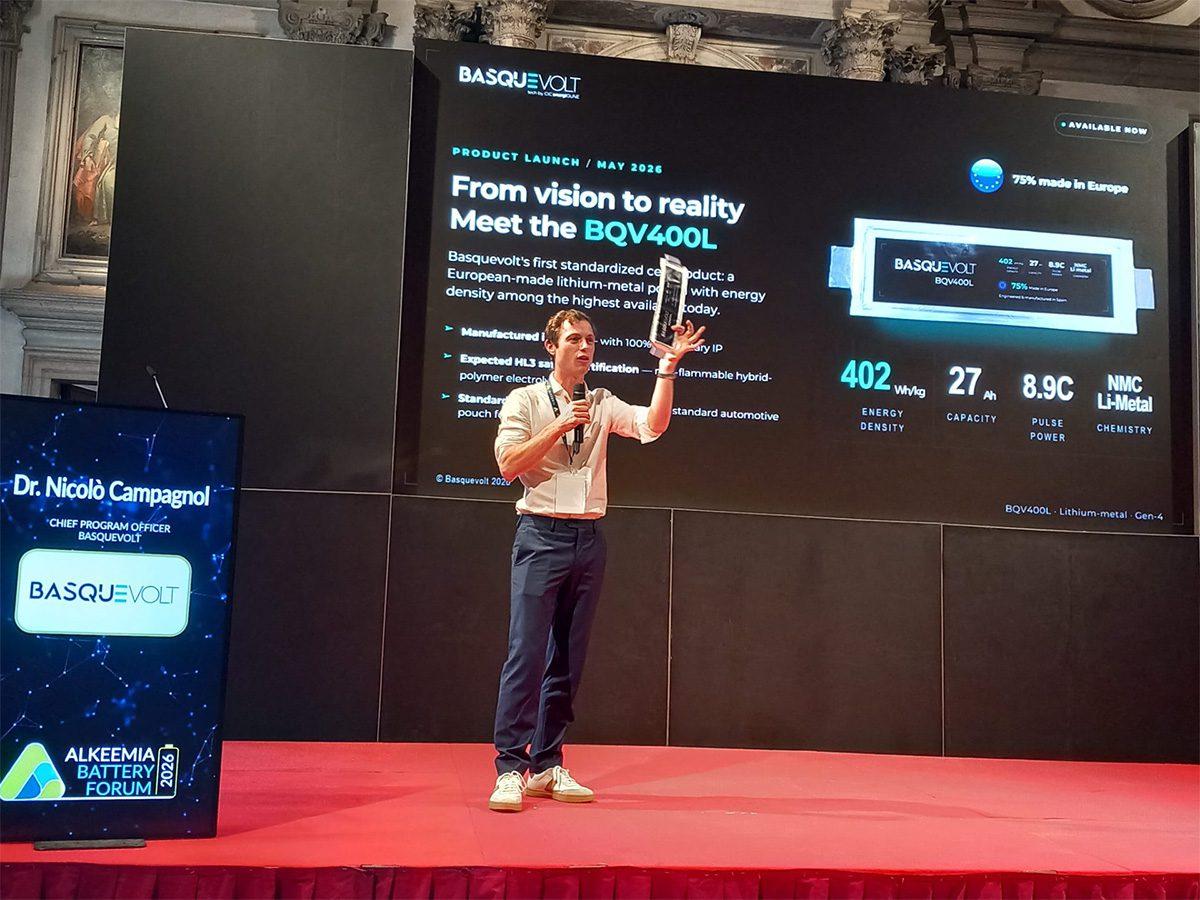
BASQUEVOLT Launches 402 Wh/Kg Li-Metal NMC Cell with 8.9C Pulse Power, Manufactured in Spain
Companies Mentioned
Why It Matters
The BQV400L raises the energy‑density ceiling for commercially viable EV batteries, enabling longer ranges and higher power bursts without new factory investments. Its European‑centric supply chain and safety focus could accelerate adoption of lithium‑metal technology across the auto industry.
Key Takeaways
- •BASQUEVOLT's BQV400L delivers 402 Wh/kg energy density.
- •Cell offers 8.9C pulse power for high‑performance bursts.
- •75% of components sourced from Europe, manufactured in Spain.
- •Joint development with Renault's Ampere validates automotive suitability.
Pulse Analysis
The 402 Wh/kg figure puts BASQUEVOLT’s BQV400L well above the 250‑300 Wh/kg typical of today’s graphite‑based lithium‑ion packs, narrowing the gap to the theoretical limits of lithium‑metal chemistry. This jump in gravimetric energy translates directly into longer vehicle ranges or lighter battery packs, both of which are critical levers for manufacturers seeking to meet stricter efficiency standards while preserving interior space. By delivering such density in a standardized 27 Ah cell, BASQUEVOLT demonstrates that high‑energy chemistry can be scaled without bespoke tooling, a claim that resonates with automakers facing massive capital expenditures for new production lines.
Central to the BQV400L’s promise is its polymer electrolyte, a hybrid that mitigates the dendrite formation and thermal runaway risks traditionally associated with lithium‑metal anodes. While not a full solid‑state solution, this approach offers a pragmatic pathway: it retains liquid‑like ionic conductivity for fast charging while adding a protective polymer matrix that enhances safety and cycle life. The European‑first supply chain—75% of parts sourced locally—further reduces geopolitical risk and aligns with the EU’s strategic push for domestic battery manufacturing, potentially qualifying the cell for subsidies tied to regional content.
The commercial relevance is underscored by BASQUEVOLT’s partnership with Renault’s Ampere division and independent testing by EDF, signaling confidence from major OEMs. Compatibility with existing gigafactory equipment means manufacturers can integrate the BQV400L without major retrofits, accelerating time‑to‑market. Pending HL3 safety certification, the cell is poised to influence next‑generation EV platforms, especially those prioritizing rapid acceleration and regenerative‑braking performance. As the industry inches toward solid‑state batteries, BASQUEVOLT’s transitional technology may become the bridge that delivers immediate gains while the longer‑term roadmap matures.
BASQUEVOLT launches 402 Wh/kg Li-metal NMC cell with 8.9C pulse power, manufactured in Spain
Comments
Want to join the conversation?
Loading comments...