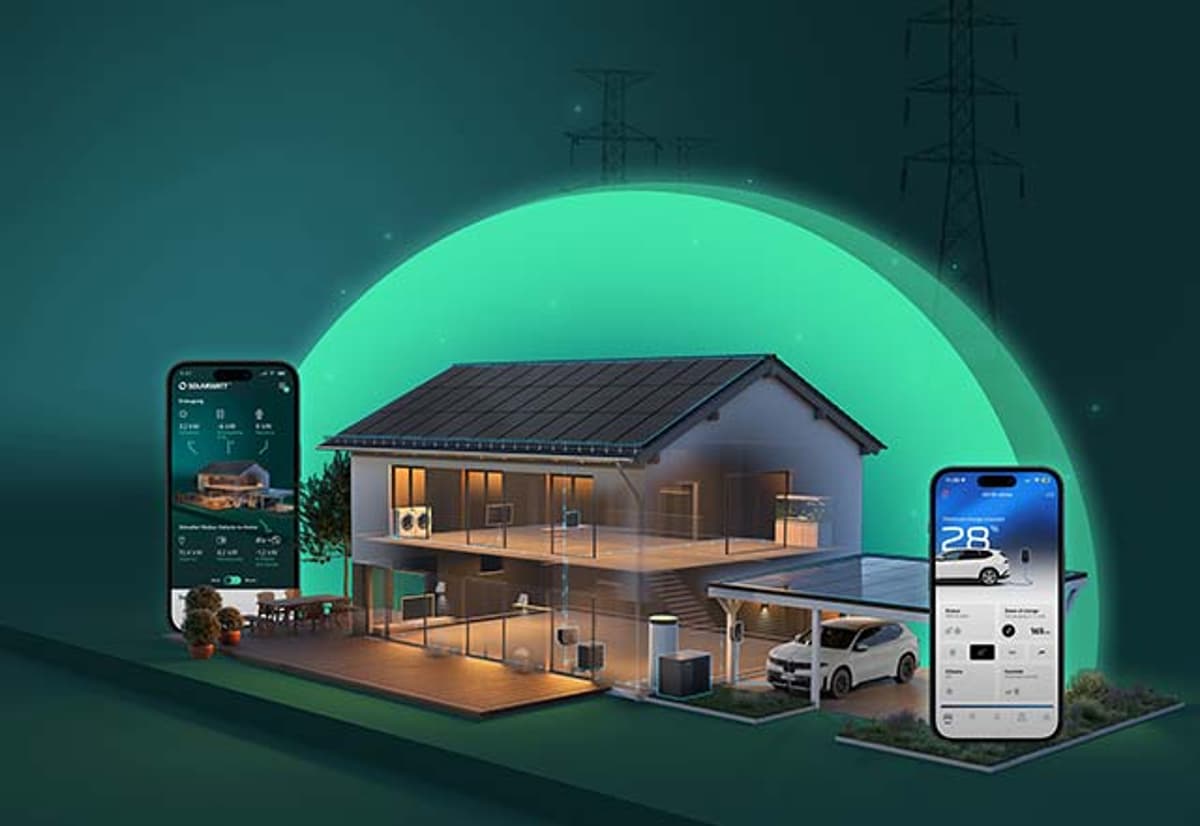
BMW iX3 & I3 Bring Bidirectional Charging With SOLARWATT Home Integration
Companies Mentioned
Why It Matters
V2H turns electric cars into mobile storage, lowering household energy costs and bolstering grid stability, a key step for Europe’s renewable transition. BMW’s rollout demonstrates how automakers can become integral players in the distributed energy market.
Key Takeaways
- •BMW iX3 and i3 now support bidirectional charging via SOLARWATT
- •System links EV, solar panels, home battery, and grid through Wallbox
- •V2H can cut household electricity bills by using stored EV energy
- •Open ecosystem allows third‑party storage devices alongside SOLARWATT
- •Late‑2026 rollout targets Germany, Austria, and the Netherlands
Pulse Analysis
The convergence of electric mobility and residential energy management is gaining momentum, and BMW’s latest V2H offering illustrates that trend. By pairing the iX3 and i3 with SOLARWATT’s Home Energy Management System, the automaker creates a seamless loop where solar generation, home consumption, and vehicle storage communicate in real time. This integration goes beyond simple charging; it transforms the EV into a dispatchable asset that can respond to dynamic electricity tariffs and grid signals, enhancing the economic case for homeowners who already own solar installations.
From a technical standpoint, the solution hinges on the BMW Wallbox Professional and SOLARWATT’s Manager software, which orchestrates energy flows based on demand, production forecasts, and price signals. Homeowners can store excess midday solar output in the vehicle’s battery, then draw that stored energy during evening peaks, reducing reliance on expensive grid power. The open‑architecture design also permits third‑party batteries, giving users flexibility to expand capacity without vendor lock‑in. Such smart coordination improves overall self‑consumption rates, cuts utility bills, and adds resilience against outages.
Market-wise, the late‑2026 launch across Germany, Austria and the Netherlands positions BMW as a pioneer in the European V2H space, where regulatory frameworks are increasingly supportive of distributed storage. As fleets grow, aggregated vehicle batteries could provide gigawatt‑scale grid services, easing the transition to higher shares of renewables. BMW’s move signals to other OEMs that energy services are a viable revenue stream, potentially reshaping the business model of car manufacturers from pure transportation providers to holistic energy solution partners.
BMW iX3 & i3 Bring Bidirectional Charging With SOLARWATT Home Integration
Comments
Want to join the conversation?
Loading comments...