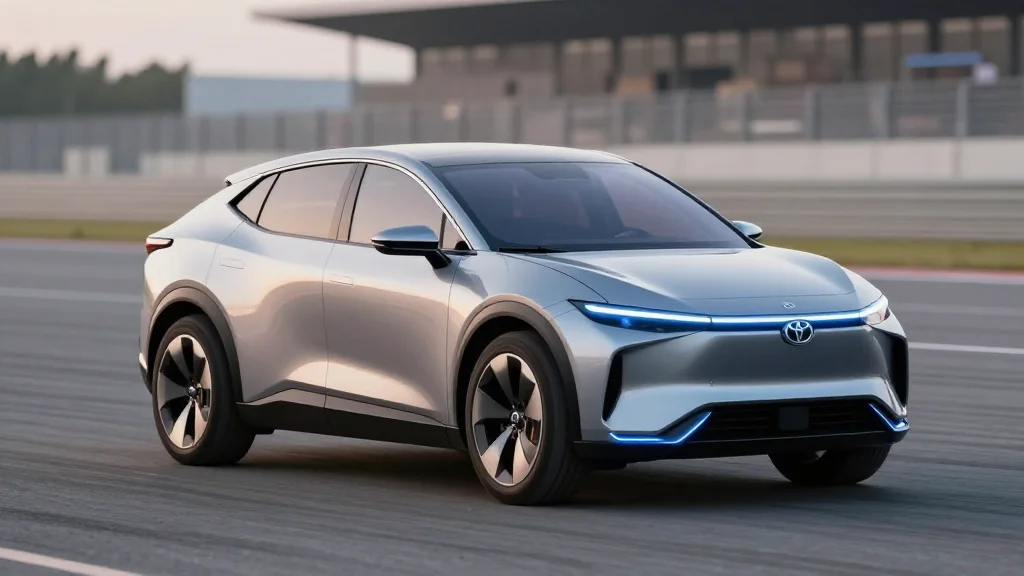
BZ4x Time Attack Is Toyota Racing Prototype
Why It Matters
The Time Attack prototype gives Toyota concrete data on how its EV architecture handles continuous high loads, informing future production upgrades and positioning the brand competitively in the emerging performance‑EV segment.
Key Takeaways
- •Toyota's bZ Time Attack pushes EV output beyond 300 kW without new hardware
- •Concept tests sustained performance, focusing on thermal management under continuous load
- •Uses proven motorsport parts, isolating the electric platform as the experiment
- •Signals Toyota's shift from compliance EVs to performance‑focused development
- •Provides data that could inform future bZ4X production upgrades
Pulse Analysis
Toyota’s bZ Time Attack Concept is more than a visual showcase; it is a rolling laboratory designed to probe the limits of the company’s current electric architecture. By extracting an extra 100 kW of power through software tweaks—adjusting inverter timing, battery discharge curves, and thermal thresholds—Toyota demonstrates that the underlying hardware can sustain higher outputs than the production bZ4X. The vehicle’s aggressive stance, large rear wing, and under‑body airflow management are all engineered to maximize cooling, highlighting how thermal control is now a decisive factor in EV performance, not just a reliability concern.
The engineering focus of the Time Attack model centers on sustained power delivery. Unlike short‑burst race cars that can tolerate rapid overheating, this concept stresses the battery and drive units over extended periods, mapping the point at which temperature rise forces the system to back off. Proven motorsport components—Alcon brakes, TEIN suspension, Continental tires—are employed to eliminate variables, ensuring that any performance limits observed stem from the electric drivetrain itself. This disciplined approach yields granular data on heat dissipation, voltage sag, and power tapering, insights that can be directly translated into more robust thermal management strategies for future consumer models.
Strategically, the prototype marks Toyota’s transition from viewing EVs as regulatory check‑boxes to treating them as performance platforms. While Hyundai’s RN22e quickly fed its rally‑derived tech into the Ioniq 5 N, Toyota is building a deeper internal knowledge base before scaling up. The data harvested from the Time Attack could lead to higher‑output bZ4X variants, improved fast‑charging resilience, and more dynamic driving modes. As the market pivots toward electric performance, Toyota’s methodical, data‑driven path positions it to compete with both legacy automakers and new EV specialists, reinforcing its relevance in a rapidly evolving automotive landscape.
bZ4x Time Attack Is Toyota Racing Prototype
Comments
Want to join the conversation?
Loading comments...