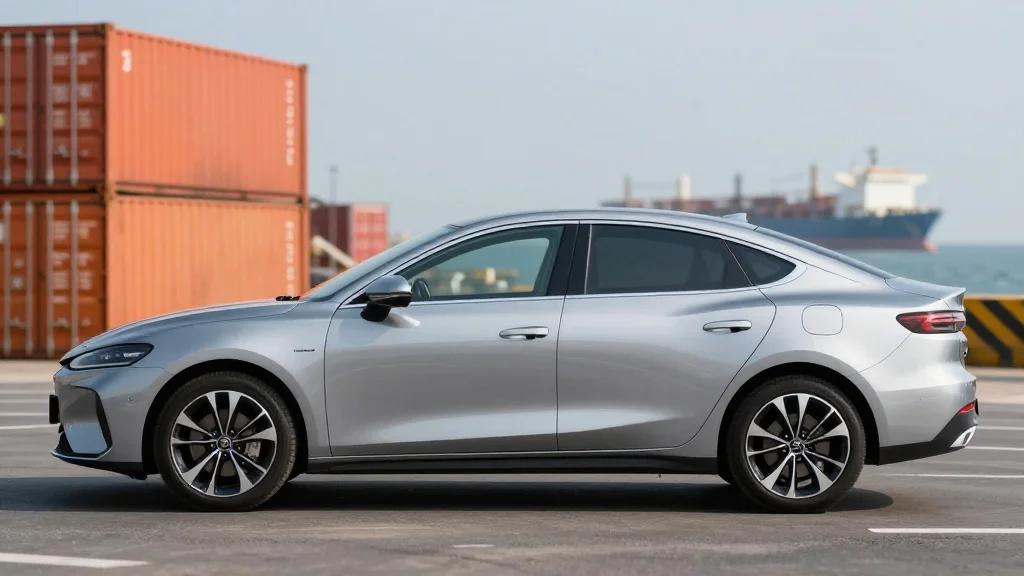
Carmakers Warn that Affordable Compact Cars May Leave US Market
Why It Matters
The potential loss of affordable compact cars would shrink mobility options for price‑sensitive American buyers. It could also push the market toward higher‑priced SUVs and trucks, raising overall vehicle costs.
Key Takeaways
- •USMCA renewal crucial for affordable compact car supply
- •25% tariff on non‑US content threatens entry‑level models
- •Nissan Sentra $22,600, Hyundai Venue $20,550 remain cheapest options
- •Automakers may reshore production if trade deal stalls
- •Consumers could face higher prices as budget models disappear
Pulse Analysis
The United States‑Mexico‑Canada Agreement, enacted in 2020, was designed to keep North American‑built vehicles duty‑free, provided most components originated within the bloc. Recent policy shifts, however, have introduced a 25% tariff on any vehicle with non‑U.S. content, undermining the cost advantage that foreign manufacturers rely on to price entry‑level models competitively. As supply chains that span the three countries become less economical, automakers face a stark choice: absorb higher costs, raise prices, or withdraw low‑margin models from the market.
For manufacturers like Nissan, Hyundai and Toyota, the stakes are high. Their most affordable offerings—the Sentra at roughly $22,600 and the Venue at $20,550—are already priced near the bottom of a market where the average new car now hovers around $50,000. With tariffs squeezing profit margins and labor expenses rising, the economics of producing compact cars in Mexico or importing parts from Asia become untenable. The White House’s push for reshoring, backed by deregulation and tax incentives, may offset some pressure, but it also signals a longer‑term shift toward domestic production that could further limit the availability of budget‑friendly options.
Consumers and the broader auto industry should watch the upcoming USMCA negotiations closely. Stricter rules on Chinese components and heightened U.S. content requirements could cement a new pricing paradigm, favoring larger, higher‑margin SUVs and pickups. If a revised pact fails to restore tariff relief, the U.S. market may see a permanent contraction of its compact‑car segment, reshaping purchasing decisions and potentially accelerating the transition to electric vehicles that rely on even more complex, cross‑border supply chains.
Carmakers warn that affordable compact cars may leave US market
Comments
Want to join the conversation?
Loading comments...