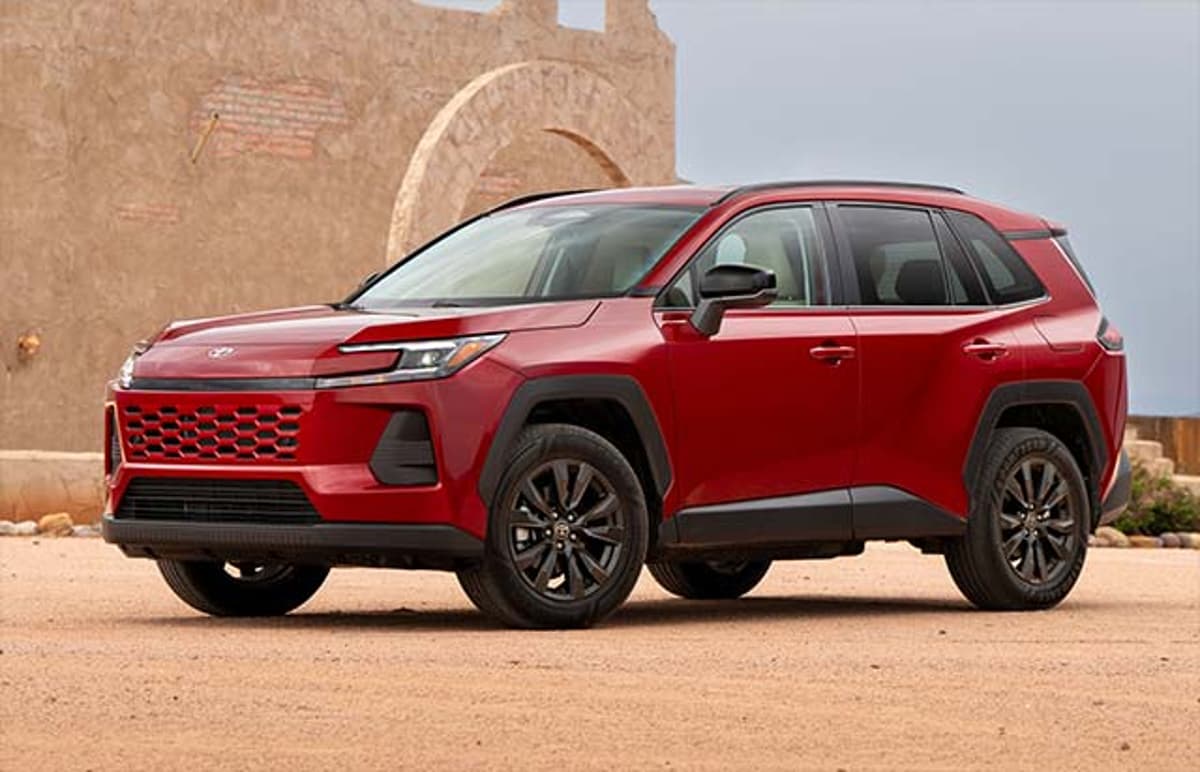
Do Plug-In Hybrids Really Work? Toyota Study Says Yes
Companies Mentioned
Why It Matters
The findings prove that when charging infrastructure is available, PHEVs deliver their promised fuel‑saving benefits, reinforcing their role as a practical bridge toward full electrification and influencing OEM and policy decisions.
Key Takeaways
- •Toyota PHEV owners charge on 7 of 10 days, Lexus 8‑9 days
- •Only 9% of Toyota and 4% of Lexus owners rarely plug in
- •PHEVs represent under 5% of new U.S. vehicle sales despite benefits
- •Higher upfront cost and limited home‑charging options hinder broader adoption
- •Average U.S. residential electricity cost ~18¢/kWh makes PHEV fuel savings significant
Pulse Analysis
The long‑standing criticism that plug‑in hybrid owners neglect to charge their vehicles has finally met data‑driven rebuttal. Toyota Research Institute North America’s peer‑reviewed study tracked more than 6,000 RAV4 Prime and Lexus NX 450h+ units across the United States and Canada, revealing that owners plug in on roughly 70‑90% of driving days. This charging frequency translates into substantial electric‑only mileage—up to 42 miles for the latest RAV4 PHEV—enabling many commuters to complete daily trips without touching the gasoline engine. By quantifying real‑world behavior, the research dispels the “lazy PHEV driver” narrative and validates the design intent of these vehicles.
Nevertheless, the market share of plug‑in hybrids remains modest. At less than five percent of new vehicle sales, PHEVs sit in a niche between conventional hybrids and full battery‑electric cars. The primary barriers are higher purchase prices, driven by larger battery packs and dual‑powertrain complexity, and the uneven availability of convenient home‑charging, especially for renters and multi‑unit dwellers. While the average U.S. residential electricity price of about 18 cents per kilowatt‑hour makes electric driving cheaper than gasoline, the upfront cost differential can deter cost‑sensitive shoppers, pushing them toward either cheaper hybrids or fully electric models when charging infrastructure permits.
Looking ahead, PHEVs could serve as a strategic stepping stone in the broader decarbonization pathway. Automakers are extending electric ranges—some 2026 models now exceed 50 miles—thereby increasing the likelihood that daily commutes stay electric. Policymakers may also incentivize PHEVs through targeted rebates or tax credits, recognizing their ability to reduce tailpipe emissions without demanding extensive public‑charging networks. As consumer confidence grows and battery costs continue to fall, plug‑in hybrids are poised to capture a larger slice of the market, offering a pragmatic compromise for drivers seeking both electric efficiency and gasoline flexibility.
Do Plug-In Hybrids Really Work? Toyota Study Says Yes
Comments
Want to join the conversation?
Loading comments...