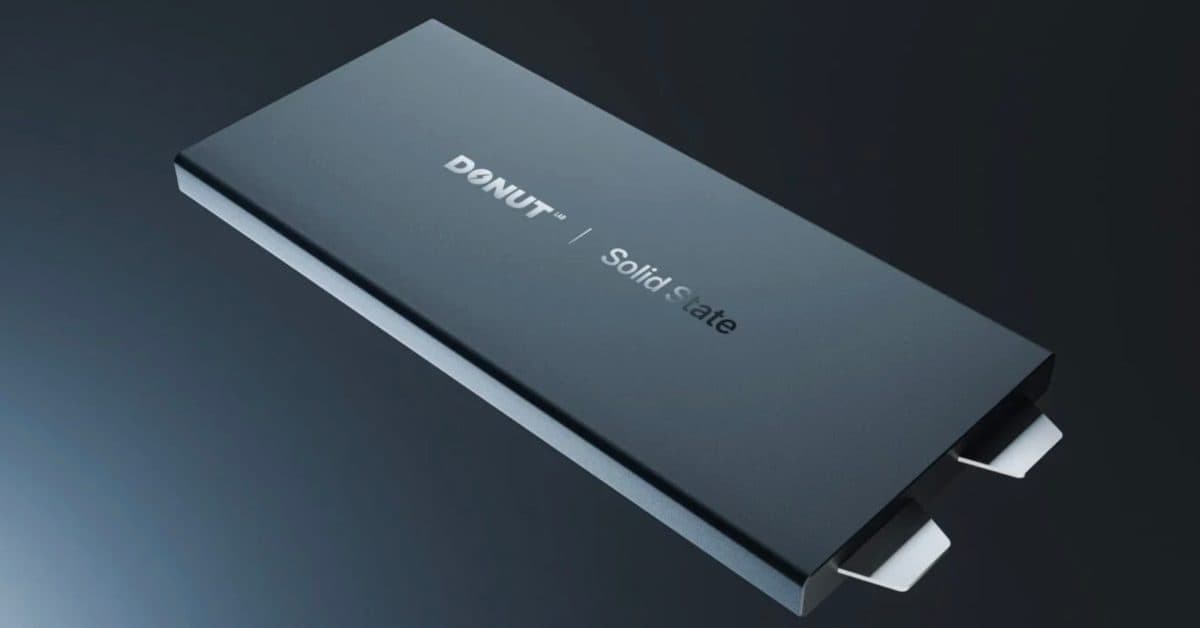
Donut Lab’s ‘Solid-State’ Battery Exposed as Regular Li-Ion in Damning Investigation
Companies Mentioned
Why It Matters
The revelation undermines investor confidence in high‑risk clean‑tech crowdfunding and threatens broader trust in solid‑state battery promises, prompting tighter regulatory scrutiny.
Key Takeaways
- •Ziroth investigation proves Donut Lab cell is conventional lithium‑ion.
- •Energy density measured at ~298 Wh/kg, far below claimed 400 Wh/kg.
- •$25 million raised from 1,300 small investors now under investigation.
- •Production vehicle claim proved pre‑production, not customer‑ready.
- •Fraud parallels Theranos, threatens confidence in emerging battery sector.
Pulse Analysis
The Ziroth probe, bolstered by electrochemical data from VTT and independent experts, dismantles Donut Lab’s narrative of a breakthrough solid‑state battery. By matching voltage profiles to high‑nickel NCM lithium‑ion chemistry and identifying graphite‑anode expansion signatures, the study confirms the cell’s true composition and a realistic 298 Wh/kg energy density. This technical refutation not only invalidates the company’s CES 2026 hype but also exposes a systematic misrepresentation that misled investors and the media.
Beyond the technical debacle, the financial fallout is stark. Donut Lab’s $25 million raise—sourced largely from retail investors contributing between $3,000 and $23,000—was predicated on unattainable performance claims and a fabricated production‑vehicle rollout. The parallel to Theranos is apt: a charismatic founder leveraged opaque due diligence to secure capital, leaving thousands with potential losses. Regulatory bodies in Finland have now launched criminal and financial investigations, signaling a shift toward stricter oversight of crowdfunding ventures that promise disruptive energy technologies without independent validation.
The episode arrives at a pivotal moment for solid‑state batteries, a field where genuine progress is being made by industry giants such as Toyota, Samsung SDI, and QuantumScape. Their multi‑billion‑dollar programs underscore that the technology is viable, yet the Donut Lab scandal risks eroding public and investor enthusiasm. Stakeholders must differentiate between credible R&D pipelines and hype‑driven pitches, reinforcing the need for transparent testing, third‑party verification, and realistic timelines to sustain momentum in the race toward next‑generation energy storage.
Donut Lab’s ‘solid-state’ battery exposed as regular li-ion in damning investigation
Comments
Want to join the conversation?
Loading comments...