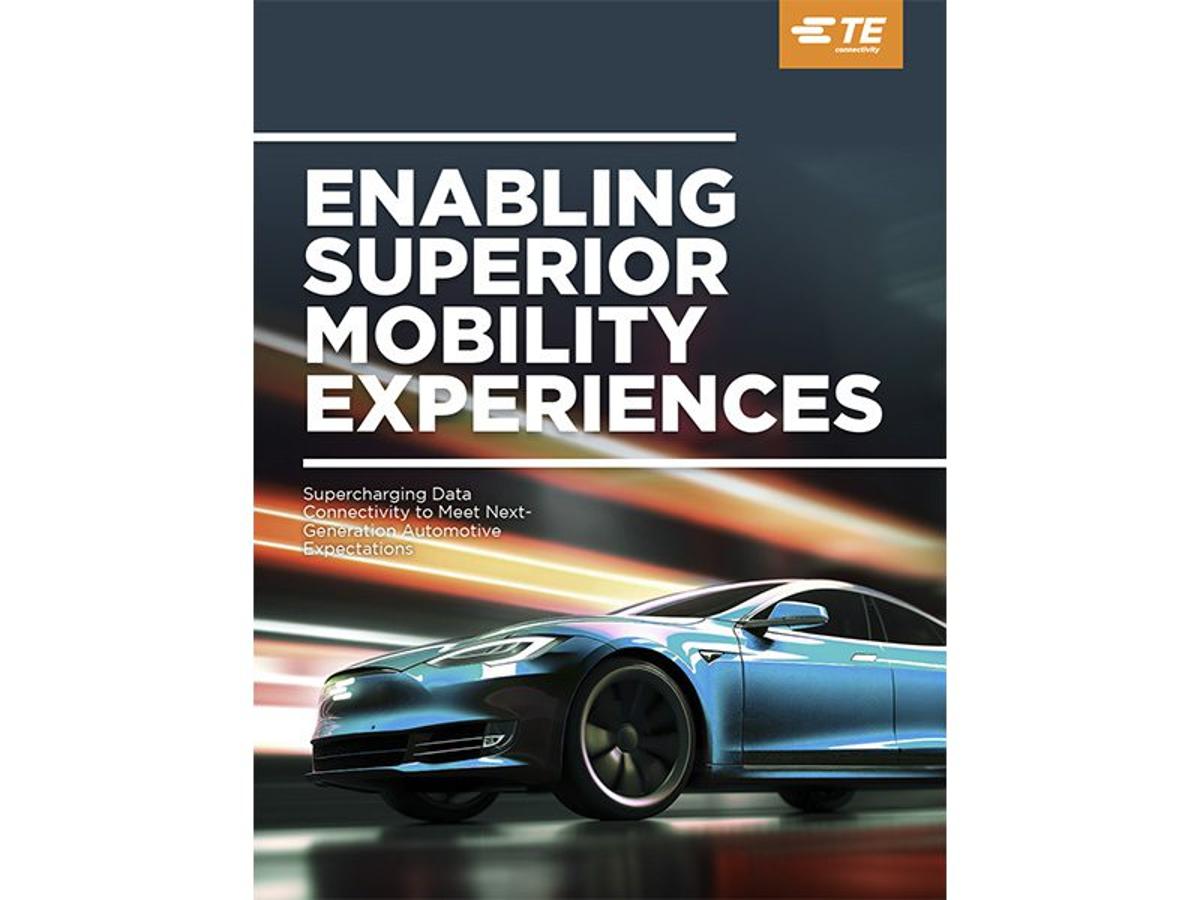
Download Trend Paper: Supercharging Data Connectivity to Meet Next-Generation Automotive Expectations
Companies Mentioned
Why It Matters
Higher‑bandwidth, miniaturized connectors are critical for OEMs to deliver ADAS and autonomous features, unlocking new revenue streams and competitive advantage in the fast‑growing automotive market.
Key Takeaways
- •TE Connectivity releases whitepaper on future vehicle data connectivity
- •Next‑gen cars require higher‑bandwidth, miniaturized camera connectors
- •Increased camera resolution drives demand for 10‑Gbps+ links
- •Integrated connectors enable tighter packaging for ADAS and autonomous systems
- •Market for high‑speed automotive interconnects expected to grow rapidly
Pulse Analysis
The automotive landscape is undergoing a rapid transformation as drivers demand more personalized, connected, and autonomous experiences. Modern vehicles now host a suite of advanced driver‑assistance systems (ADAS) and emerging autonomous driving (AD) capabilities that rely on a growing array of high‑resolution cameras and sensors. Each additional camera adds a substantial data stream, pushing the required bandwidth well beyond legacy automotive Ethernet standards. As a result, manufacturers are re‑evaluating the entire data‑path architecture, from sensor to processor, to ensure latency‑free performance.
At the heart of this shift is the need for connectors that combine ultra‑high data rates with a dramatically reduced footprint. TE Connectivity’s whitepaper highlights how next‑generation interconnects must support 10 Gbps or higher while integrating directly into compact camera modules. Innovations such as stacked‑die packaging, low‑profile shielding, and advanced materials are enabling these performance gains without compromising durability or automotive‑grade reliability. The paper also examines emerging standards like Automotive Ethernet 100BASE‑T1 and 1000BASE‑T1, which promise to simplify network topologies while delivering the necessary throughput for high‑definition imaging.
For OEMs and tier‑one suppliers, the implications are clear: investing in high‑speed, space‑efficient connectors is no longer optional but a strategic imperative. The market for automotive interconnects is projected to expand at a double‑digit CAGR through 2035, driven by the rollout of Level 3‑4 autonomous features and the proliferation of over‑the‑air updates. By adopting the connectivity solutions outlined in TE’s trend paper, manufacturers can accelerate development cycles, reduce vehicle weight, and ultimately deliver richer, safer mobility experiences to consumers. Downloading the full paper provides deeper technical guidance and a roadmap for aligning product portfolios with these emerging demands.
Download trend paper: Supercharging data connectivity to meet next-generation automotive expectations
Comments
Want to join the conversation?
Loading comments...