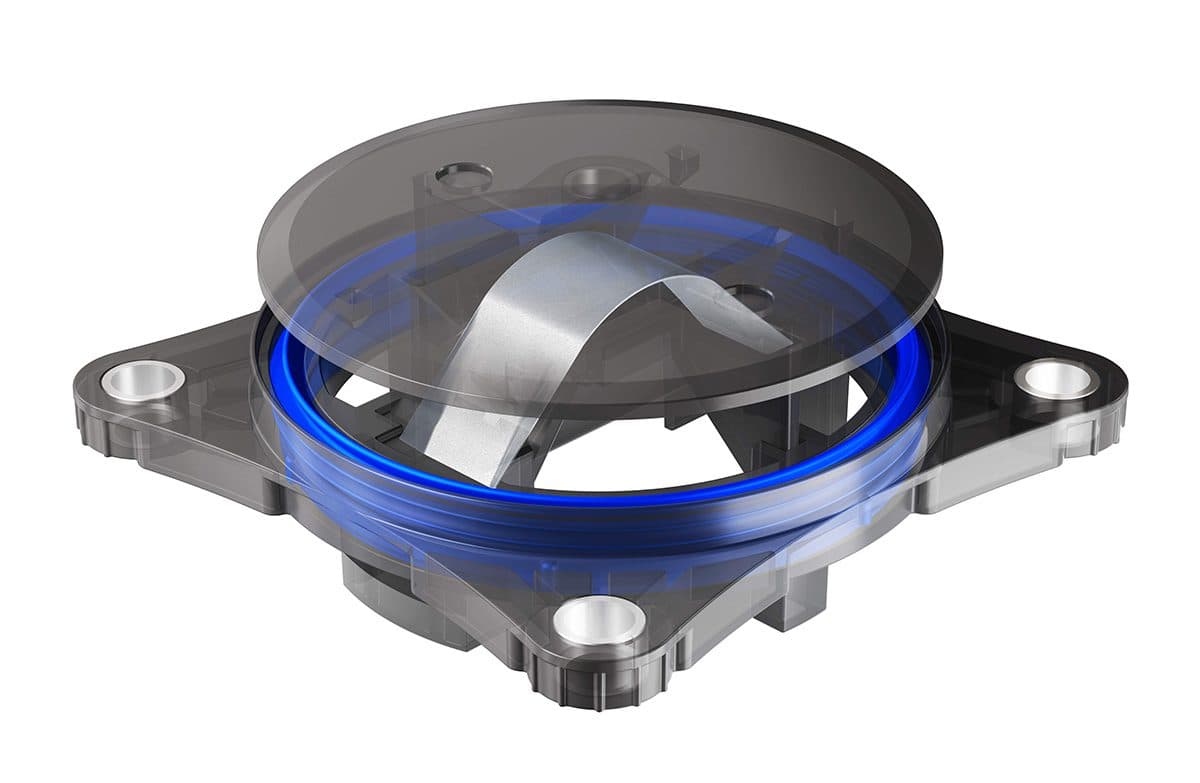
Freudenberg’s New DIAvent maxFlow Vents over 190 Liters per Second in EV Battery Thermal Runaway Events
Why It Matters
The maxFlow dramatically improves battery‑pack safety by expelling hot gases faster and preventing cascade failures, while its testable, resealable design streamlines quality control and reduces warranty risk for EV makers.
Key Takeaways
- •190 L/s flow at 300 mbar, 2.5× previous model.
- •Spring‑actuated valve snaps open instantly, then reseals automatically.
- •Adjustable trigger pressure 50‑200 mbar, non‑destructive testing possible.
- •Compact 86 × 86 × 12.1 mm, IPX9K/IP6KX, UL94 V0 certified.
- •Enables safer battery packs and quicker first‑responder access.
Pulse Analysis
Thermal‑runaway events remain one of the most critical safety challenges for electric‑vehicle manufacturers. Traditional venting solutions—rubber umbrellas that open gradually or single‑use burst disks—often struggle to evacuate gases quickly enough, increasing the likelihood of adjacent cells igniting. Moreover, burst disks cannot be re‑closed, limiting post‑event inspection and complicating quality‑control processes. As EV ranges extend and pack energy densities rise, the industry has been searching for a vent that can both react instantly and support rigorous testing without destroying the component.
Freudenberg’s DIAvent maxFlow answers that call with a spring‑driven mechanism that fully opens at a precisely set pressure, delivering over 190 L s⁻¹ of flow—2.5 times the capacity of its HighFlow ancestor. The valve’s adjustable trigger (50‑200 mbar) offers manufacturers fine‑tuned control, while its reversible action enables non‑destructive verification of fully assembled battery modules, a distinct advantage on high‑volume lines. The compact 86 × 86 × 12.1 mm package meets demanding environmental standards (IPX9K, IP6KX) and carries UL94 V0 flame‑retardancy, ensuring it can survive the harsh conditions of a runaway while still protecting first responders from lingering oxygen ingress.
The introduction of a high‑flow, reusable vent aligns with tightening global safety regulations and growing insurer scrutiny of EV battery designs. OEMs that adopt the maxFlow can differentiate their packs with faster gas evacuation, reduced risk of cell‑to‑cell propagation, and streamlined production testing—factors that translate into lower warranty costs and stronger consumer confidence. As the EV market pushes toward higher energy densities and faster charging, technologies like Freudenberg’s maxFlow are poised to become standard components, shaping the next generation of safer, more reliable electric vehicles.
Freudenberg’s new DIAvent maxFlow vents over 190 liters per second in EV battery thermal runaway events
Comments
Want to join the conversation?
Loading comments...