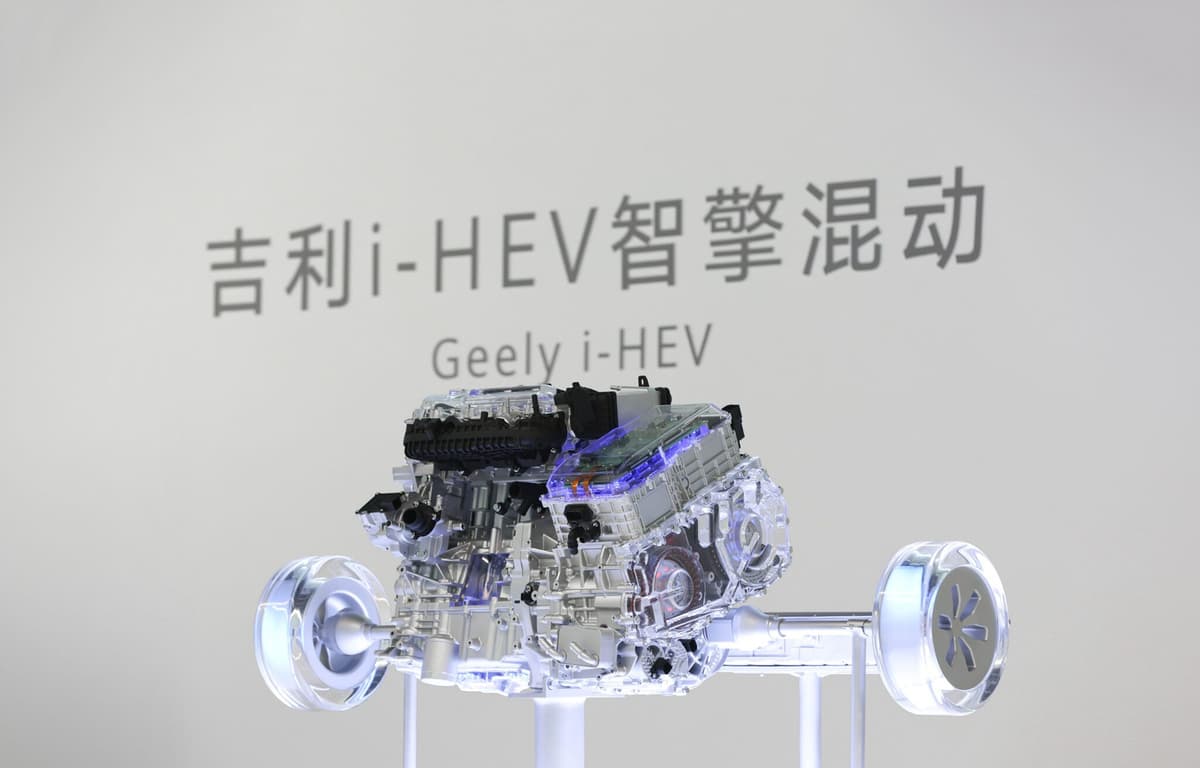
Geely Launches AI-Driven I-HEV Hybrid with Record Efficiency
Why It Matters
The record‑setting efficiency sets a new benchmark for hybrid powertrains, forcing rivals to accelerate AI‑driven energy management to stay competitive. It also demonstrates how software‑centric design can dramatically improve fuel economy and emissions without sacrificing performance.
Key Takeaways
- •Guinness‑verified 48.41% thermal efficiency, world‑record hybrid performance.
- •Fuel consumption 2.22 L/100 km (≈107 mpg) across tested models.
- •AI Cloud Power improves efficiency >10% using real‑time environment data.
- •Motor‑led design runs on electricity ~80% without external charging.
- •i‑CMA platform integrates driving, cockpit, chassis controls on single AI hub.
Pulse Analysis
Geely's i‑HEV hybrid arrives at a moment when automakers are racing to squeeze every ounce of efficiency from internal‑combustion platforms. By achieving a Guinness‑certified 48.41% thermal efficiency, the system outperforms traditional hybrids that typically hover around 35‑40%. This leap is not merely a mechanical triumph; it reflects a broader industry shift toward software‑defined powertrains where AI algorithms continuously optimize combustion, electric assist, and energy recuperation. The result is a fuel consumption figure of 2.22 L/100 km—equivalent to roughly 107 mpg—positioning the i‑HEV among the most economical mass‑market vehicles.
At the heart of Geely's advantage is the AI Cloud Power engine, which ingests real‑time weather, altitude and traffic data to fine‑tune the petrol‑electric split on the fly. This motor‑led architecture, unlike conventional engine‑first designs, allows the car to operate on electric power about 80% of the time without needing a plug, effectively creating a pseudo‑plug‑in hybrid experience. The 230 kW motor delivers brisk acceleration and a modest 66 km/h EV‑mode top speed, appealing to urban commuters who prioritize low emissions and low operating costs. Moreover, the i‑CMA platform's integrated control of driving dynamics, cockpit functions, and chassis systems simplifies vehicle architecture, reducing weight and improving reliability.
The market implications are significant. As regulators tighten CO₂ targets and consumers demand lower‑cost ownership, manufacturers will look to replicate Geely's AI‑centric approach. Competitors may accelerate development of motor‑led hybrids or retrofit existing platforms with similar AI cloud services to stay relevant. For investors, Geely's early mover advantage in AI‑driven efficiency could translate into stronger sales margins and a defensible technology moat, especially in the highly competitive Chinese and emerging Southeast Asian markets where hybrid adoption remains robust. The i‑HEV thus signals a new era where intelligent software, rather than sheer hardware upgrades, drives the next wave of automotive efficiency.
Geely launches AI-driven i-HEV hybrid with record efficiency
Comments
Want to join the conversation?
Loading comments...