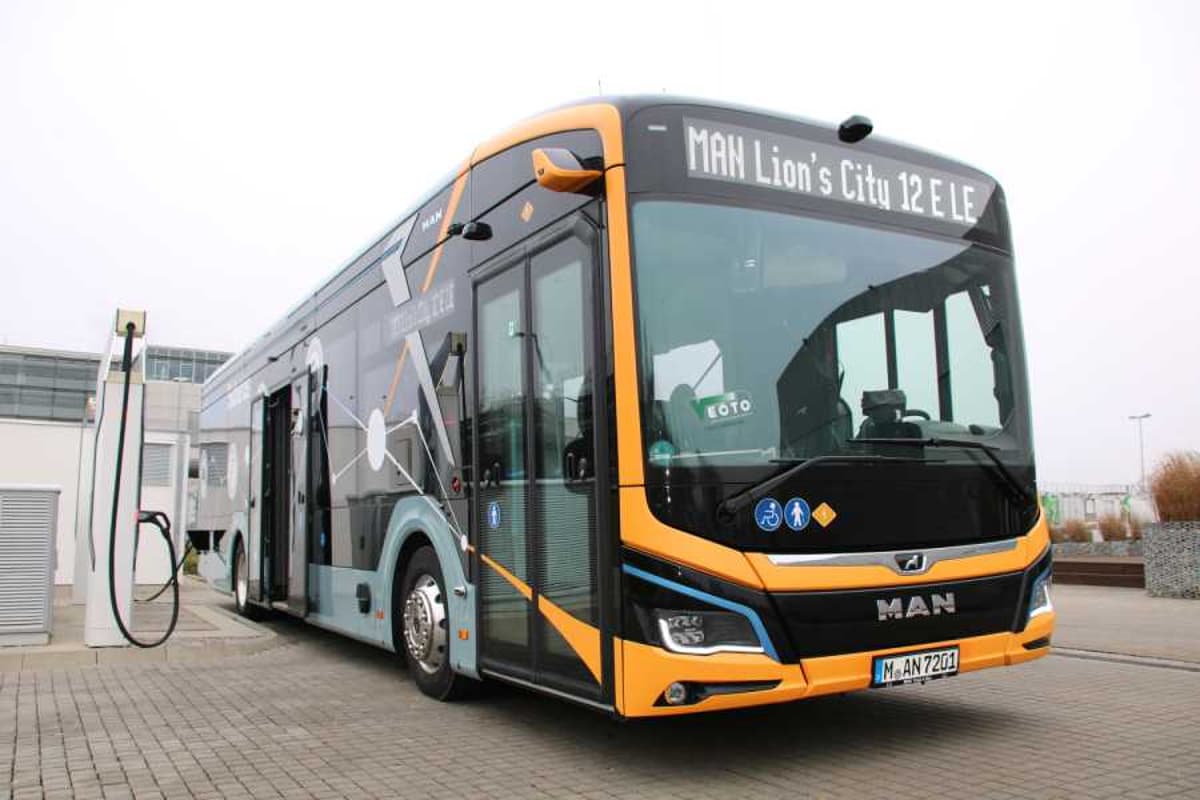
Germany Allocates 2026 Funding for Additional 1,500 Zero-Emission Buses
Companies Mentioned
Why It Matters
The infusion of over $400 million accelerates Germany’s transition to electric public transport, but lower subsidies risk slowing progress needed to meet EU climate goals and industry growth expectations.
Key Takeaways
- •€400 M (~$432 M) funding targets 1,500 new zero‑emission buses.
- •Subsidy rates drop to 70% or 55% versus previous 80% support.
- •Fleet electrification at 14% of 35,000 buses, 6,400 planned by 2030.
- •VDV warns funding cuts may miss EU Clean Vehicles Directive deadlines.
Pulse Analysis
Germany’s aggressive push for electric buses reflects both national ambition and EU climate mandates. Since the first funding directive in 2021, the federal government has invested about €1.5 billion (≈$1.62 billion) in over 5,300 climate‑friendly buses, lifting the share of zero‑emission vehicles to roughly 14% of the country’s 35,000 city‑bus fleet. The latest 2026 call, published in the Federal Gazette, earmarks €400 million to finance an additional 1,500 e‑buses, reinforcing Germany’s trajectory toward the 6,400‑bus expansion target for 2030 and aligning with the European Clean Vehicles Directive.
The funding structure introduces two pillars: an activation programme mirroring earlier rounds and a new scaling programme for operators already deep into electrification. Operators with modest fleet conversion can receive up to 70% of the incremental cost versus a diesel counterpart, while more advanced fleets qualify for 55% support, a step down from the previous 80% subsidy. Infrastructure grants cover up to 40% of charging or hydrogen refuelling expenses, encouraging holistic rollout. This tiered approach aims to balance fiscal prudence with market stimulation, offering manufacturers and service providers a clearer path to scale battery‑electric, trolley‑electric, and fuel‑cell buses.
Industry voices, notably the VDV, warn that the reduced subsidy rates and the programme’s 2029 cutoff may constrain the speed of adoption. Past calls were heavily oversubscribed, indicating robust demand that outstrips available public funds. If funding gaps persist, Germany could miss critical EU targets and slow the domestic supply chain for electric drivetrains, which is vital for broader European industry competitiveness. Stakeholders are therefore urging the government to consider extending the programme and restoring higher subsidy levels to sustain momentum and secure Germany’s position as a leader in clean public transport.
Germany allocates 2026 funding for additional 1,500 zero-emission buses
Comments
Want to join the conversation?
Loading comments...