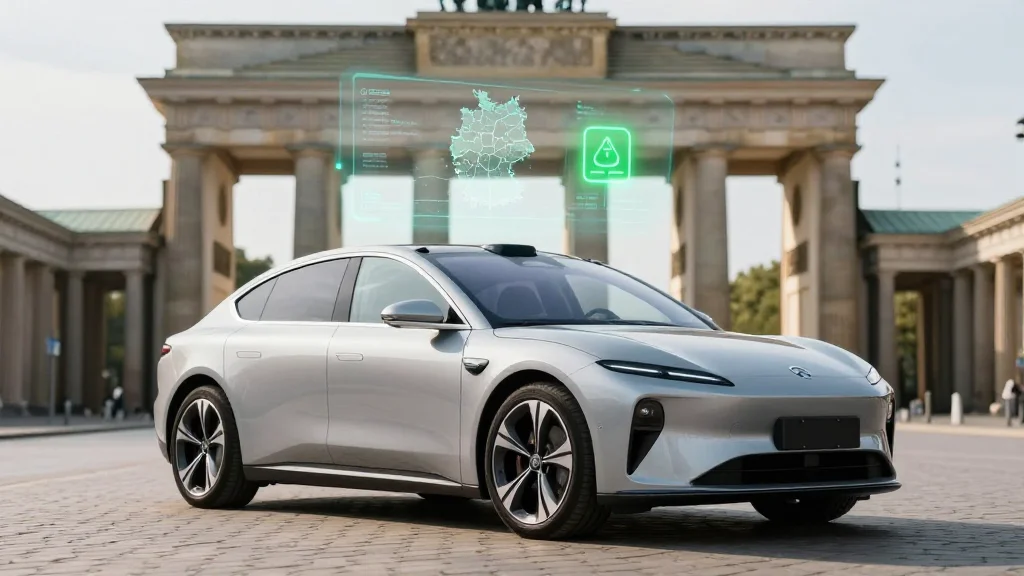
Germany Launches New Electric Car Subsidy Aimed at Low-Income Households
Companies Mentioned
Why It Matters
The subsidy directly lowers the cost barrier for disadvantaged buyers, accelerating Germany’s EV rollout and helping the country meet its 2045 climate‑neutrality goal while sustaining domestic automotive production.
Key Takeaways
- •€3 bn (~$3.2 bn) fund supports 800k EVs by 2029.
- •Up to $9,800 subsidy for low‑income households buying EVs.
- •Scheme covers BEVs, range‑extenders, and select plug‑in hybrids.
- •Early uptake pushes EV share to 25% of registrations.
- •Critics warn subsidies may be passed to consumers via prices.
Pulse Analysis
Germany’s latest electric‑vehicle incentive reflects a strategic pivot toward inclusive mobility. By targeting households with limited purchasing power, the €6,000 (≈$9,800) grant tackles one of the primary obstacles to EV adoption—upfront cost. The €3 billion budget, equivalent to about $3.2 billion, is earmarked to subsidize roughly 800,000 vehicles through 2029, a scale that could reshape demand curves for manufacturers like Volkswagen and Audi. The digital portal streamlines applications, allowing retroactive submissions and signaling a more efficient, data‑driven approach to policy delivery.
The subsidy’s immediate market impact is evident in the surge to a 25 percent EV share of new registrations in the first four months of the year. This uptick not only benefits consumers but also provides a lifeline to Germany’s auto sector, which suffered a sales dip after the 2023 budget‑crisis cut a previous subsidy program. However, industry analysts caution that manufacturers might embed the grant into higher vehicle prices, diluting its intended benefit. Moreover, the inclusion of certain plug‑in hybrids raises questions about real‑world emissions, as these models can revert to higher fuel consumption once battery charge depletes.
From a climate perspective, the initiative is a critical lever for meeting the nation’s 2045 carbon‑neutral target. Transport accounts for over 22 percent of Germany’s greenhouse‑gas emissions, a share that has stubbornly persisted despite efficiency gains. By expanding the EV fleet, the subsidy supports a shift away from diesel and petrol, aligning with broader EU decarbonisation goals. Yet, experts stress that subsidies alone won’t suffice; parallel investments in charging infrastructure and affordable electricity are essential to sustain long‑term adoption and deliver the environmental dividends promised by policymakers.
Germany launches new electric car subsidy aimed at low-income households
Comments
Want to join the conversation?
Loading comments...