GM Raises 2026 Outlook After Tariff Ruling
Why It Matters
The tariff ruling improves GM’s profit margin, reinforcing its competitive position, while the Saginaw investment secures supply chain control for high‑margin trucks.
Key Takeaways
- •GM lifts FY2026 adjusted EBIT guidance to $13.5‑$15.5 bn.
- •Supreme Court tariff ruling cuts GM’s gross tariff costs by $0.5 bn.
- •Automotive revenue fell 0.9% YoY to $39.34 bn.
- •GM Financial revenue rose to $4.27 bn, supporting earnings.
- •$150 m Saginaw investment targets next‑gen V‑8 engines for pickups.
Pulse Analysis
The U.S. Supreme Court’s interpretation of the International Emergency Economic Powers Act (IEEPA) removed a significant tariff burden for General Motors, shaving roughly $0.5 bn off projected gross tariff costs. This legal win not only boosts GM’s bottom line but also signals to other manufacturers that tariff exposure can be mitigated through strategic litigation, potentially reshaping cost structures across the auto sector. Analysts view the decision as a catalyst for higher operating leverage, especially as automakers grapple with rising material prices and supply‑chain volatility.
In the first quarter, GM’s adjusted EBIT surged 21.9% to $4.25 bn, driven by strong performance in its financial services arm and modest resilience in automotive sales despite a 0.9% revenue dip. The company’s revised FY2026 EBIT range of $13.5‑$15.5 bn reflects confidence in sustained profitability, even as net‑income guidance was nudged lower to $9.9‑$11.4 bn. The announcement of a quarterly dividend underscores GM’s commitment to returning capital to shareholders, a move likely to please income‑focused investors amid a broader market push for shareholder-friendly policies.
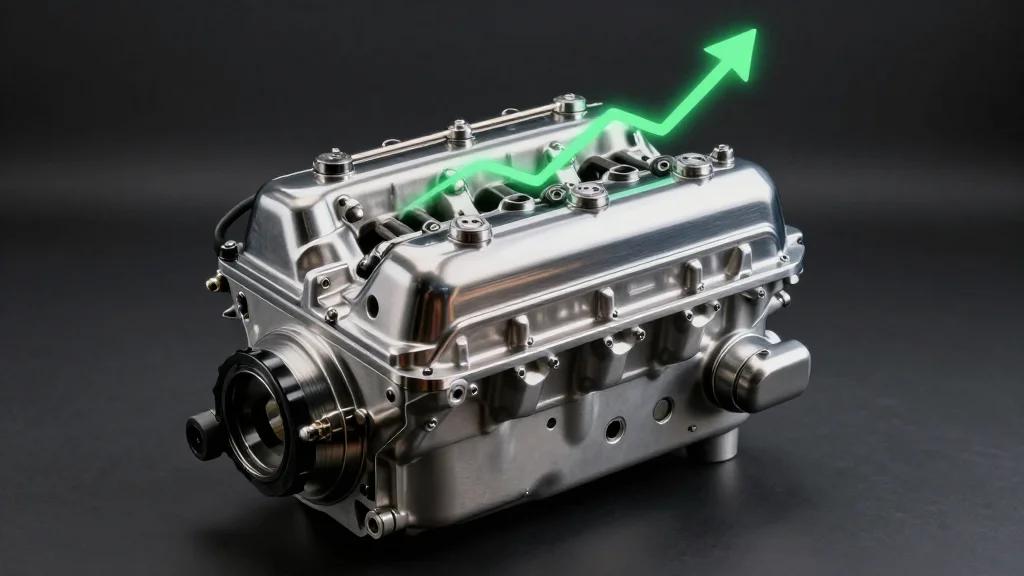
Strategically, GM is allocating more than $150 m to upgrade its Saginaw Metal Casting Operations, targeting the production of sixth‑generation V‑8 engine blocks and heads for full‑size pickups. This investment not only modernizes tooling but also secures a domestic supply chain for high‑margin powertrains, a segment where GM commands premium pricing. By reinforcing its V‑8 capabilities, the automaker positions itself to capture continued demand for large trucks, even as the industry accelerates toward electrification. The dual focus on cost mitigation and targeted capital deployment illustrates GM’s balanced approach to navigating short‑term challenges while laying groundwork for long‑term growth.
GM raises 2026 outlook after tariff ruling
Comments
Want to join the conversation?
Loading comments...