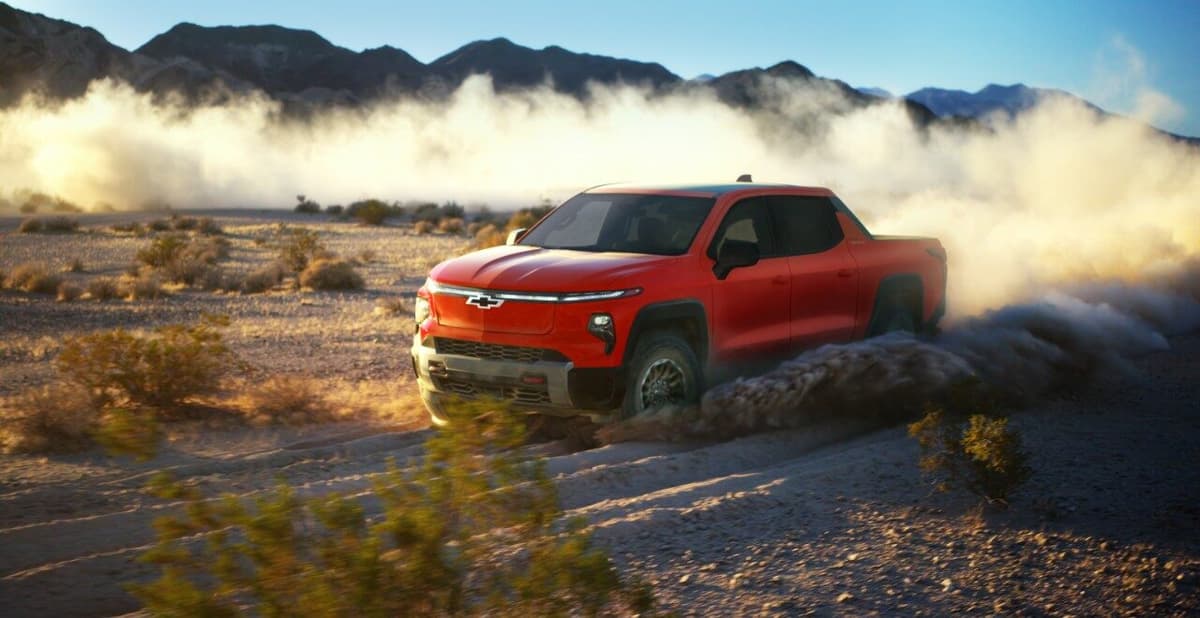
GM’s Growing EV Retreat Raises Long-Term Viability Questions
Companies Mentioned
Why It Matters
The suspension delays GM’s entry into a rapidly growing electric truck market, weakening its competitive position and raising doubts about its EV roadmap.
Key Takeaways
- •GM suspends next‑gen full‑size EV pickup development
- •Tax credit removal triggered strategic retreat on electric trucks
- •2028 refresh pushed beyond 2030, delaying lower‑cost models
- •Investors question GM’s long‑term EV viability
Pulse Analysis
When the federal 7,500‑dollar EV tax credit expired at the end of 2025, automakers that had bet on high‑margin electric trucks faced a sudden pricing cliff. General Motors, which had earmarked a 2028 refresh for its flagship Silverado EV, Sierra EV, Hummer EV, and Cadillac Escalade IQ, announced an indefinite suspension of those next‑generation programs. By pulling the plug, GM acknowledges that without the credit the projected profit margins and sales volumes no longer justify the heavy R&D spend required for new battery architectures and lower‑cost platforms.
The delay reshapes the competitive landscape for electric pickups, a segment where rivals such as Ford and Rivian are already delivering production‑ready models. Dealers and fleet customers who expected a 2028 rollout now face a gap that could push them toward alternative brands or conventional diesel trucks. Supply‑chain partners, from battery cell manufacturers to aluminum suppliers, must re‑allocate capacity, potentially slowing economies of scale that would have reduced unit costs. Moreover, GM’s lower‑cost variant strategy—intended to capture price‑sensitive buyers—loses momentum, eroding its ability to compete on both performance and affordability.
For investors, the suspension fuels skepticism about GM’s long‑term electric‑vehicle ambition, a key metric in ESG assessments and future earnings forecasts. Analysts are revising revenue projections for the EV division, and the company may need to double‑down on its Ultium battery joint ventures or explore new partnerships to regain credibility. While GM still plans to launch its current‑generation models through 2027, the extended timeline to 2030 suggests a strategic pivot toward incremental improvements rather than a full model overhaul, leaving the market to watch whether policy incentives or cost breakthroughs will eventually revive the stalled programs.
GM’s growing EV retreat raises long-term viability questions
Comments
Want to join the conversation?
Loading comments...