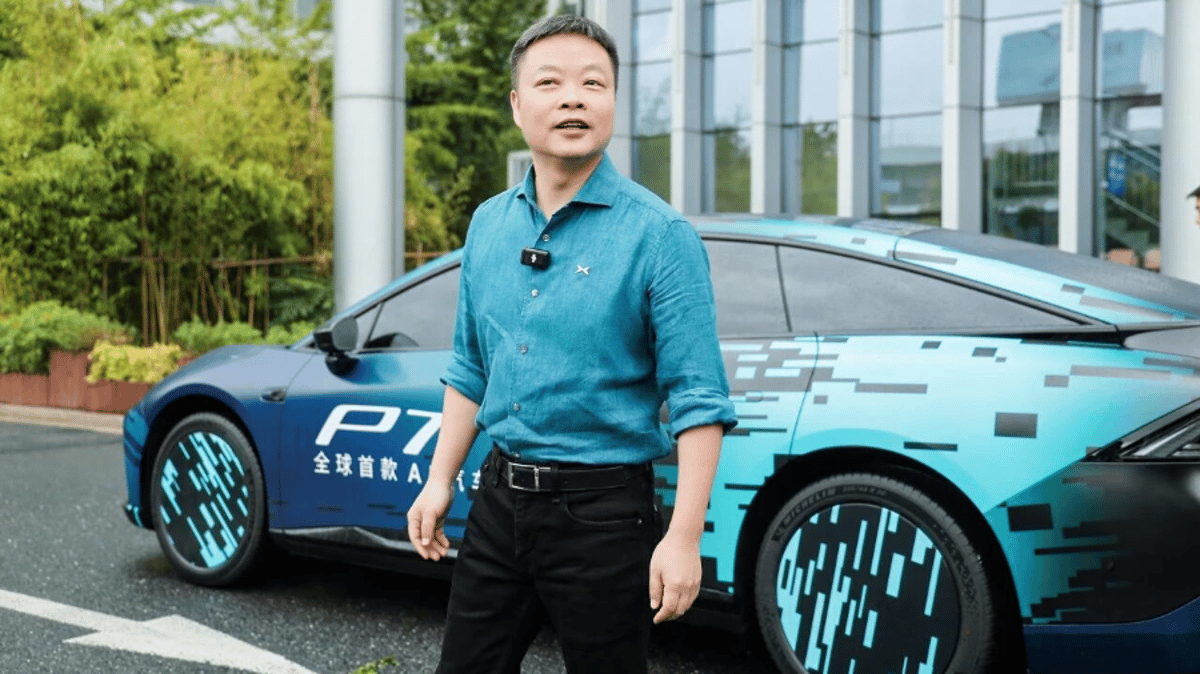
He Xiaopeng Responds to Autonomous Driving Route Debate: Iterating Directly From L2 to L4 Is the Safest Path
Why It Matters
Skipping L3 accelerates deployment of higher‑level autonomous features while aligning with emerging safety regulations, reshaping competitive dynamics in the Chinese EV market.
Key Takeaways
- •XPeng CEO advocates skipping L3, moving L2→L4
- •Goal: extend driver‑intervention distance to 1,000+ km
- •China finalizes national safety standard for assisted‑driving systems
- •Standard defines three assistance levels and safety test criteria
- •Industry sees safety‑first path as faster route to autonomy
Pulse Analysis
The autonomous‑driving debate in China has sharpened around the relevance of Level 3 technology. XPeng’s He Xiaopeng contends that Level 3, originally a technical classification, does not translate well to commercial reality. By leaping from Level 2 to Level 4, XPeng aims to collect massive real‑world data while prioritizing safety, targeting a driver‑intervention interval of up to 10,000 km. This approach mirrors moves by Tesla and Baidu, suggesting a broader industry shift toward higher‑level autonomy without an incremental L3 phase.
Concurrently, the Ministry of Industry and Information Technology has completed a draft national standard for Intelligent Connected Vehicles. The regulation categorizes combined driving‑assistance systems into basic single‑lane, basic multi‑lane, and pilot levels, each with explicit safety metrics for lane keeping, lane changes, obstacle avoidance, and intersection handling. By codifying these requirements, the standard provides a unified framework for manufacturers to validate safety and streamline regulatory approval, reducing uncertainty for firms pursuing aggressive L4 development.
For investors and market observers, the convergence of XPeng’s L2‑to‑L4 strategy and the new safety standard signals a faster path to commercially viable autonomous driving in China. Companies that can demonstrate compliance and superior safety performance are likely to capture premium market share, especially as Chinese consumers increasingly demand advanced driver assistance. The emphasis on safety and data accumulation may also accelerate policy evolution, positioning China as a leader in large‑scale autonomous vehicle deployment.
He Xiaopeng responds to autonomous driving route debate: Iterating directly from L2 to L4 is the safest path
Comments
Want to join the conversation?
Loading comments...