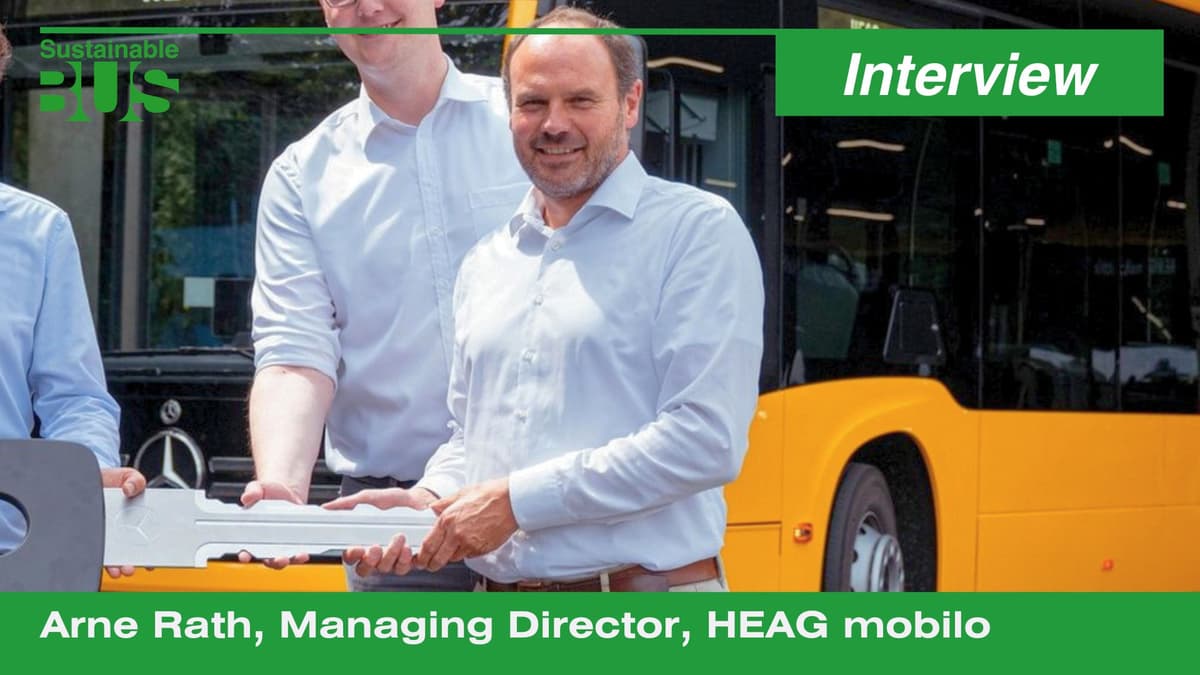
HEAG Mobilo’s Arne Rath: E-Bus Batteries Are Lasting Longer than Expected — and Are Improving Their Economics
Companies Mentioned
Why It Matters
Extended battery life improves the total cost of ownership for electric buses, making full fleet electrification more financially viable for public‑transport operators and policymakers.
Key Takeaways
- •HEAG mobilo runs 54 electric buses, aiming full fleet electrification by 2029.
- •Battery health ~90% after six years, extending life to 10 years.
- •Electricity and maintenance costs are about half diesel, but CAPEX double.
- •Federal €500 M (~$545 M) funding meets a fraction of €5 B demand.
- •15‑year flexible contract lets HEAG adopt new tech, on‑demand services.
Pulse Analysis
Battery durability is emerging as a decisive factor in the economics of electric public transport. HEAG mobilo reports that its 2021‑batch batteries retain over 90% capacity after six years, extending the projected service life from eight to ten years. This performance gain reduces the frequency of costly replacements and improves the total cost of ownership, a metric that has traditionally favored diesel buses despite higher fuel and maintenance expenses for electric fleets.
Operating costs for e‑buses are already compelling: electricity and maintenance together run at roughly half the price of diesel, yet the upfront capital outlay remains about twice as high. In Germany, federal subsidies of €500 million (about $545 million) have been allocated, but the total demand of €5 billion (approximately $5.45 billion) highlights a substantial funding gap. Policymakers must therefore consider more predictable, broader‑based incentives to narrow the price differential and enable operators to plan long‑term investments without the uncertainty of lottery‑style grants.
HEAG’s 15‑year flexible contract illustrates how regulatory frameworks can accelerate innovation. By decoupling service obligations from fixed kilometre targets, the agreement permits the integration of demand‑responsive transport, digitalisation, and future autonomous pilots. As driver shortages intensify, such flexibility could be crucial for maintaining service levels while exploring cost‑saving technologies. The German experience underscores the need for coordinated funding, longer‑lasting batteries, and adaptable contracts to achieve a sustainable, fully electrified public‑transport network.
HEAG mobilo’s Arne Rath: e-bus batteries are lasting longer than expected — and are improving their economics
Comments
Want to join the conversation?
Loading comments...