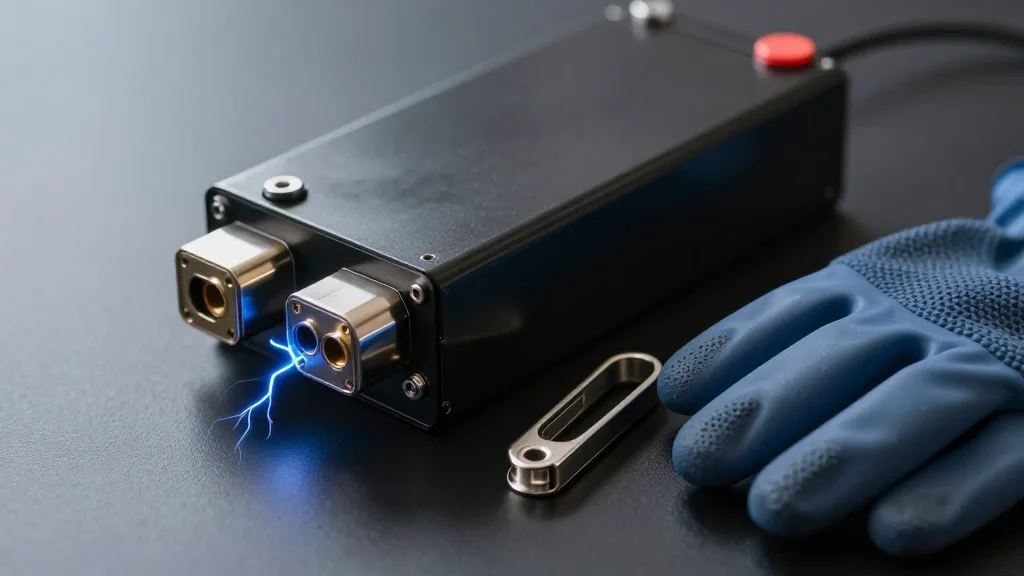
High-Potential Testing for EVs: Why Reed Relays Raise Confidence in Insulation and Safety
Why It Matters
Accurate, fast hipot testing reduces false failures and downtime, accelerating EV development and ensuring safety compliance. Reed‑relay‑based rigs lower maintenance costs while supporting the high‑voltage demands of next‑generation electric vehicles.
Key Takeaways
- •Reed relays deliver sub‑millisecond switching for faster EV hipot cycles
- •Leakage below nanoamp levels preserves measurement accuracy in high‑voltage tests
- •Isolation resistance up to 10¹⁴ Ω prevents false failures during breakdown testing
- •Compact, shielded design enables dense multi‑channel test matrices
- •Mechanical life reaches billions of operations, reducing maintenance costs
Pulse Analysis
As electric‑vehicle architectures push toward higher pack voltages and power densities, high‑potential (hipot) testing has become a non‑negotiable gatekeeper for safety and reliability. Battery packs, traction inverters and DC fast chargers must demonstrate robust insulation against chassis, coolant ingress and inter‑module shorts throughout production and field service. The growing volume of EVs—projected to exceed 30 million units in the United States by 2030—means manufacturers need test stations that can keep pace without compromising data integrity. Hipot rigs that combine precise kilovolt sources with trustworthy leakage measurement are essential for meeting regulatory standards and protecting end‑users.
Traditional electromechanical relays and solid‑state relays each bring trade‑offs: EMRs suffer limited standoff voltage and higher contact wear, while SSRs introduce non‑linear leakage and parasitic capacitance that can mask microamp‑level currents. High‑voltage reed relays bridge this gap. Their vacuum‑sealed contacts tolerate electric fields up to 20 kV, delivering off‑state leakage in the picoamp range and insulation resistance up to 10¹⁴ Ω. The galvanic isolation of the coil protects control electronics, and sub‑millisecond operate/release times shrink cycle times, directly boosting throughput on production lines. Engineers can therefore differentiate true insulation failures from measurement noise, reducing false rejects and re‑work.
When selecting reed relays for a hipot stage, designers should prioritize standoff voltage, switching power, coil‑to‑switch isolation and physical footprint. Pickering’s Series 63 and Series 600 provide up to 20 kV standoff and 12.5 kV switching, suitable for pack and charger isolation. Lower‑voltage families like Series 104 and 119 enable dense multi‑channel matrices for harness testing, while Series 67/68 handle higher discharge currents. By standardizing on a common relay platform, OEMs simplify spare‑part inventories and accelerate design reuse across vehicle platforms. Looking ahead, as EVs adopt megawatt‑class chargers and higher‑voltage architectures, reed‑relay‑centric hipot stations will be pivotal in maintaining safety margins while keeping test line efficiency competitive.
High-potential testing for EVs: why reed relays raise confidence in insulation and safety
Comments
Want to join the conversation?
Loading comments...