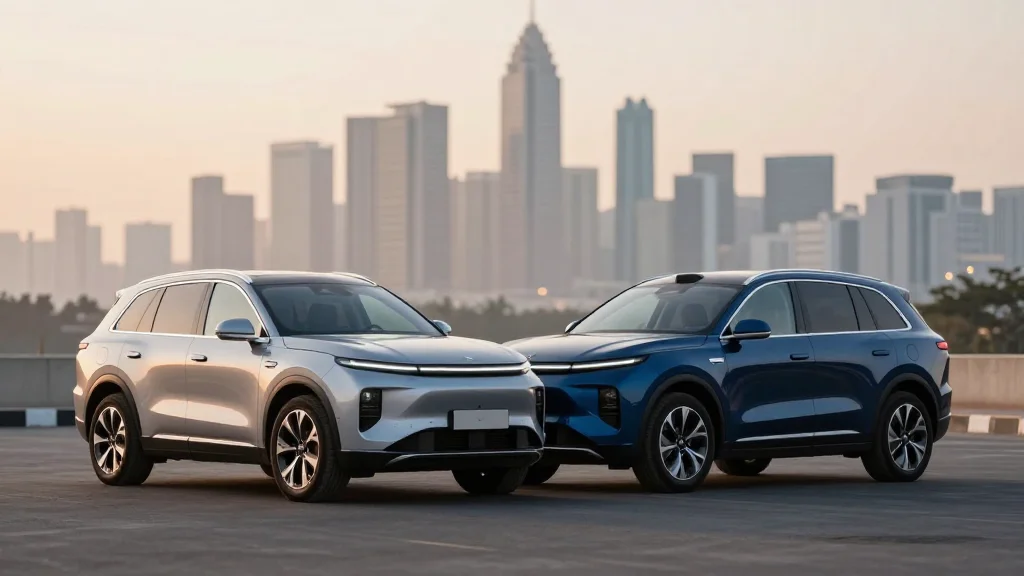
Hyundai Pins Hopes on New SUV Launches in FY27 to Regain Lost Ground
Companies Mentioned
Why It Matters
The new models are Hyundai’s primary lever to regain market share in India’s fast‑growing SUV segment and to sustain its global export ambitions, directly affecting its competitive position against Tata and Mahindra.
Key Takeaways
- •Hyundai plans two new SUVs: a compact EV and a mid‑size ICE
- •FY27 sales target: 8‑10% domestic volume growth
- •FY27 capex ~₹7,500 cr (~$900 m), 45‑50% product spend
- •Total Indian production capacity to exceed 1.1 million units by 2030
- •New models will also be exported, aiming 8‑10% export growth
Pulse Analysis
India’s passenger‑vehicle market expanded 8% in FY26, yet Hyundai Motor India saw a 2.3% sales decline, slipping to fourth place behind Mahindra and Tata. The loss of its No. 2 slot underscores the intensity of competition in the country’s compact and mid‑size SUV segments, where local players have leveraged price‑sensitive offerings and rapid model cycles. Hyundai’s dip, despite a 17% month‑on‑month surge in April 2026, signals a strategic inflection point that demands fresh product momentum to recapture growth.
In response, Hyundai is committing roughly ₹7,500 crore—about $900 million—to FY27, with 45‑50% earmarked for new‑model development. The company will roll out the Inster EV, targeting the burgeoning compact electric SUV niche, and the Bayon, an ICE crossover aimed at rivals like the Maruti Suzuki Fronx. Production will shift to the Chennai plant, while the Pune facility undergoes a Phase‑2 expansion to lift its capacity to 320,000 units, pushing total Indian capacity beyond 1.1 million by 2030. These investments are designed to fuel an 8‑10% domestic volume lift and reinforce Hyundai’s product pipeline.
Beyond home‑market recovery, Hyundai plans to export the new SUVs, seeking an 8‑10% rise in overseas shipments. The strategy leverages existing backorders in the Middle East and positions India as a global hub for models such as the second‑generation Venue, Verna PE, and Exter PE. By diversifying export markets and expanding left‑hand‑drive offerings, Hyundai aims to buffer domestic volatility and capture a larger share of the worldwide SUV demand, setting the stage for sustained growth through 2030.
Hyundai pins hopes on new SUV launches in FY27 to regain lost ground
Comments
Want to join the conversation?
Loading comments...