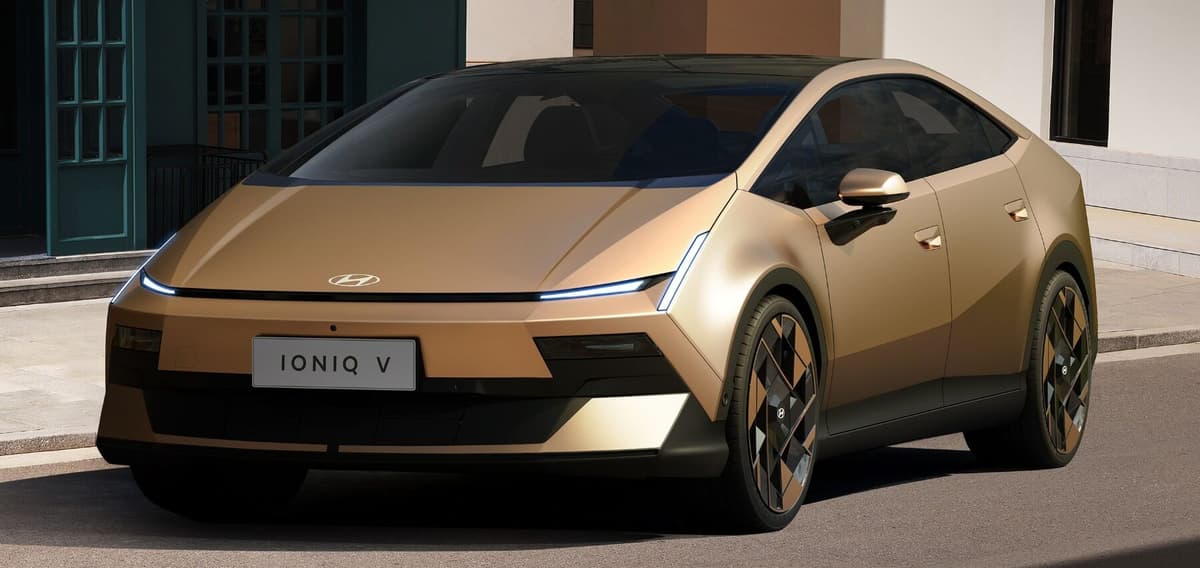
Hyundai Unveils China-Only Ioniq V in 20-Model Five-Year Push
Companies Mentioned
Why It Matters
The move signals Hyundai’s aggressive bid to reclaim market share in China by localising design and technology, while turning the country into a production base for global EV exports.
Key Takeaways
- •Hyundai invests CN¥8 bn ($1.17 bn) in China JV with BAIC.
- •Ioniq V, a 4.9 m sedan, offers 600 km CLTC range.
- •Target: 500,000 China sales annually by 2030.
- •Hyundai plans to export China‑built models to Europe, UK, Middle East.
- •Partnerships with Momenta and CATL add autonomous and battery tech.
Pulse Analysis
Hyundai’s latest unveiling underscores a strategic pivot toward deep localisation in the world’s largest EV market. By committing roughly $1.2 billion to its BAIC joint venture, the Korean automaker is not merely adding a model but building a platform for a 20‑model rollout that aligns with Chinese consumer preferences and regulatory standards. The Ioniq V’s sedan form factor, extended range and high‑tech cabin differentiate it from the globally sold Ioniq 5, reflecting a tailored product roadmap designed to compete with home‑grown rivals that dominate price and feature battles.
The partnership ecosystem surrounding the Ioniq V further illustrates Hyundai’s intent to embed itself within China’s supply chain. Collaborations with autonomous‑driving specialist Momenta and battery giant CATL provide access to cutting‑edge software and energy storage solutions, narrowing the technology gap with domestic EV makers. This approach mirrors a broader industry trend where foreign brands adopt Chinese components and platforms rather than transplanting Korean or European architectures, accelerating development cycles and reducing costs in a market where speed and price are decisive.
Beyond domestic sales, Hyundai is positioning China as an export hub, targeting the UK, Europe and the Middle East with China‑manufactured vehicles. This export‑oriented model could reshape global EV distribution, leveraging lower production costs while meeting regional demand for electric mobility. If Hyundai meets its 500,000‑unit annual target by 2030, it would signal a successful turnaround and potentially inspire other foreign automakers to deepen their China‑centric strategies, intensifying competition across both the Chinese and international EV landscapes.
Hyundai unveils China-only Ioniq V in 20-model five-year push
Comments
Want to join the conversation?
Loading comments...