Improving Magnetic Performance in EV Motors
Why It Matters
The technique cuts dependence on scarce, expensive heavy rare‑earth elements, lowering EV motor costs and weight while boosting performance, a strategic advantage for the auto industry’s electrification push.
Key Takeaways
- •DGIST combined spark plasma sintering with grain boundary diffusion.
- •Uniform diffusion creates core‑shell topology, boosting magnetic uniformity.
- •Magnets retain strength using same rare‑earth amount, but are smaller.
- •Post‑sinter heat at 1,000 °C raises coercivity dramatically.
- •Reduces reliance on costly terbium and dysprosium for EV motors.
Pulse Analysis
Neodymium‑iron‑boron (Nd‑Fe‑B) magnets power most electric‑vehicle drivetrains, yet their performance drops sharply at high temperatures. To compensate, manufacturers traditionally alloy a thin surface layer with heavy rare‑earth elements such as terbium and dysprosium, which stabilise the magnetic field. These elements are not only scarce but also drive up material costs and add weight, creating a supply‑chain bottleneck as EV production scales.
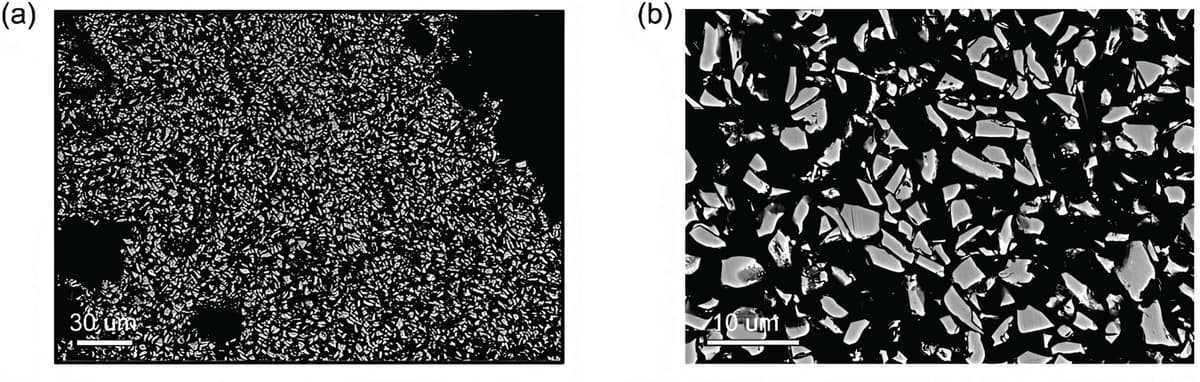
The breakthrough from DGIST’s Nano Technology Research Division tackles this bottleneck by integrating spark plasma sintering (SPS) with grain‑boundary diffusion. By pre‑mixing the diffusion material during powder compaction, the team achieves deep, uniform diffusion that forms a core‑shell architecture throughout the magnet. A subsequent heat treatment at 1,000 °C refines the microstructure and boosts coercivity to near‑theoretical levels, all while using the same quantity of rare‑earths as conventional magnets. The result is a denser, smaller magnet that delivers equivalent magnetic strength without the heavy‑rare‑earth surface coating.
For the EV sector, this advancement promises lighter motor designs, improved efficiency, and a significant reduction in reliance on volatile rare‑earth markets. Automakers can expect lower material expenditures and more flexible supply chains, accelerating the rollout of high‑performance electric models. Moreover, the technology could be adapted to other high‑flux applications such as wind‑turbine generators and aerospace actuators, widening its commercial impact across the clean‑energy landscape.
Improving magnetic performance in EV motors
Comments
Want to join the conversation?
Loading comments...