Japanese Suppliers Form Venture for Modular EV Battery Factories – Report
Companies Mentioned
Why It Matters
Modular factories accelerate EV battery supply chain scaling and cut capital risk, strengthening Japan’s competitiveness in the global electric‑vehicle market.
Key Takeaways
- •Swiftfab Energy Systems unites nine Japanese battery equipment firms.
- •Modular containers enable 50,000‑EV battery output with 1,000 units.
- •Build time drops to 2‑3 years, half of traditional projects.
- •Government subsidies expected to support the venture’s rollout.
- •Smaller equipment reduces operating costs and supplier coordination complexity.
Pulse Analysis
The global push toward electric mobility has turned battery production into a strategic priority for automakers and governments alike. While China and Europe have poured billions into gigafactories, Japan’s battery sector faces a fragmented supply chain, often juggling more than 50 vendors per plant. This complexity translates into long lead times and inflated capital expenditures, slowing the country’s ability to meet rising demand for EVs. In response, Japanese equipment makers are exploring new architectures that can streamline construction and cut costs without sacrificing output quality.
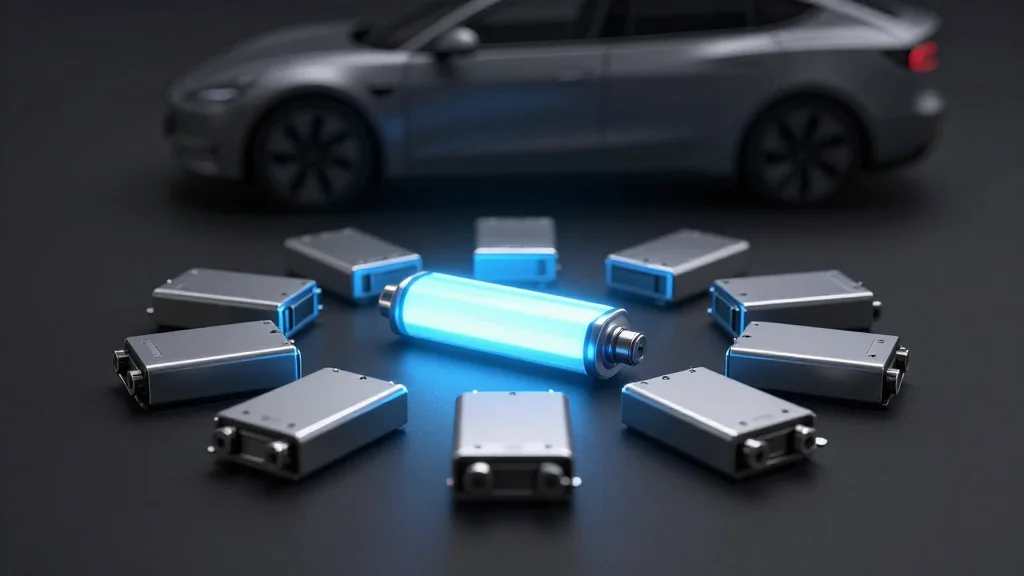
Swiftfab Energy Systems, launched in April, brings together nine heavyweight suppliers such as Hitachi, Ricoh and Jtekt under a single venture. Their plan centers on container‑sized modules that house individual production steps—material processing, electrode fabrication, cell assembly and electrolyte filling. By stacking roughly 1,000 of these units, a plant can churn out batteries sufficient for 50,000 electric vehicles each year. The modular design promises to shrink build cycles from the typical four‑to‑six years down to two‑or‑three, while also lowering equipment purchase and operating expenses. Government subsidies are expected to underwrite the first factory slated for completion by the end of 2030.
The venture’s modular blueprint could reshape how automakers source batteries, offering faster deployment and reduced financial risk. If successful, other Japanese firms and overseas partners may adopt the container model, accelerating the rollout of mid‑size plants that complement larger gigafactories. Investors will likely view Swiftfab’s approach as a hedge against supply bottlenecks, while policymakers see an opportunity to bolster domestic EV production and meet climate targets. Ultimately, the ability to launch battery factories in under three years could give Japan a competitive edge in the rapidly expanding global electric‑vehicle market.
Japanese suppliers form venture for modular EV battery factories – report
Comments
Want to join the conversation?
Loading comments...