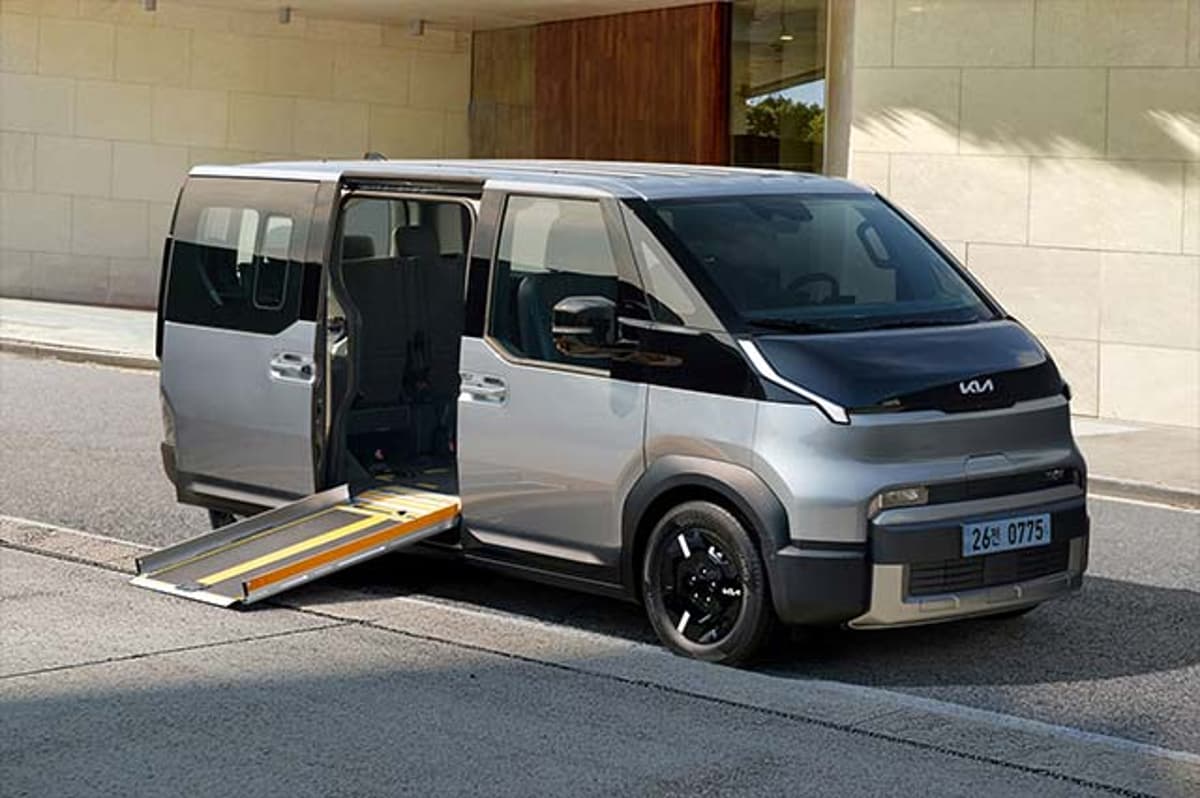
Kia Expands Accessible Mobility Range with PV5 WAV Side Entry
Why It Matters
Factory‑integrated accessibility lowers cost and improves safety, accelerating adoption of inclusive EVs by private owners and mobility fleets. The side‑entry design addresses a key urban‑mobility gap, positioning Kia as a leader in the emerging accessible electric‑vehicle segment.
Key Takeaways
- •Side-entry wheelchair access debut in small electric van segment
- •Factory-led MIP conversion ensures consistent quality and scalable production
- •Ramp handles 13.1° incline, 150 mm kerb, with floor lighting
- •Designed for private owners, taxis, and mobility service fleets
Pulse Analysis
The rise of inclusive transportation is reshaping urban mobility strategies, and manufacturers are racing to embed accessibility at the factory level rather than relying on aftermarket retrofits. Kia’s Platform Beyond Vehicle (PBV) architecture provides a modular foundation that can accommodate a range of accessibility modules, from rear‑entry ramps to the newly announced side‑entry system. By integrating conversion steps directly into its assembly lines—a process Kia calls Made‑In‑Plant (MIP)—the company can guarantee structural integrity, safety compliance, and economies of scale that were previously unattainable for niche wheelchair‑accessible models.
The PV5 WAV Side Entry distinguishes itself with a two‑step manual ramp capable of a 13.1‑degree incline, or 11 degrees when deployed from a standard 150 mm curb, complemented by floor‑level lighting for low‑light boarding. Inside, the vehicle offers a centrally positioned wheelchair space and flexible seating configurations, including a 2‑0‑3 passenger layout or a 2‑0‑1 arrangement that pairs a wheelchair user with a companion. Reinforced floor structures and an integrated anchorage system meet rigorous durability standards, making the van suitable for high‑usage scenarios such as taxi services, shuttle fleets, and corporate mobility programs.
For the European market, where regulatory pressure to electrify public transport is intensifying, Kia’s side‑entry solution fills a critical gap in the accessible EV segment. Fleet operators can now procure a purpose‑built, zero‑emission vehicle that eliminates the compromises of aftermarket conversions, while private users gain a reliable, stylish alternative to traditional mobility scooters. As cities continue to prioritize low‑emission, inclusive transport, the PV5 WAV is poised to influence competitors and accelerate broader industry adoption of factory‑engineered accessible electric vehicles.
Kia Expands Accessible Mobility Range with PV5 WAV Side Entry
Comments
Want to join the conversation?
Loading comments...