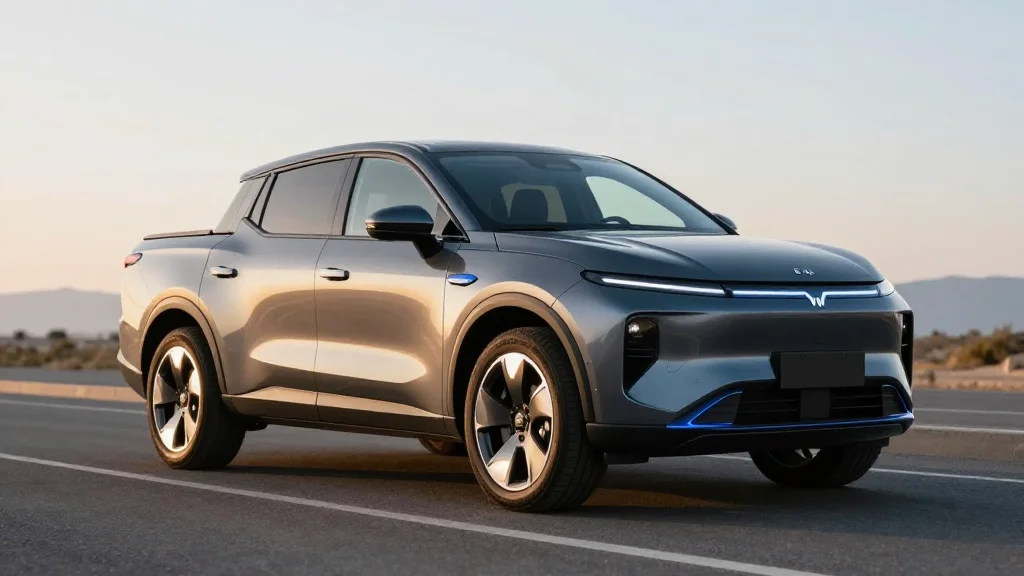
Kia Promises New Mid-Size Truck For US And Global 'Flagship' SUV
Why It Matters
The new truck positions Kia to compete directly with entrenched midsize pickups, while the flagship SUV signals a deeper commitment to premium EVs, both crucial for capturing market share as consumers shift toward electrified vehicles.
Key Takeaways
- •Kia aims to sell 90,000 US trucks by 2034
- •Truck will offer electric or range‑extended hybrid powertrains
- •Shares platform with Hyundai’s upcoming body‑on‑frame pickup
- •Hybrid lineup to double to eight models by 2030
Pulse Analysis
Kia’s investor‑day roadmap marks a decisive shift toward electrified utility vehicles, a segment traditionally dominated by legacy American brands. By committing to a midsize pickup that can be ordered as a battery‑electric or a range‑extended hybrid, Kia is hedging against the uncertain pace of EV adoption while still offering a zero‑emission option for early adopters. Leveraging a shared body‑on‑frame architecture with Hyundai reduces development costs and accelerates time‑to‑market, allowing both companies to field competitive products against the Toyota Tacoma and Ford Ranger without sacrificing distinct brand identities.
The U.S. market, which accounted for roughly 852,000 Kia sales last year, is a focal point for the new truck strategy. Kia’s target of 90,000 truck units by 2034 reflects confidence in growing consumer demand for versatile, electrified pickups, especially as fleet operators seek lower total‑ownership costs. The dual‑powertrain approach also provides flexibility: fleet buyers can opt for pure electric models where charging infrastructure is robust, while the range‑extended hybrid offers a safety net in regions where charging remains sparse. This nuanced offering could help Kia capture a slice of the projected $150 billion U.S. pickup market by the end of the decade.
Beyond the truck, Kia’s announcement of a global flagship electric SUV for 2029 underscores its broader ambition to expand its EV lineup from 11 to 14 models, including a compact EV1 and several commercial variants. The next‑generation EV architecture, set to replace the current Electric Global Modular Platform, aims to improve range, reduce costs, and support higher‑density battery packs. If Kia can meet its goal of 1 million EV sales annually, it will solidify its position among the top EV manufacturers worldwide, while providing U.S. consumers with a premium alternative to the Tesla Model Y and Volkswagen ID.4. The combined rollout of a competitive pickup and a flagship SUV positions Kia to capitalize on the accelerating electrification trend across both utility and premium segments.
Kia Promises New Mid-Size Truck For US And Global 'Flagship' SUV
Comments
Want to join the conversation?
Loading comments...