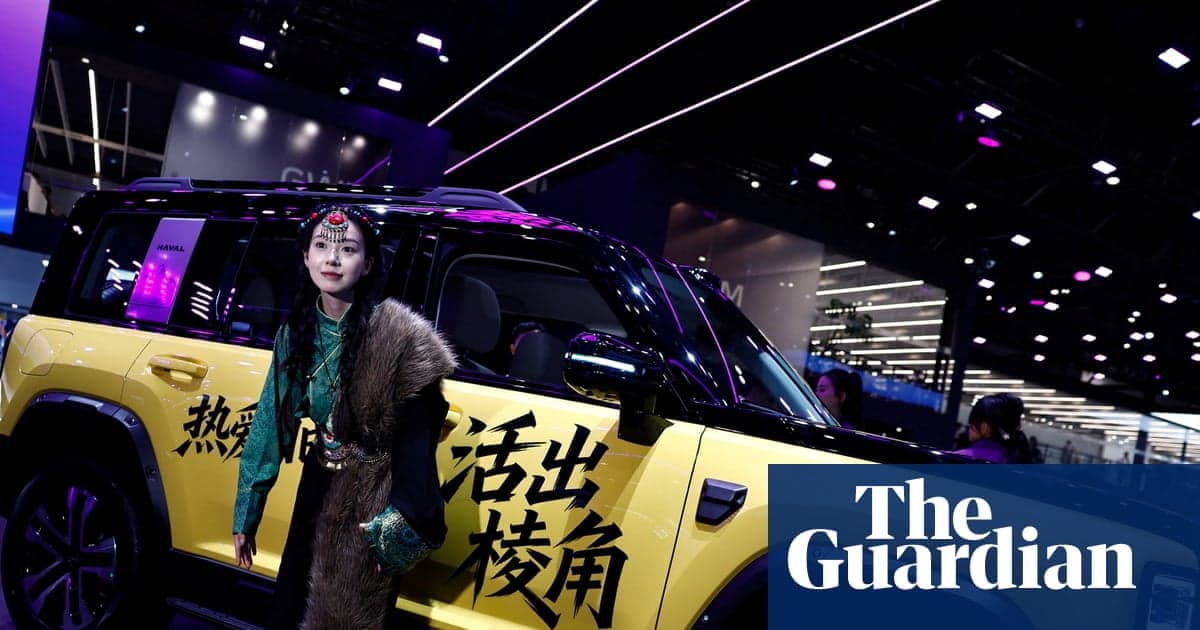
‘Look, No Hands’: China Chases the Driverless Dream at Beijing Car Show
Why It Matters
The shift to autonomous software and overseas expansion is a hedge against China’s slowing car market and a bid to capture new revenue streams globally, reshaping the competitive landscape for EV and mobility firms.
Key Takeaways
- •Huawei pledges $11 bn investment in autonomous‑driving software over five years.
- •Xpeng’s AI lets drivers command parking by destination, not exact spot.
- •Chery targets 10 m global sales by 2030, double 2025 level.
- •Geely plans to launch thousands of driverless taxis worldwide in 2027.
- •Chinese robotaxis to appear in London via Baidu‑Lyft/Uber partnership.
Pulse Analysis
China’s auto sector is at a crossroads. With passenger‑vehicle sales down 17% after subsidy cuts, manufacturers are betting on software to sustain growth. Huawei’s $11 bn commitment underscores the scale of capital flowing into AI‑driven platforms, while firms like Xpeng and Xiaomi are turning cars into connected assistants that can take verbal parking commands or order coffee on the move. This pivot mirrors a broader industry trend: monetizing vehicle intelligence through subscriptions and data services rather than pure hardware sales.
The push for autonomy is not limited to domestic roads. Baidu’s Apollo Go robotaxis, despite recent operational hiccups, are slated for rollout in London through collaborations with Lyft and Uber, signaling Chinese firms’ intent to challenge U.S. players such as Waymo. Meanwhile, Geely’s Caocao arm plans a global driverless‑taxi fleet next year, and Chery aims to double its annual sales to 10 million units by 2030, leveraging strong export momentum that rose over 60% in Q1. These moves illustrate a strategic shift toward high‑margin, technology‑centric business models.
Regulatory uncertainty remains a hurdle. Beijing has only issued draft safety standards, and past incidents—like Baidu’s stalled robotaxis in Wuhan—highlight operational risks. Nevertheless, Chinese manufacturers are targeting markets perceived as more open, such as the UK and Canada, to offset tariff pressures in the U.S. and EU. If the overseas rollout succeeds, China could account for one in ten new cars in Britain by 2025, cementing its role as a global mobility innovator.
‘Look, no hands’: China chases the driverless dream at Beijing car show
Comments
Want to join the conversation?
Loading comments...