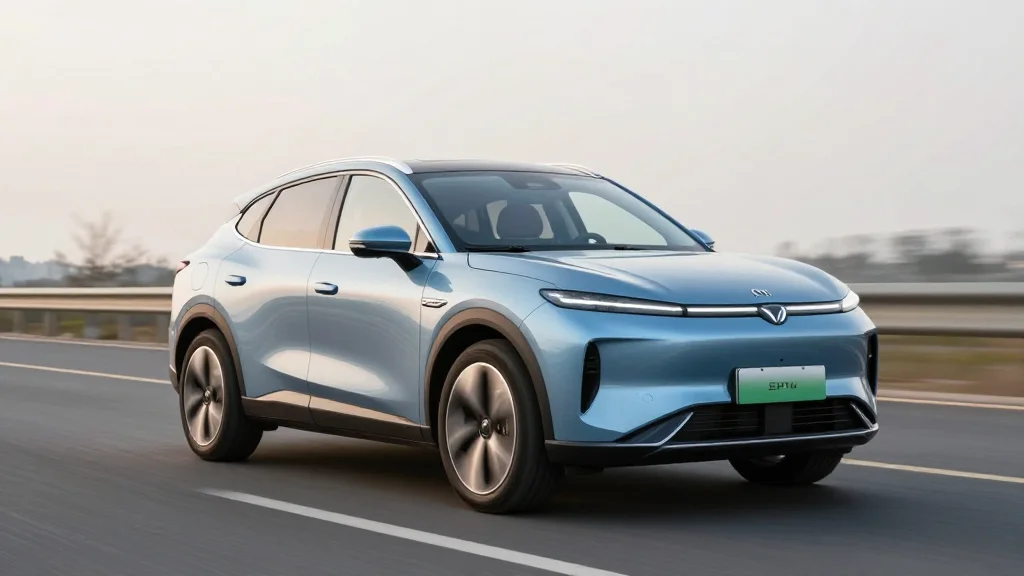
Mahindra Eyes 15% Electric SUV Penetration Ahead of CAFE 3 Norms
Why It Matters
Reaching the targeted EV penetration will help Mahindra meet upcoming regulatory mandates while capturing a fast‑growing electric‑vehicle market, bolstering its profitability and competitive edge in India’s auto sector.
Key Takeaways
- •Mahindra targets 13‑15% EV SUV revenue share by March 2027.
- •Q4 FY26 EV SUV sales hit 9.6% of total SUV volume.
- •Monthly EV output to rise to 8,000 units by FY27.
- •Six new electric models planned through 2031.
- •EV revenue grew 32% to $4.2 bn in Q4 FY26.
Pulse Analysis
India’s automotive landscape is on the cusp of a major shift as the government prepares to enforce CAFE 3 fuel‑efficiency norms by 2028. These standards will pressure manufacturers to accelerate electrification, and Mahindra’s announced 13‑15% EV‑SUV revenue target positions it as a proactive player. By setting a clear timeline—reaching the midpoint by March 2027—the firm signals confidence in its product pipeline and its ability to meet stricter emissions benchmarks, which could influence policy discussions and set a benchmark for peers.
Operationally, Mahindra is scaling its manufacturing footprint to support the ambition. Current EV output hovers just above 6,000 units per month, but the company plans to boost this to 8,000 by the close of FY27, with an additional 4,000‑unit capacity earmarked for FY28 launches. The surge is driven by strong demand for its newest models—particularly the XEV 9S—while the BE 6 and XEV 9E follow. This capacity expansion, coupled with a 32% revenue jump to roughly $4.2 billion in Q4 FY26, underscores a robust growth trajectory and suggests the firm can absorb higher production volumes without compromising margins.
For investors and industry observers, Mahindra’s roadmap offers a clear narrative of growth amid regulatory pressure. The plan to introduce six new electric models by 2031 diversifies its portfolio and mitigates reliance on a single platform. As EV adoption accelerates across India, the company’s early‑move advantage could translate into sustained market share gains, especially given its 37.4% lead in EV‑revenue share last fiscal year. Stakeholders should monitor execution risks—such as supply‑chain constraints and battery cost volatility—but the strategic alignment with upcoming CAFE norms makes Mahindra a compelling case study in Indian automotive electrification.
Mahindra eyes 15% electric SUV penetration ahead of CAFE 3 norms
Comments
Want to join the conversation?
Loading comments...