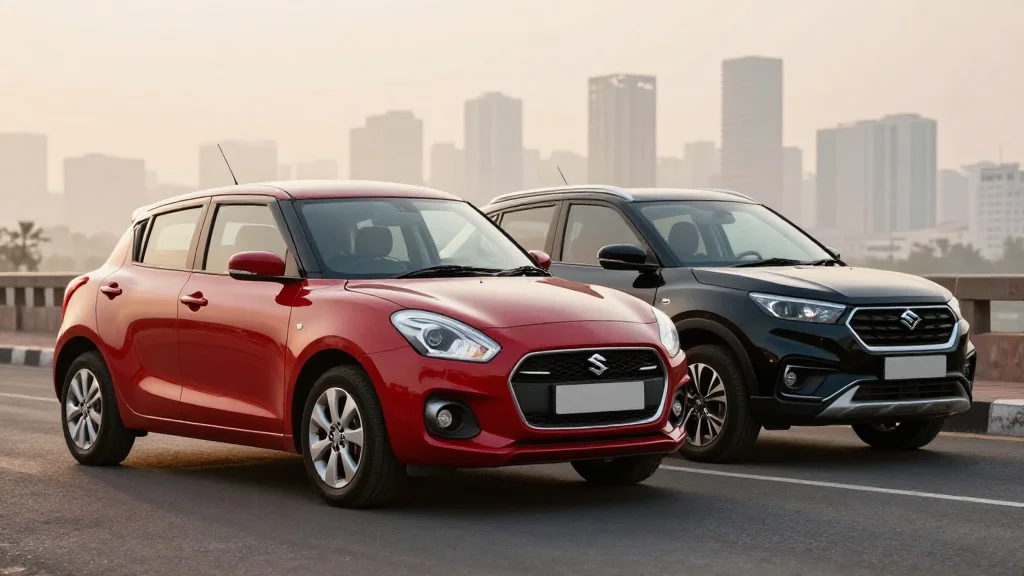
Maruti Suzuki India Starts FY27 with Increase in Market Share to 42%
Why It Matters
The surge solidifies Maruti’s dominance in India’s auto market, pressuring rivals and shaping supplier dynamics as the industry pivots toward higher‑margin SUVs and future electrification.
Key Takeaways
- •Market share rose to 42% in FY27, up 3 points
- •April sales hit 191,122 units, a record for Maruti
- •SUV sales jumped 141.6%, reaching 55,065 units in April
- •Small‑car segment grew 74.4%, boosting overall market dominance
Pulse Analysis
Maruti Suzuki’s impressive start to FY27 underscores the resilience of India’s automotive sector, which has rebounded from supply‑chain disruptions and macro‑economic headwinds. By capturing 42% of the market, the company not only widened its lead over competitors but also set a new benchmark for volume growth. The April sales spike reflects a broader consumer shift toward personal mobility, as rising incomes and urbanization fuel demand for both compact cars and premium‑priced SUVs. Analysts note that Maruti’s extensive dealer network and deep‑priced portfolio give it a distinct advantage in a market where price sensitivity remains high.
The segment breakdown reveals where the momentum is strongest. SUV sales exploded by 141.6%, reaching an all‑time high of 55,065 units, signaling that Indian buyers are gravitating toward higher‑utility vehicles despite higher price points. Meanwhile, passenger‑car sales climbed to 96,725 units, and the small‑car lineup—Alto, S‑Presso, Celerio, Wagon R—registered a 74.4% surge, reinforcing Maruti’s grip on the entry‑level segment. This dual‑track growth forces rivals like Tata Motors and Mahindra to accelerate their own SUV rollouts while attempting to protect their foothold in the budget‑car arena.
Looking ahead, Maruti’s market‑share expansion positions it favorably for upcoming strategic initiatives, including its planned electric‑vehicle (EV) rollout and partnerships with technology firms for connected‑car services. However, the company must navigate rising raw‑material costs, tightening emission norms, and the competitive push from global OEMs entering India’s market. Suppliers stand to benefit from higher production volumes, yet they also face pressure to meet stricter quality and sustainability standards. If Maruti can sustain its growth trajectory while successfully transitioning to EVs, it could further entrench its status as the cornerstone of India’s automotive ecosystem.
Maruti Suzuki India starts FY27 with increase in market share to 42%
Comments
Want to join the conversation?
Loading comments...