MG’s SolidCore Battery: Why Semi-Solid State Is the Smarter Path to Production
Why It Matters
By offering a production‑ready semi‑solid battery, MG reduces the capital and time barriers that have stalled full solid‑state adoption, giving automakers a near‑term path to higher energy density and safer packs.
Key Takeaways
- •SolidCore cuts liquid electrolyte to ~5% by weight
- •First‑gen cells hit 180 Wh/kg, roadmap aims >500 Wh/kg
- •Semi‑solid process fits existing slurry‑coating lines
- •Reduced flammability simplifies thermal‑management architecture
Pulse Analysis
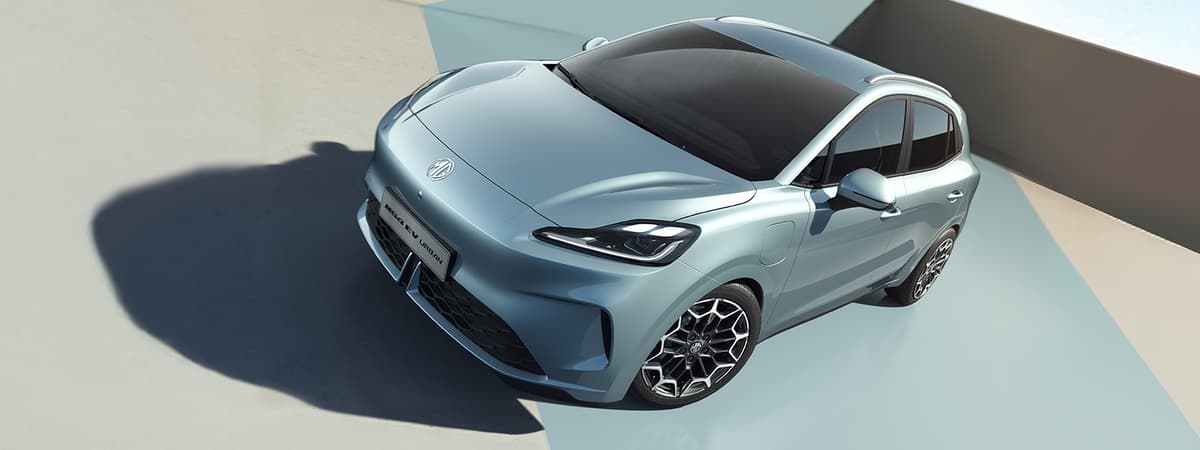
The automotive industry has long chased solid‑state batteries for their promise of higher energy density and intrinsic safety, yet scaling challenges have kept them on the research horizon. MG’s SolidCore takes a pragmatic detour by retaining a minimal liquid component, which preserves the manufacturability of conventional lithium‑ion lines while leveraging the stability of solid‑state materials. This hybrid approach mitigates the notorious interface instability and volumetric expansion issues that have plagued fully solid electrolytes, allowing MG to claim mass‑production readiness for the 2026 MG4 EV Urban.
From a chemistry standpoint, the use of lithium‑manganese‑oxide (LMO) spinel cathodes offers fast charge acceptance and thermal resilience, but historically suffers from manganese dissolution and the Jahn‑Teller distortion that erodes cycle life. By embedding the LMO in a semi‑solid matrix and slashing the liquid electrolyte to roughly five percent of cell mass, SolidCore curtails the migration of dissolved manganese, shifting degradation mechanisms toward mechanical fatigue rather than chemical corrosion. The result is a battery that can start at sub‑zero temperatures without pre‑heating, simplifying vehicle thermal‑management systems and reducing the weight and cost of active heating modules.
Manufacturing implications are equally compelling. Full solid‑state cells demand dry‑room environments and ultra‑precise layer deposition, inflating capital expenditures and slowing ramp‑up. Semi‑solid electrolytes, however, can be processed with adapted slurry‑coating and winding equipment already common in battery factories, accelerating time‑to‑market and lowering entry barriers for other OEMs. Safety gains—lower flammability and reduced reliance on inter‑cell barriers—further enhance the value proposition, positioning MG’s SolidCore as a bridge technology that could accelerate the industry’s transition toward next‑generation solid‑state powertrains.
MG’s SolidCore battery: why semi-solid state is the smarter path to production
Comments
Want to join the conversation?
Loading comments...