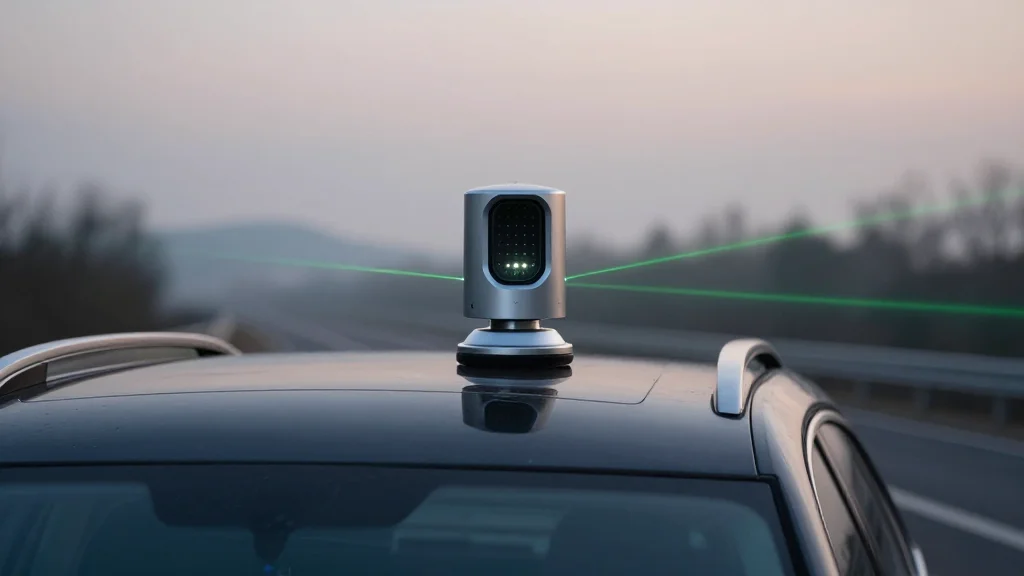
MicroVision Expands Lidar Portfolio After Two Acquisitions
Companies Mentioned
Why It Matters
By driving lidar costs toward $200, MicroVision could unlock mass‑market ADAS adoption and position itself as a key supplier for diverse autonomous‑driving applications.
Key Takeaways
- •Acquired Luminar assets for $33 million, adding Halo and Iris sensors
- •Bought German Scantinel Photonics, gaining ultra‑long‑range FMCW lidar
- •Targets $200 price point for lidar sensors, enabling broader ADAS adoption
- •Expands applications to trucks, forklifts, drones, and military mapping
- •Demonstrated GPS‑free navigation in Volkswagen Tiguan prototype
Pulse Analysis
Lidar has long been a bottleneck for autonomous‑driving rollouts, primarily because high‑precision sensors command prices in the thousands of dollars. MicroVision’s recent acquisitions—Luminar’s Halo and Iris units and Scantinel’s FMCW technology—merge complementary detection methods, creating a more versatile sensor suite. By consolidating these assets, the company can streamline R&D, leverage shared software stacks, and accelerate time‑to‑market for next‑generation perception modules, a strategic advantage in a crowded market where incumbents like Velodyne and new entrants vie for OEM contracts.
The $200 price target represents a paradigm shift. If achieved, lidar could become a cost‑neutral component in mid‑range ADAS packages, expanding beyond premium models to fleet vehicles, autonomous forklifts, and even military drones. Lower hardware costs also reduce the total cost of ownership for commercial‑vehicle operators, who stand to benefit from safety‑related insurance discounts and productivity gains. Analysts estimate the global automotive lidar market could exceed $10 billion by 2030, and MicroVision’s broadened addressable base—from Class 8 trucks to industrial robotics—positions it to capture a meaningful share of that growth.
MicroVision’s live demonstration in a Volkswagen Tiguan highlighted practical capabilities: real‑time 3‑D mapping, object tracking, and GPS‑free localization. Such feats underscore the maturity of its perception algorithms and the potential to simplify vehicle architecture by eliminating reliance on satellite navigation. Investors will watch the company’s ability to scale production while meeting the $200 cost goal, as success could trigger a wave of OEM partnerships and solidify MicroVision’s role in the emerging "lidar 2.0" ecosystem.
MicroVision Expands Lidar Portfolio After Two Acquisitions
Comments
Want to join the conversation?
Loading comments...