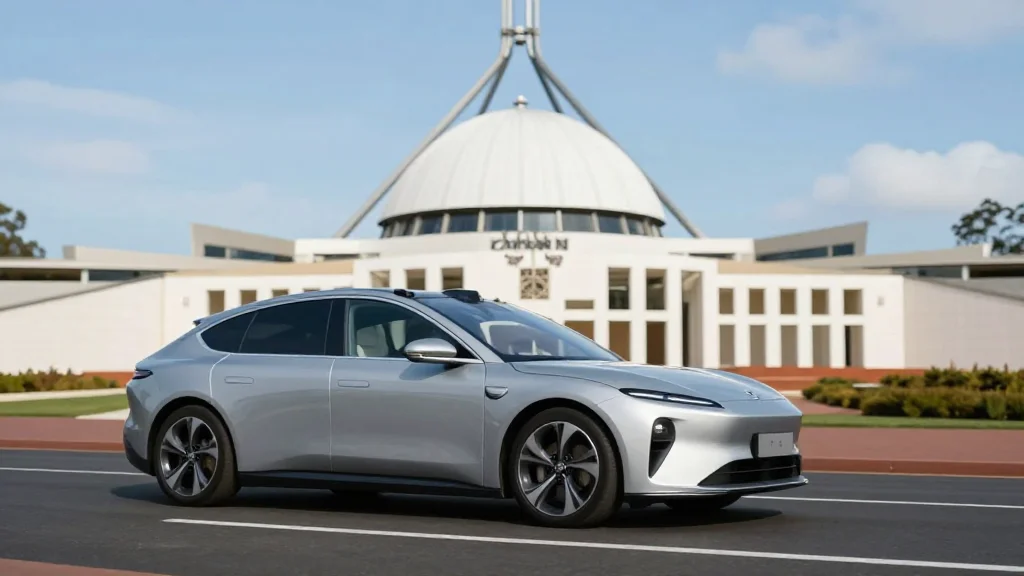
National Capital Leads Australia’s EV Charge with 34 Pct of New Car Sales in April
Why It Matters
The surge signals accelerating consumer adoption and policy effectiveness in the ACT, offering a blueprint for other states seeking to meet emissions targets. Higher EV market share also drives infrastructure investment and reduces reliance on fossil fuels.
Key Takeaways
- •ACT EV share hit 34% of new registrations in April.
- •Total ZEV fleet in ACT reached 15,596 vehicles by early May.
- •ZEVs now represent 4.04% of all ACT registered vehicles.
- •EV penetration in ACT is about twice the national average.
- •Data includes light, motorcycle, heavy, hydrogen, solar, and steam vehicles.
Pulse Analysis
Australia’s electric‑vehicle market has long lagged behind Europe and the United States, but the Australian Capital Territory is rapidly narrowing that gap. Aggressive local incentives, such as reduced registration fees and expanded charging subsidies, have created a fertile environment for early adopters. Coupled with a relatively affluent, environmentally conscious population, these policies have propelled the ACT to a 34% share of new ZEV registrations in April—far outpacing any other state or territory.
The implications extend beyond headline numbers. A higher concentration of EVs accelerates the business case for public charging networks, prompting utilities and private operators to invest in fast‑charging hubs along commuter corridors. Retailers and workplaces are also upgrading their parking facilities to accommodate electric fleets, which in turn boosts consumer confidence. Compared with the national average of roughly 17% for new ZEV sales, the ACT’s performance demonstrates how targeted policy can double market penetration within a single jurisdiction.
Looking ahead, the ACT’s data arrives just before the release of nationwide EV statistics, setting a benchmark for other regions. As federal incentives mature and battery costs continue to fall, the momentum observed in Canberra is likely to ripple across Australia. However, scaling will require coordinated infrastructure planning, grid upgrades to handle increased electricity demand, and continued support for emerging technologies like hydrogen‑fuel‑cell and solar‑powered vehicles. The ACT’s experience offers a practical roadmap for achieving broader decarbonisation goals while fostering a resilient, modern automotive market.
National capital leads Australia’s EV charge with 34 pct of new car sales in April
Comments
Want to join the conversation?
Loading comments...