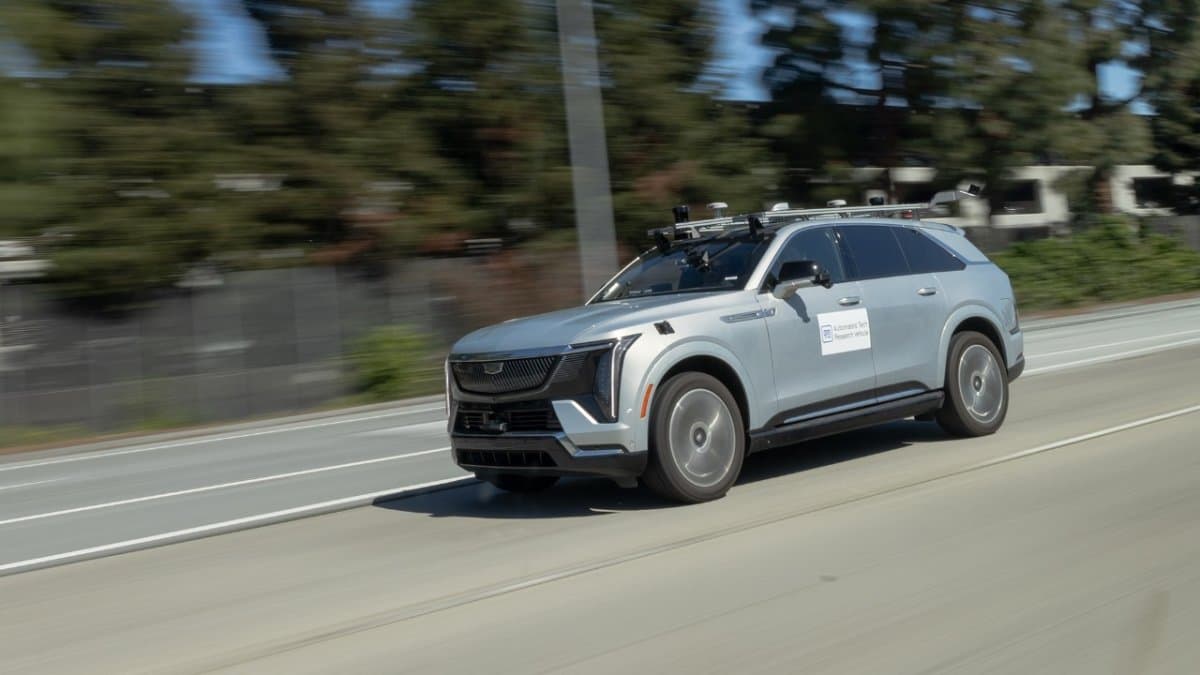
Nervous Humans Are GM’s Secret Weapon for Self-Driving Cars
Why It Matters
Quantifying human stress and emotion lets GM program autonomous systems that react to real‑world driver behavior, shortening validation cycles and boosting safety confidence. AI‑driven aerodynamics and cheaper batteries improve EV competitiveness as the market tightens.
Key Takeaways
- •GM uses VR rigs with eye, heart, sweat sensors to gauge stress
- •AI-driven virtual wind tunnel cuts drag analysis from weeks to seconds
- •LMR batteries lower cost by reducing cobalt and other rare minerals
- •Hands‑off, eyes‑off driving slated for 2028 Cadillac Escalade IQ debut
- •Emotional AI turns biometric data into real‑time driver‑state insights
Pulse Analysis
GM’s research campus in Warren, Michigan has turned driver physiology into a data engine for autonomous‑vehicle development. Test subjects sit in a real Cadillac Lyriq while a surrounding projection simulates road conditions; sensors record eye gaze, pulse, skin conductance and even pupil dilation. Machine‑learning pipelines translate these signals into stress metrics, allowing engineers to spot moments when the system’s decision‑making might feel uncomfortable to a human. By treating the human body as a diagnostic tool, GM shortens the feedback loop between simulation and real‑world safety validation.
Beyond the driver‑in‑the‑loop, GM is reshaping vehicle engineering with AI‑accelerated tools. An AI‑powered virtual wind tunnel delivers instantaneous drag predictions, collapsing weeks‑long computational fluid‑dynamics runs into seconds of insight. This rapid feedback enables designers to iterate aerodynamic shapes without costly physical prototypes. Simultaneously, the company’s shift to lithium‑manganese‑rich (LMR) battery chemistry cuts reliance on cobalt and other scarce minerals, lowering material costs and easing supply‑chain constraints. The combined effect is a more affordable, energy‑efficient electric platform that can support the power demands of advanced driver‑assistance features.
The ultimate test comes with GM’s promise of hands‑off, eyes‑off driving in the 2028 Cadillac Escalade IQ. Delivering a vehicle that can navigate without driver input requires not only robust perception algorithms but also confidence that the system can handle the nuanced stress responses of human occupants. By integrating emotional AI and biometric monitoring into its validation pipeline, GM aims to build a safety case that satisfies regulators and reassures consumers. If successful, the technology could set a new benchmark for Level 4 autonomy, prompting rivals to adopt similar human‑centric testing frameworks and accelerating the industry’s shift toward fully driverless electric cars.
Nervous humans are GM’s secret weapon for self-driving cars
Comments
Want to join the conversation?
Loading comments...