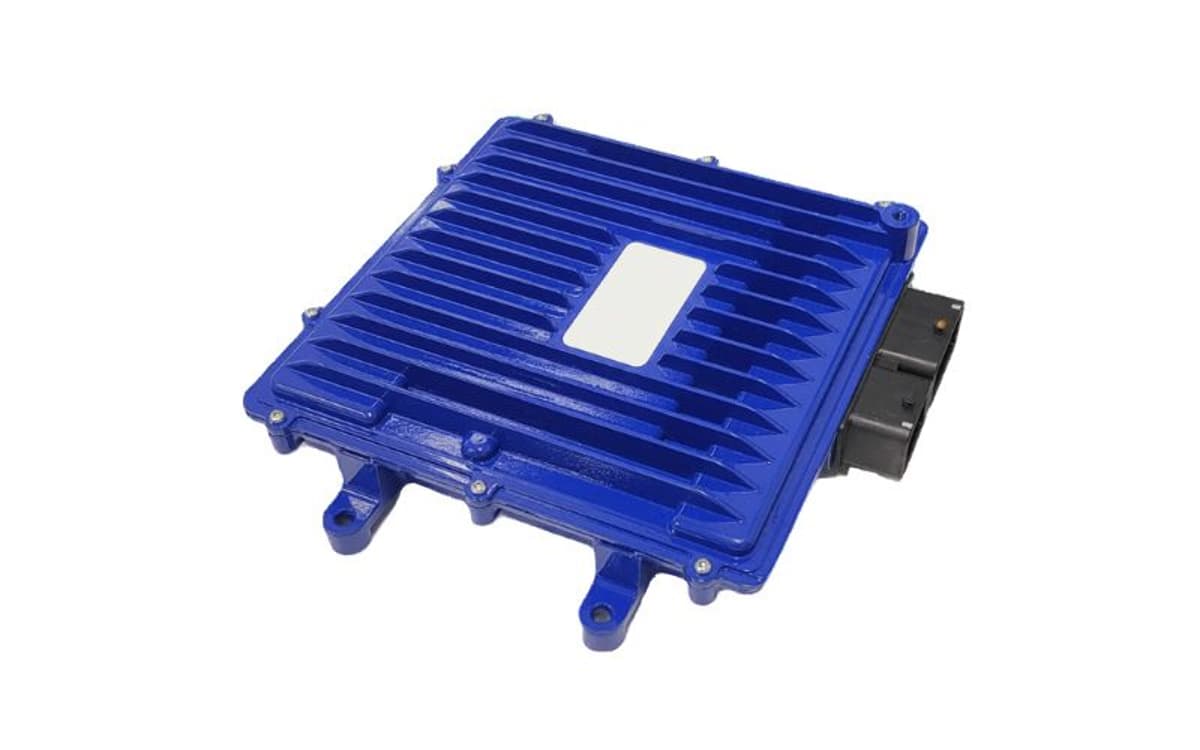
New Eagle’s OpenECU NX3 Puts MCS, CCS and Vehicle Supervisory Control Into a Single ECU
Why It Matters
Consolidating charging and supervisory control cuts system complexity and accelerates time‑to‑market for high‑power EVs, giving OEMs a cost‑effective path to meet safety and cyber‑security requirements.
Key Takeaways
- •NX3 combines MCS, CCS, and vehicle supervision in one ECU.
- •Meets ASIL‑D functional safety and ISO 21434 cybersecurity standards.
- •Reduces wiring, failure points, and validation effort for EV programs.
- •Enables faster deployment of megawatt‑class charging for heavy‑duty vehicles.
Pulse Analysis
The rapid expansion of electric‑vehicle fleets has created a fragmented landscape of charging protocols. While CCS remains the de‑facto standard for passenger cars, the Megawatt Charging System (MCS) is gaining traction for heavy‑duty trucks that demand gigawatt‑hour‑scale energy transfers. Traditionally, automakers have deployed separate ECUs for each protocol and an additional supervisory controller to manage powertrain, battery, and auxiliary systems. This architecture inflates wiring harnesses, adds weight, and multiplies validation cycles, ultimately raising vehicle cost and time‑to‑market.
New Eagle’s OpenECU NX3 tackles these challenges by unifying MCS, CCS, and vehicle supervisory control within a single, production‑ready unit. Leveraging the OpenECU platform and the Raptor toolchain, developers can transition seamlessly from model‑based design to C‑code implementation, preserving traceability across the development lifecycle. The NX3 is engineered to satisfy ASIL‑D functional safety and ISO 21434 cybersecurity standards, reflecting the company’s recent acquisition of Pi Innovo, which bolstered its hardware and software capabilities. By consolidating functions, the NX3 reduces the bill of materials, shortens integration timelines, and simplifies compliance testing.
For OEMs, the NX3 represents a strategic lever to accelerate the rollout of megawatt‑class charging solutions without sacrificing safety or security. Fewer ECUs mean lower failure rates and streamlined supply chains, translating into tangible cost savings for both manufacturers and end‑users. As the industry prepares for the next wave of heavy‑duty electrification, the ability to deploy a single, standards‑compliant controller could become a differentiator. New Eagle’s simultaneous unveiling of the Charge Control Unit and DLC‑12 at ACT Expo 2026 underscores its broader ambition to become a one‑stop supplier for electrified‑vehicle electronics.
New Eagle’s OpenECU NX3 puts MCS, CCS and vehicle supervisory control into a single ECU
Comments
Want to join the conversation?
Loading comments...