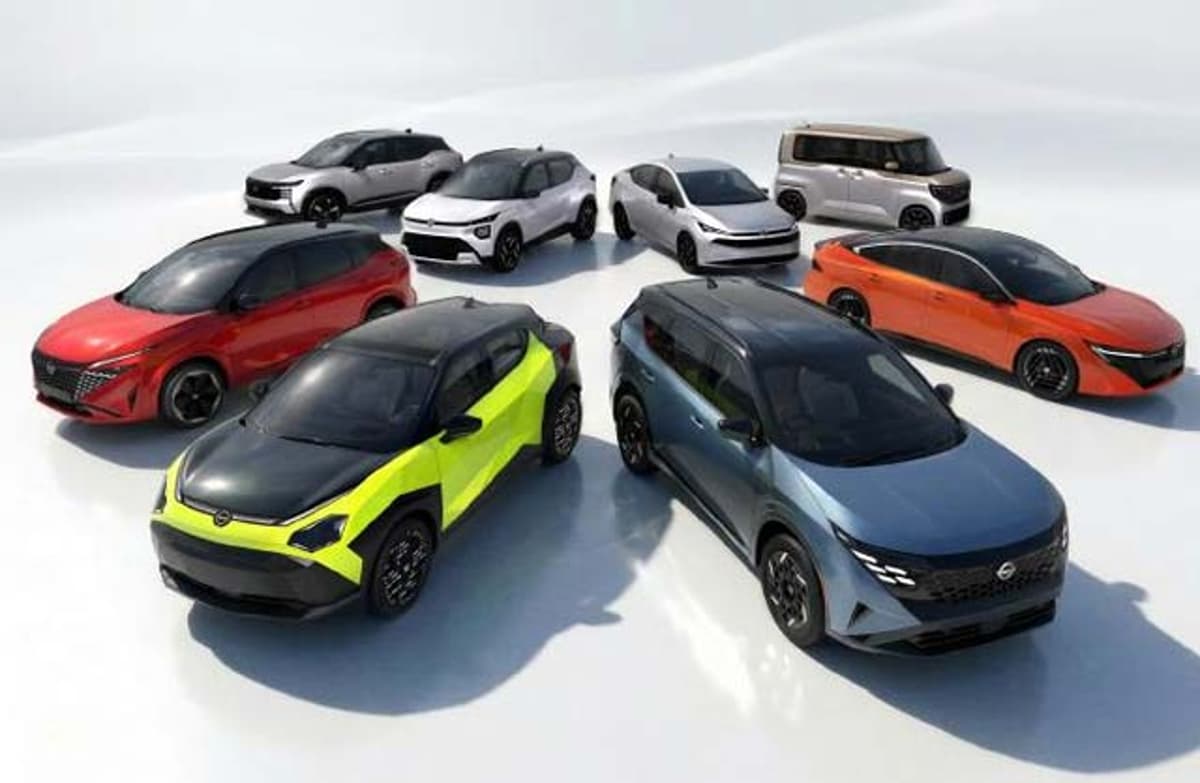
Nissan Reveals Long-Term “Mobility Intelligence” Vision Focused on AI, EVs and Smarter Mobility
Companies Mentioned
Why It Matters
By marrying software‑defined AI with diversified electrification, Nissan positions itself to capture growth in its three anchor markets and regain relevance as the auto industry pivots toward autonomous, electric mobility.
Key Takeaways
- •AI Drive slated for 90% of Nissan lineup long term
- •New Elgrand to debut AI features summer 2026, full autonomy by FY2027
- •Model count trimmed to 45, focusing on three core families
- •Hybrid e‑POWER and new body‑on‑frame hybrid expand electrified options
- •US and China sales targets set at one million units each by 2030
Pulse Analysis
Nissan’s new "Mobility Intelligence" roadmap arrives at a pivotal moment for the auto sector, as manufacturers race to embed software, artificial intelligence and zero‑emission powertrains into every vehicle. While legacy brands scramble to retrofit legacy platforms, Nissan is building AI from the ground up, integrating its Nissan AI Drive and AI Partner suites into future models. This approach mirrors broader industry trends where data‑driven services and autonomous capabilities are becoming profit centers, not just add‑ons, and it signals Nissan’s intent to compete with the likes of Tesla, BYD and traditional OEMs that have accelerated their EV and software agendas.
The centerpiece of the strategy is the AI‑Defined Vehicle (AIDV) platform, which promises to roll AI‑enhanced driver assistance across 90% of the lineup. The upcoming Elgrand will be the first showcase, featuring next‑generation ProPILOT and end‑to‑end autonomy slated for fiscal 2027. Complementary AI Partner technology will personalize in‑car interactions, turning vehicles into adaptive assistants that manage daily tasks. By embedding these capabilities early, Nissan aims to differentiate its products in crowded SUV and crossover segments, where consumers increasingly value seamless connectivity and advanced safety.
Operational efficiency underpins the vision, with Nissan slashing its global portfolio from 56 to 45 models and consolidating development around three core families that will generate over 80% of volume. This leaner architecture reduces R&D spend and accelerates time‑to‑market, crucial for meeting ambitious sales goals of one million units annually in both the United States and China by 2030. Coupled with an expanded hybrid e‑POWER lineup and new body‑on‑frame hybrids, the strategy balances market demand, infrastructure readiness, and price sensitivity, positioning Nissan to capture a larger share of the accelerating global shift toward electrified, software‑centric mobility.
Nissan Reveals Long-Term “Mobility Intelligence” Vision Focused on AI, EVs and Smarter Mobility
Comments
Want to join the conversation?
Loading comments...