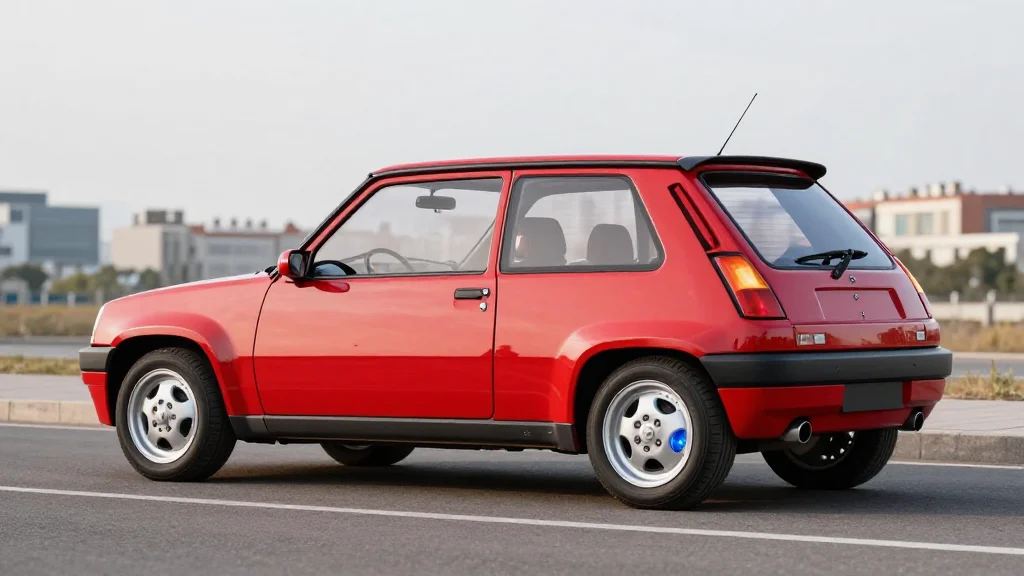
Renault 5 Turbo 3E to Be Fitted with In-Wheel Motors
Companies Mentioned
Why It Matters
The partnership proves high‑performance in‑wheel motors are production‑ready, potentially redefining EV architecture and interior space efficiency. It also gives Renault a distinctive performance edge in the premium compact electric segment.
Key Takeaways
- •First European production car with in‑wheel motors
- •555 hp enables sub‑3.5 sec 0‑62 mph
- •Eliminates traditional drivetrain, freeing interior space
- •Renault targets 2026 launch; details at Vienna symposium
- •Protean gains flagship platform to prove IWM technology
Pulse Analysis
In‑wheel motor technology has moved from concept cars to real‑world applications, offering a compact, high‑torque solution that integrates the electric motor directly into each wheel hub. By eliminating the need for a central motor, gearbox, driveshafts, and differential, manufacturers can achieve lower unsprung mass, improve handling, and free up chassis space for batteries or cabin amenities. Protean Electric, a pioneer in this field, claims its latest IWM system can produce 555 horsepower while maintaining efficiency comparable to conventional layouts, positioning the technology as a viable alternative for performance‑focused electric vehicles.
The Renault 5 Turbo 3E revives the iconic 1980s super‑mini with a fully electric powertrain that leverages Protean’s IWM. The 555‑horsepower output translates to a 0‑62 mph sprint in under 3.5 seconds, rivaling many high‑end sports cars while retaining the compact footprint of a city hatchback. By placing the motors on the rear wheels, Renault can preserve the classic silhouette and interior packaging without sacrificing battery capacity. The vehicle’s launch, slated for 2026, targets enthusiasts seeking a blend of heritage styling and cutting‑edge electrification, and it underscores Renault’s strategy to differentiate its EV lineup through innovative drivetrain architectures.
Beyond a single model, the Renault‑Protean collaboration signals a broader shift in the automotive industry toward modular, wheel‑integrated powertrains. As manufacturers grapple with range anxiety, weight distribution, and manufacturing complexity, in‑wheel motors present a compelling path to simplify assembly lines and reduce vehicle weight. However, challenges such as unsprung mass management, durability under harsh road conditions, and cost remain. The upcoming technical papers at the Vienna Motor Symposium will likely address these hurdles, offering insights that could accelerate adoption across other segments, from compact cars to larger SUVs, and reshape the future landscape of electric mobility.
Renault 5 Turbo 3E to be fitted with in-wheel motors
Comments
Want to join the conversation?
Loading comments...