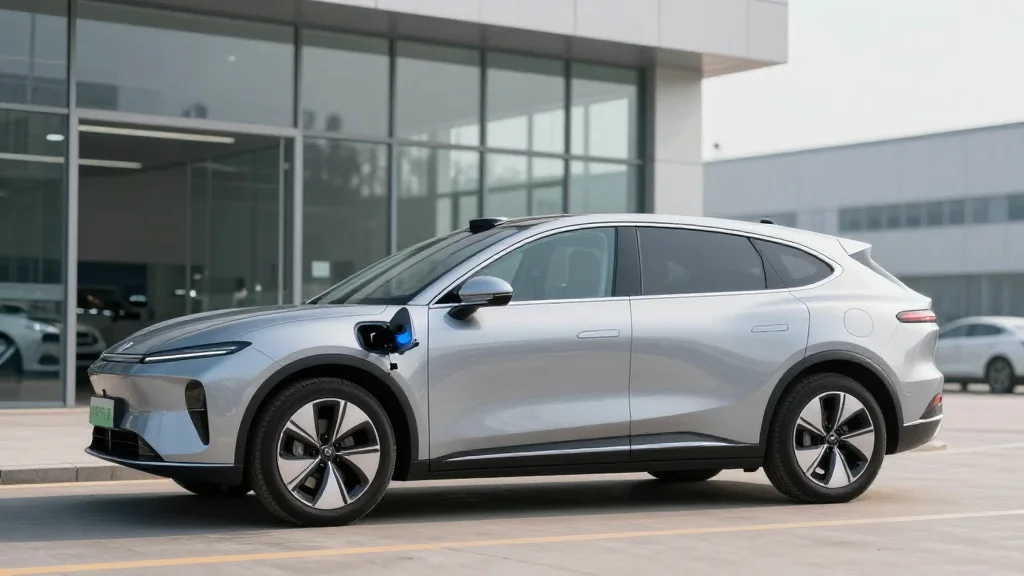
Renault Korea to Produce BEVs From 2028
Companies Mentioned
Why It Matters
Accelerating BEV production and software-defined vehicles positions Renault Korea to capture a growing electric market and offset recent sales declines, while the rapid development timeline could set a new industry benchmark in South Korea.
Key Takeaways
- •Renault Korea to start BEV production in Busan in 2028.
- •First software-defined vehicle slated for launch in South Korea in 2027.
- •New model rollout: one fresh vehicle per year through 2029.
- •Development cycle target under two years, Grand Koleos built in 24 months.
- •Domestic sales fell 20% to 10,868 units in Q1 2026.
Pulse Analysis
The South Korean automotive market is rapidly electrifying, with the government’s subsidies and a surge in consumer demand pushing manufacturers toward battery electric vehicles. Renault Korea, which saw domestic sales tumble 20% to just 10,868 units in the first quarter of 2026, has responded by earmarking its Busan plant as a dedicated BEV hub starting in 2028. Localizing battery production and creating an end‑to‑end EV ecosystem aims to reduce import costs, improve supply chain resilience, and make the brand more competitive against domestic rivals such as Hyundai and Kia.
Beyond hardware, Renault is betting on software to differentiate its offerings. The upcoming software‑defined vehicle, slated for a 2027 launch, will run the AI‑driven OpenR Panorama system, delivering Level 2++ autonomous capabilities in both city traffic and highway cruising. This aligns with a broader industry shift toward over‑the‑air updates, modular vehicle architectures, and data‑centric services. By embedding advanced driver‑assist functions from day one, Renault Korea hopes to attract tech‑savvy buyers and lay the groundwork for future higher‑level autonomy.
Renault’s aggressive rollout—one new model per year through 2029 and a sub‑two‑year development cycle—signals a strategic push to transform the Busan subsidiary into a flagship design and manufacturing center for the Group. Faster model cadence can shorten time‑to‑market, generate fresh revenue streams, and help recoup the recent sales slump. If the localized battery strategy succeeds, it could also serve as a template for Renault’s other emerging‑market operations, reinforcing the company’s ‘Future‑Ready’ agenda and strengthening its global EV footprint.
Renault Korea to produce BEVs from 2028
Comments
Want to join the conversation?
Loading comments...