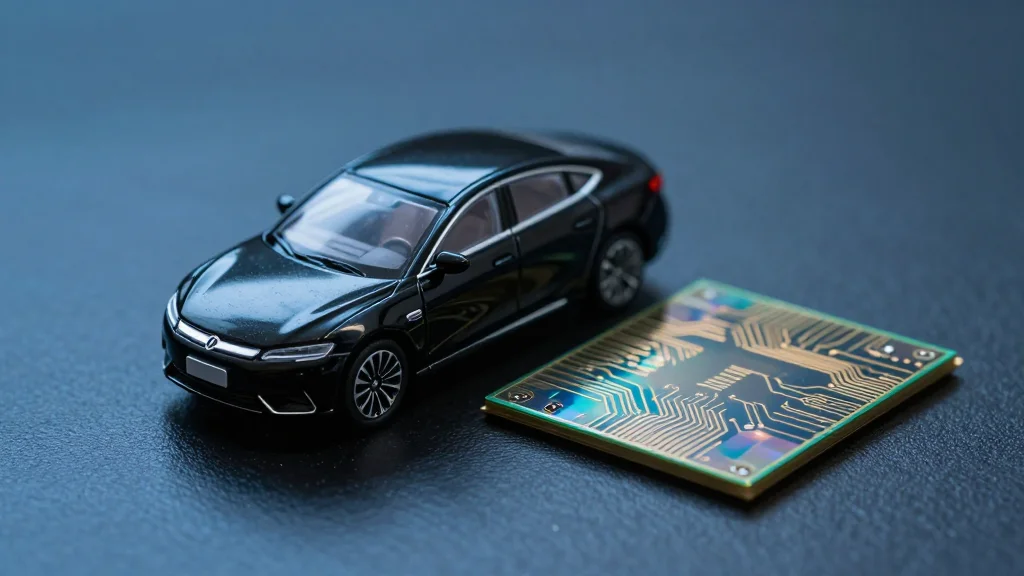
RoboSense Releases Image-Grade SPAD-SoC Platform as LiDAR Competition Heats Up
Key Takeaways
- •Phoenix chip offers 2,160-beam image-grade LiDAR, 600 m range
- •Design wins secured with leading global automakers for 2026 production
- •Peacock chip delivers 640×480 solid-state imaging, <5 cm minimum distance
- •RoboSense aims to shift LiDAR from analog to digital imaging architecture
Pulse Analysis
RoboSense’s Phoenix chip marks a technical leap for automotive LiDAR, combining a monolithic SPAD‑SoC design with 2,160 laser‑receiving channels to generate point clouds comparable to a 4‑megapixel camera. This ultra‑high resolution and 600‑meter range enable more precise object detection, a critical factor for Level‑4 autonomous driving. By securing design wins with major OEMs for 2026 production, RoboSense positions itself to become a preferred supplier, potentially setting new performance benchmarks that rivals like Hesai must match.
The LiDAR market is transitioning from traditional analog architectures to fully digital imaging platforms, a shift that promises lower unit costs and easier integration into vehicle electronics. RoboSense’s Eocene architecture exemplifies this trend, offering a scalable chip‑level solution that can be iterated rapidly across multiple beam configurations. As manufacturers seek to embed perception sensors in mass‑consumer models, the ability to produce high‑resolution, solid‑state units such as the 640×480 Peacock chip—capable of detecting objects as close as 5 cm—will be a decisive advantage in meeting safety regulations and consumer expectations.
From a business perspective, the launch comes as RoboSense reports its first profitable quarter, netting roughly $15 million, signaling that its R&D investments are beginning to pay off. The forthcoming RGBD fusion sensor, slated for 2027, aims to combine depth data with color imaging, further expanding the company’s product ecosystem. Investors and industry analysts are likely to view these developments as evidence of a sustainable competitive moat, driven by chip‑level innovation that could accelerate LiDAR adoption across automotive and robotics sectors.
RoboSense releases image-grade SPAD-SoC platform as LiDAR competition heats up
Comments
Want to join the conversation?