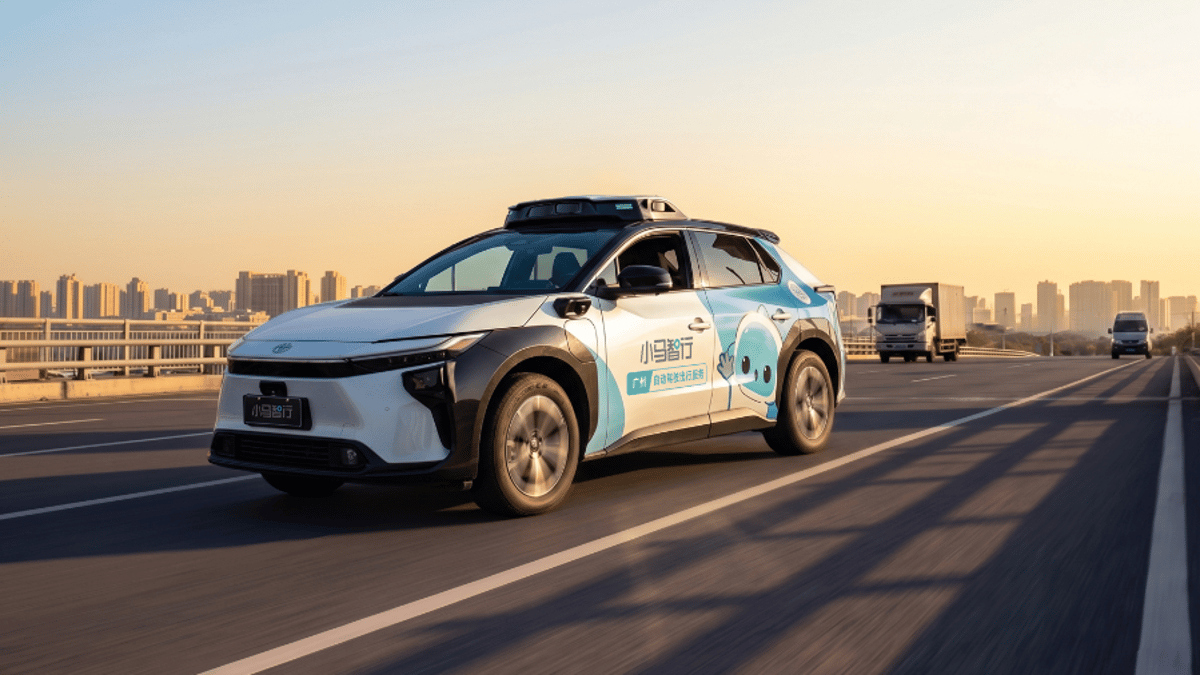
Robotaxi Cost to Drop Under 230,000 Yuan in 2027, Pony.ai Unveils First L4 Autonomous Light Truck
Companies Mentioned
Why It Matters
The price drop makes robotaxi services economically viable for wider city deployment, accelerating autonomous mobility adoption. Simultaneously, the L4 light truck and truck‑platoon permit open a cost‑effective, high‑volume logistics segment for autonomous freight.
Key Takeaways
- •Robotaxi cost under 230k yuan (~$32k) by 2027
- •Fleet exceeds 1,400 units, serving over 1 million users
- •Dual-engine strategy targets 20+ global cities, 3,000 vehicles by 2026
- •First L4 autonomous light truck offers 18 m³ cargo, 40‑50% lower freight cost
- •Secured China’s first permit for unmanned truck platoons on expressways
Pulse Analysis
Pony.ai’s announcement marks a watershed moment for autonomous mobility in China. By driving the total cost of a fully unmanned robotaxi below 230,000 yuan—roughly $32,000—the firm bridges the gap between premium electric sedans and mass‑market ridesharing. This price parity not only challenges traditional OEMs but also unlocks profitability for fleet operators in tier‑1 and emerging tier‑1 cities, where price sensitivity has long hampered large‑scale deployment. The cost advantage stems from shared L4 hardware, battery economies of scale, and a streamlined vehicle architecture that mirrors the company’s seventh‑generation robotaxi.
Beyond passenger transport, Pony.ai is leveraging the same L4 platform to disrupt urban logistics. The newly unveiled autonomous light truck, with an 18‑cubic‑meter cargo bay and a range of up to 450 km, cuts freight cost per kilometer by 40‑50% compared with manual delivery vans. Its fully redundant architecture ensures 600,000 km service life, making it attractive for B2B scenarios such as express sorting hubs and supermarket replenishment. Coupled with a dedicated charging and remote‑assistance ecosystem, the truck exemplifies how shared technology can drive down operating expenses across distinct business lines.
Regulatory momentum further accelerates Pony.ai’s growth trajectory. The company secured China’s first permit for unmanned truck platoons, allowing "1+N" convoys on high‑traffic corridors like the Beijing‑Tianjin Expressway. This breakthrough paves the way for high‑throughput freight corridors, reducing labor costs and improving supply‑chain resilience. Together with a dual‑engine expansion plan targeting over 20 cities and a projected fleet of 3,000 vehicles by 2026, Pony.ai is positioning itself as a cornerstone of both autonomous passenger transport and next‑generation logistics, reshaping how Chinese and global markets view driverless technology.
Robotaxi Cost to Drop Under 230,000 Yuan in 2027, Pony.ai Unveils First L4 Autonomous Light Truck
Comments
Want to join the conversation?
Loading comments...