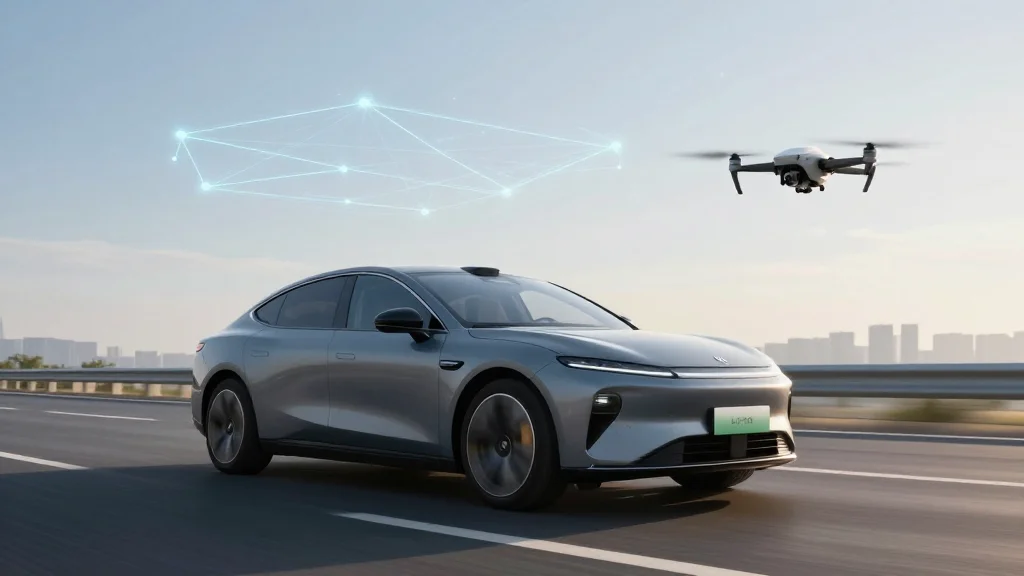
Robotaxis, AI Manufacturing and Next-Gen Mobility on the Rise
Why It Matters
These developments signal a convergence of software, semiconductor and alternative‑fuel strategies that will reshape vehicle economics, supply chains and regulatory frameworks worldwide.
Key Takeaways
- •India’s shift to E85 flex‑fuel could cut oil imports
- •Intel’s 14A chips power Tesla’s next‑gen vehicle computing
- •TVS Motor uses AI manufacturing to boost two‑wheel efficiency
- •Geely plans thousands of robotaxis by 2027, scaling autonomy
Pulse Analysis
The momentum behind autonomous and connected mobility is no longer confined to Silicon Valley. In Asia, especially India and China, governments and corporations are aligning policy with technology, from higher‑blend biofuels like E85 to massive R&D commitments such as Huawei’s $2.6 billion smart‑driving fund. These moves diversify the energy mix, reduce reliance on imported oil, and create new revenue streams for automakers that can integrate fuel‑flexible powertrains with advanced software stacks.
At the heart of the next‑generation vehicle lies semiconductor supremacy. Intel’s 14A process, now adopted by Tesla, promises higher performance per watt, enabling more sophisticated driver‑assist algorithms and over‑the‑air updates. Parallelly, AI‑driven factories—exemplified by TVS Motor’s rollout—are slashing production cycles and improving quality on two‑wheel platforms, while connected‑car ecosystems from JSW Motors and Tata Elxsi lay the groundwork for software‑defined mobility. This convergence of chips, AI, and cloud services is reshaping OEM value chains, pushing traditional parts suppliers toward digital solutions.
Looking ahead, the industry is expanding beyond roads. Xpeng’s ambition to field flying cars and humanoid robots by 2027 reflects a broader vision of multimodal transport, where aerial and ground assets share data and control platforms. Meanwhile, Tesla’s robotaxi launch and Geely’s plan to deploy thousands of autonomous cabs by 2027 mark the transition from pilot projects to commercial fleets. The scaling challenge will hinge on regulatory acceptance, safety validation, and the ability to monetize high‑density autonomous services, setting the stage for a new era of mobility economics.
Robotaxis, AI manufacturing and next-gen mobility on the rise
Comments
Want to join the conversation?
Loading comments...