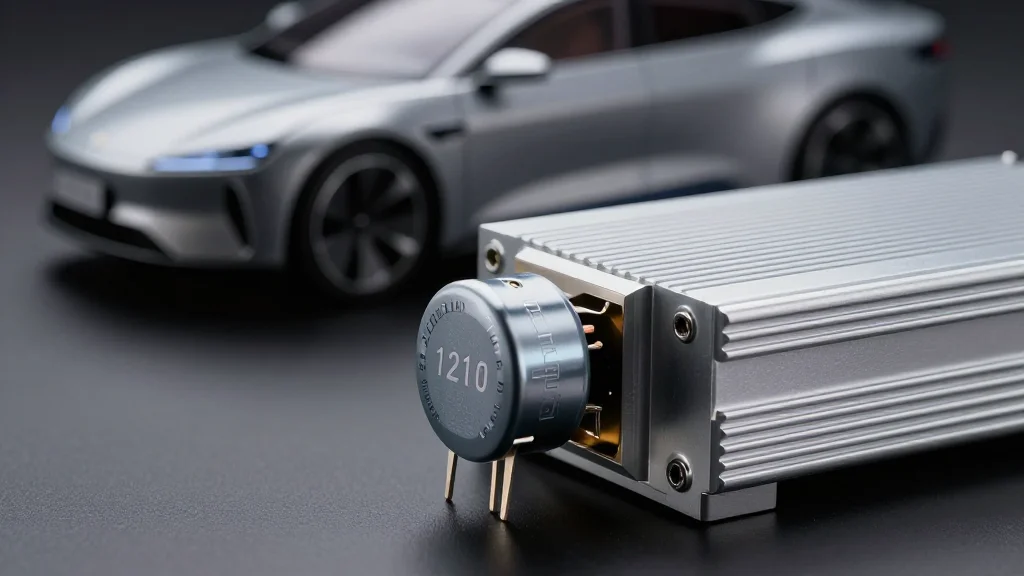
Samsung Electro-Mechanics Introduces 1000–1500 V MLCCs for EV Inverter and OBC Designs
Why It Matters
These high‑voltage, temperature‑stable MLCCs enable designers to increase power density and reliability in 800 V‑plus EV inverters and OBCs, shortening development cycles and supporting higher charging power targets.
Key Takeaways
- •Samsung launches 1000‑1500 V MLCCs for EV inverters and OBCs
- •1210 package holds 1.2‑33 nF, C0G/X8G stable across –55 °C to 150 °C
- •Fail‑safe design on three parts improves reliability in high‑voltage snubbers
- •Mass production enables immediate sampling, accelerating EV power‑train development
Pulse Analysis
The rapid rise of 800‑volt electric‑vehicle platforms has exposed a gap in the component market: reliable, high‑voltage capacitors that can operate with minimal drift under harsh thermal conditions. Traditional MLCCs top out around 800 V, forcing designers to series‑stack parts, which adds parasitic inductance and reduces efficiency. Samsung Electro‑Mechanics’ new 1000‑1500 V series directly addresses this bottleneck, allowing single‑device solutions for resonant tank circuits and snubber networks, thereby simplifying board layouts and improving overall system performance.
Samsung’s offering stands out for its C0G and X8G dielectric formulations, which guarantee capacitance variation of only ±30 ppm/°C across a wide temperature span. In resonant converters, such stability locks the resonant frequency, preserving optimal efficiency even as ambient conditions fluctuate. The fail‑safe design on three of the four models adds an extra layer of protection against voltage spikes, a critical factor for inverter modules that experience frequent switching transients. With capacitance values ranging from 1.2 nF at 1500 V to 33 nF at 1000 V, engineers can fine‑tune power‑density targets without compromising reliability.
The market impact is immediate. By moving these parts into mass production, Samsung reduces lead times and offers sample kits, enabling OEMs and Tier‑1 suppliers to validate designs faster. Competitors will need to accelerate their own high‑voltage MLCC roadmaps, potentially sparking a wave of innovation in automotive power electronics. As onboard chargers push beyond 22 kW and inverter voltages climb, the availability of stable, high‑voltage MLCCs will become a decisive factor in achieving the next generation of faster‑charging, higher‑range electric vehicles.
Samsung Electro-Mechanics introduces 1000–1500 V MLCCs for EV inverter and OBC designs
Comments
Want to join the conversation?
Loading comments...