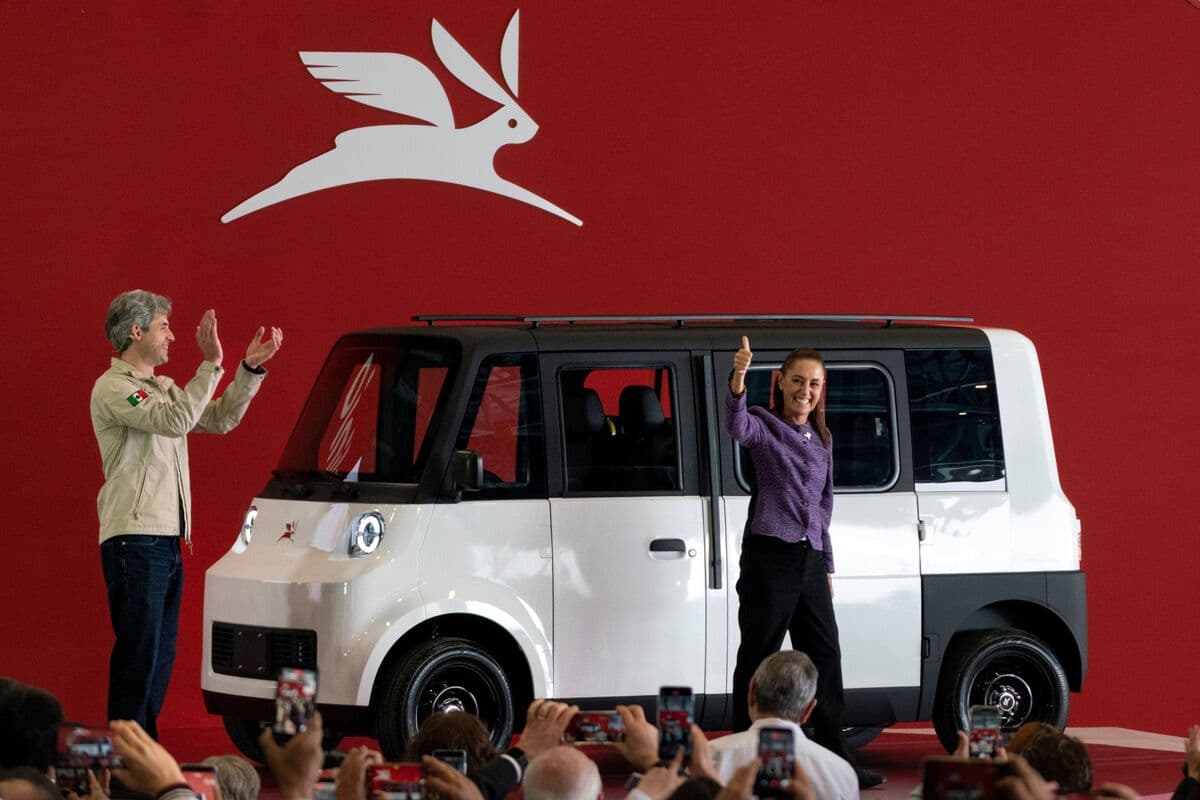
Sheinbaum Unveils Affordable EV Prototype Backed by Government
Why It Matters
The launch signals Mexico’s intent to build a homegrown electric‑vehicle industry, potentially lowering import dependence and creating new jobs. It also offers a lower‑cost alternative for consumers, accelerating the nation’s shift toward sustainable transport.
Key Takeaways
- •Olinia Uno prototype unveiled with six seats, government backing
- •President Sheinbaum positions EV as affordable mobility and industrial showcase
- •Project aims to spur domestic manufacturing and green transition in Mexico
- •Prototype displayed in Air Force hangar, signaling strong state support
- •Olinia targets price‑competitive market to challenge imported electric cars
Pulse Analysis
Mexico’s automotive sector has long been dominated by foreign manufacturers, but the election of President Claudia Sheinbaum has accelerated a policy shift toward homegrown electric mobility. In her first year, Sheinbaum unveiled a national strategy that couples climate goals with industrial diversification, earmarking billions of pesos for research, subsidies, and infrastructure. The Olinia Uno prototype, revealed in a symbolic Air Force hangar, embodies that vision, signaling the government’s willingness to invest directly in a domestically produced EV that can compete on price and performance.
The Olinia Uno is a six‑seat, compact electric van designed for urban and regional routes. Built on a modular chassis sourced from Mexican steel mills, it incorporates locally assembled battery packs rated at roughly 150 kWh, delivering a range of about 300 km per charge. Early estimates suggest a base price near 500,000 pesos (≈ $27,000), positioning it below most imported models from Tesla or BYD. By keeping critical components within national borders, the project aims to create a supply‑chain ecosystem that could generate thousands of skilled jobs and reduce reliance on foreign parts.
If the Olinia Uno reaches mass production, it could reshape the competitive landscape across Latin America, where cost‑sensitive consumers have been slow to adopt premium electric cars. The prototype also serves as a testbed for policy tools such as tax incentives, charging‑network grants, and public‑private partnerships that other emerging markets may emulate. However, challenges remain: scaling battery manufacturing, securing financing, and meeting safety certifications on a tight timeline. Success would not only validate Mexico’s industrial ambitions but also provide a replicable model for sustainable mobility in the region.
Sheinbaum Unveils Affordable EV Prototype Backed by Government
Comments
Want to join the conversation?
Loading comments...