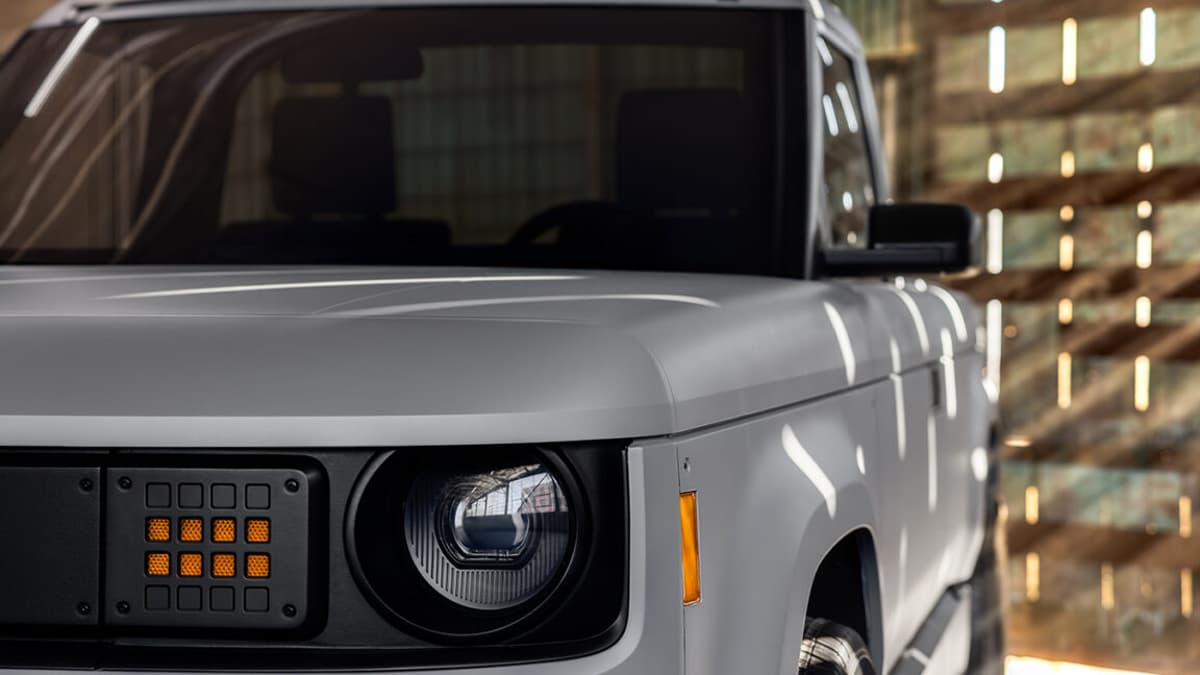
Slate Auto Gets Serious About Privacy for Its Bare-Bones EV Pickup
Why It Matters
By refusing to monetize driver data, Slate challenges the industry’s prevailing revenue model and could reshape consumer expectations for data privacy in EVs. Its approach also tests market demand for truly unconnected vehicles in a regulatory climate tightening around data use.
Key Takeaways
- •Slate Truck uses only 600 parts, no infotainment, manual windows.
- •Data collected only via local smartphone app, no embedded modem.
- •Company pledges not to sell data, focusing on ownership value.
- •Industry may watch privacy‑first EV as niche trend, regulatory backdrop.
Pulse Analysis
Slate Auto’s ultra‑minimalist electric pickup is a radical departure from the connected‑car norm. By limiting the vehicle to 600 components, eliminating infotainment screens, and offering only manually operated windows, the company creates a product that feels almost analog. The only digital interface is a smartphone app that works locally, allowing owners to adjust drive modes, view range and receive OTA updates without any cellular modem. This design philosophy positions privacy as a core feature rather than an after‑thought, appealing to buyers wary of constant data collection.
The privacy‑first stance arrives at a time when regulators are tightening oversight of automotive data. In the United States, the FTC warned manufacturers in 2024 against monetizing driver information without clear consent, a policy whose future remains uncertain after early 2025. Europe has mandated embedded modems for emergency calls since 2018, coupled with robust GDPR protections that treat vehicle data as personal. Meanwhile, bipartisan U.S. legislation seeks to block imports of Chinese cars with opaque data practices. Slate’s model sidesteps these pressures by forgoing a modem altogether, offering a clear compliance advantage while highlighting the gap between consumer privacy concerns and actual buying behavior.
The market impact remains speculative. If a sizable cohort of consumers embraces an unconnected EV, larger OEMs may be forced to offer privacy‑focused trims or modular connectivity options. Conversely, the niche could stay limited to privacy enthusiasts, serving as a proof‑point rather than a mainstream shift. Either way, Slate’s experiment forces the industry to confront the trade‑off between data‑driven services and consumer trust, a balance that will shape the next generation of electric vehicles.
Slate Auto gets serious about privacy for its bare-bones EV pickup
Comments
Want to join the conversation?
Loading comments...