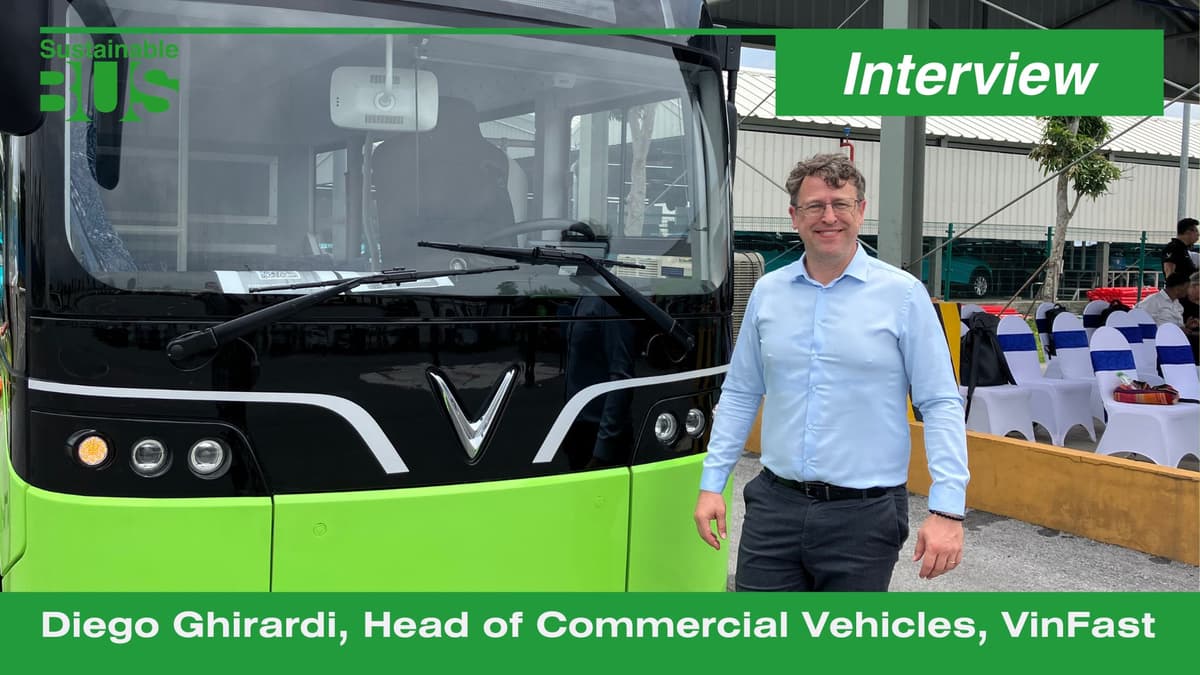
Software Ownership and Vertical Integration: VinFast European Winning Cards According to Head of Commercial Vehicles Diego Ghirardi
Companies Mentioned
Why It Matters
VinFast’s integrated approach could lower total‑cost of ownership and accelerate time‑to‑market, challenging entrenched European and Chinese e‑bus manufacturers. Success would showcase Vietnam’s emerging EV manufacturing capability and reshape competitive dynamics in the global bus sector.
Key Takeaways
- •VinFast produces 4,500‑5,000 buses yearly, 90% for Vietnam
- •New 12‑m and 8‑m e‑buses feature streamlined electrical architecture
- •Full software stack ownership enables rapid updates and lower maintenance
- •Vertical integration includes in‑house batteries, electronics, and motherboard assembly
- •Export focus on India, Indonesia, Philippines, with Europe as strategic market
Pulse Analysis
The electric bus market is entering a phase of rapid consolidation, with manufacturers racing to offer lower‑cost, high‑quality solutions that meet stringent European emissions standards. VinFast, a Vietnamese automaker best known for its passenger EVs, is now applying its aggressive growth model to commercial vehicles. By presenting a 12‑metre prototype at Busworld 2025 and announcing an 8‑metre variant, the firm signals its intent to compete on both size categories. Its strategy mirrors a broader industry shift toward vertical integration, where control over hardware, battery cells, and software can translate into faster development cycles and tighter cost control.
At the heart of VinFast’s bus redesign is a new electrical architecture originally rolled out in its passenger cars. The architecture reduces the number of discrete components, trims vehicle weight, and simplifies assembly, which together lower production expenses and improve vehicle efficiency. Complete ownership of the software stack means firmware updates, diagnostic tools, and feature upgrades can be deployed instantly, enhancing after‑sales service and reducing downtime for operators. While the company still sources battery packs from CATL and Gotion for buses—due to lower volumes—the in‑house capability to produce cells for cars positions VinFast to eventually internalize bus battery production as volumes rise.
VinFast’s export roadmap underscores its ambition to become a global player. Targeting India and neighboring Southeast Asian markets leverages its brand momentum from passenger‑car sales, while the European push pits it directly against Chinese manufacturers that dominate the continent’s low‑cost segment. By promising European‑level durability and quality, VinFast aims to differentiate itself from price‑driven rivals. If the company can deliver on its integration promises, it could force competitors to rethink supply‑chain strategies, accelerate innovation, and potentially shift market share toward a new entrant from Southeast Asia.
Software ownership and vertical integration: VinFast European winning cards according to Head of Commercial Vehicles Diego Ghirardi
Comments
Want to join the conversation?
Loading comments...