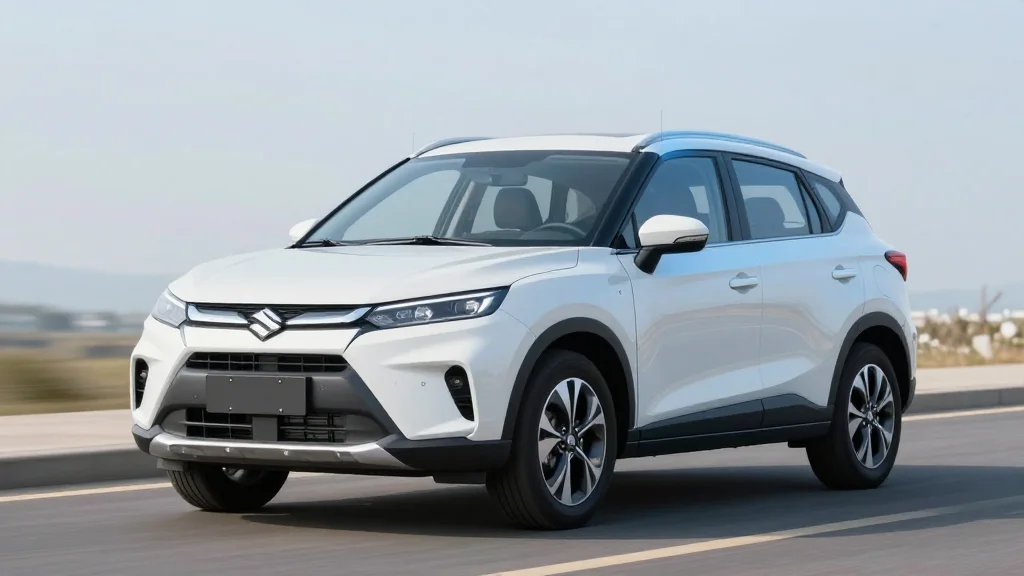
Suzuki Gets Four-Star ANCAP Safety Rating for Its First EV in Australia
Companies Mentioned
Why It Matters
A four‑star rating signals that Suzuki’s entry‑level EV meets baseline safety expectations but may deter safety‑conscious buyers, influencing early market adoption in Australia’s growing EV segment.
Key Takeaways
- •e‑Vitara earns four‑star ANCAP rating
- •Adult occupant score limited rating
- •No rear‑view pedestrian AEB while reversing
- •Standard driver knee airbag included
- •Competes with Audi Q3 five‑star model
Pulse Analysis
Australia’s EV market is entering a pivotal phase, with manufacturers racing to combine affordability, range, and safety. Suzuki’s e‑Vitara, positioned as a budget‑friendly electric crossover, arrives with a four‑star ANCAP rating that meets regulatory standards but falls short of the industry’s top tier. The rating underscores the importance of comprehensive occupant protection, especially as first‑time EV buyers often prioritize safety alongside environmental credentials. By offering dual frontal, side‑chest, side‑head airbags and a driver knee airbag, Suzuki addresses core crash‑worthiness, yet the lack of a centre airbag and weaker adult protection scores reveal development trade‑offs typical of new EV platforms.
From a strategic perspective, Suzuki’s rating reflects its broader push to establish an EV foothold beyond its traditional internal‑combustion stronghold. The e‑Vitara’s launch aligns with government incentives and expanding charging infrastructure, aiming to capture price‑sensitive consumers hesitant about higher‑priced rivals. However, the safety gap compared with the five‑star Audi Q3 plug‑in hybrid may influence brand perception, especially among safety‑focused families. Automakers increasingly leverage safety ratings as marketing differentiators; thus, Suzuki may need to iterate quickly, either through software updates or hardware revisions, to boost adult occupant scores and add missing safety‑assist features like reverse‑direction pedestrian AEB.
The broader industry implication is clear: as EV adoption accelerates, safety performance will become a decisive factor in market share battles. Consumers expect electric models to match or exceed the safety pedigree of conventional vehicles, and regulators are tightening assessment criteria. Suzuki’s four‑star result serves as a benchmark for other emerging EV entrants, highlighting that meeting baseline safety is insufficient for competitive advantage. Continuous improvement in occupant protection, advanced driver‑assist systems, and comprehensive pedestrian safety will be essential for manufacturers aiming to secure consumer trust and achieve higher ANCAP ratings in future model cycles.
Suzuki gets four-star ANCAP safety rating for its first EV in Australia
Comments
Want to join the conversation?
Loading comments...