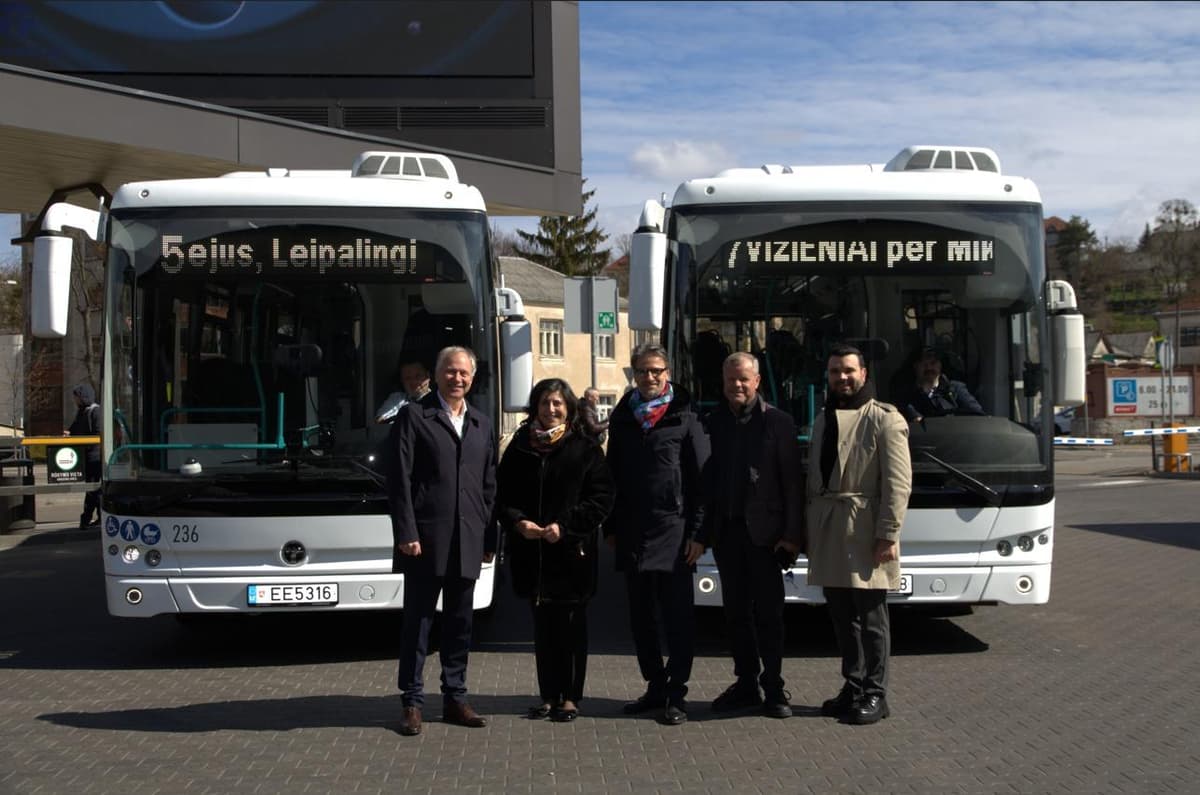
Temsa Delivers 15 Electric Buses in Kaunas, Lithuanian Fleet to Reach 321 Units
Why It Matters
The delivery accelerates Lithuania’s shift toward zero‑emission public transport, reducing CO₂ emissions and supporting EU climate goals. It also signals Temsa’s growing foothold in the European electric‑bus market, where demand is rapidly rising.
Key Takeaways
- •Temsa delivered 15 MD9 electriCITY buses to Kaunas, Lithuania.
- •Fleet will total 321 vehicles in Lithuania after 2026 deliveries.
- •Electric buses make up ~52% of new Lithuanian bus registrations in 2025.
- •Each bus cuts about 650 tonnes CO₂ over ten years.
- •Temsa offers 11 zero‑emission models and develops its own batteries.
Pulse Analysis
Lithuania is fast becoming one of the most electrified bus markets in the Baltics. According to European Commission data, battery‑electric buses represented about 52 % of all new bus registrations in 2025, a share that dwarfs the EU average. The recent handover of 15 MD9 electriCITY units in Kaunas adds to the country’s ambition to replace diesel‑powered fleets with clean alternatives, a move that is expected to cut roughly 650 tonnes of CO₂ per bus over a decade. Municipal operators such as UAB Kautra are leading the rollout, supported by national subsidies and EU climate funding.
Temsa’s delivery fits a broader strategy to cement its position in the European zero‑emission segment. The Turkish manufacturer now offers 11 fully electric models, including the 9.5‑metre MD9 electriCITY equipped with a 250 kW motor and in‑house battery packs. By bundling vehicles with charging infrastructure and energy‑management services, Temsa presents itself as a mobility partner rather than a pure OEM. Recent expansions into Portugal, Czechia, Finland and Norway demonstrate a deliberate push into markets where public‑transport authorities are committing sizable procurement budgets to electric buses.
The Lithuanian contract highlights the accelerating demand for turnkey electric‑bus solutions across Europe. Competitors such as BYD, VDL and Solaris are also scaling production, but Temsa’s emphasis on localized design and integrated charging could give it an edge in markets that value flexibility. As EU emissions standards tighten and funding mechanisms reward low‑carbon fleets, operators are likely to prioritize suppliers that can deliver both hardware and the supporting ecosystem. For investors, Temsa’s growing order book and its control over battery technology suggest a resilient revenue stream as the continent races toward its 2030 climate targets.
Temsa delivers 15 electric buses in Kaunas, Lithuanian fleet to reach 321 units
Comments
Want to join the conversation?
Loading comments...