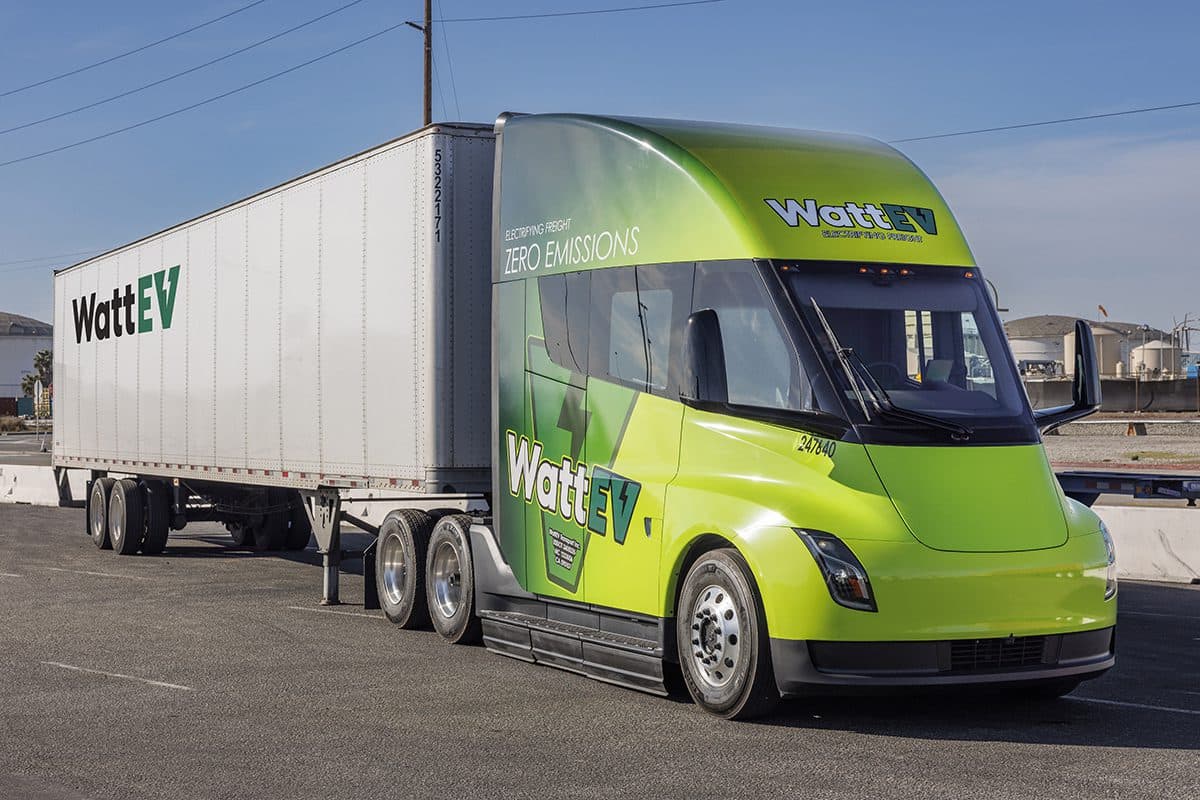
Tesla Says Its Semi Electric Trucks Enjoy Less Down-Time than Diesels
Companies Mentioned
Why It Matters
Higher uptime and rapid service turnaround cut operating costs and emissions for fleets, accelerating electric‑truck adoption. This gives Tesla a foothold in the roughly $800 billion U.S. trucking market.
Key Takeaways
- •Tesla Semi uptime exceeds 95% in 2025 trial.
- •Downtime under 5% beats diesel trucks’ 8‑10% average.
- •75% of services completed within 24 hours.
- •1.2 MW Megacharger enables fast charging for 500‑800 km range.
- •Production capacity 50,000 units annually at Nevada Gigafactory.
Pulse Analysis
The heavy‑duty trucking sector has long been dominated by diesel power, where unplanned downtime can erode profit margins and increase carbon footprints. Fleet managers typically contend with two to three days of repairs per incident, translating into lost revenue and higher maintenance budgets. As regulators tighten emissions standards and shippers demand greener logistics, the industry is actively scouting alternatives that can deliver reliability comparable to diesel while cutting fuel costs.
Tesla’s latest Semi data shows a breakthrough in operational reliability: more than 95% uptime and less than 5% downtime during its 2025 trial year. Seventy‑five percent of service visits were resolved within 24 hours, a stark improvement over the 90‑92% uptime of conventional trucks. The new Megacharger, capable of 1.2 MW power, shortens charging cycles enough to support 500‑km standard‑range and 800‑km long‑range variants, making long hauls feasible without extensive layovers. Nevada’s Gigafactory, built for high‑volume output, can churn out up to 50,000 Semis annually, signaling Tesla’s intent to scale quickly and meet growing demand from large operators like Walmart, Costco, DHL and PepsiCo.
If the Semi’s performance translates to broader fleet adoption, Tesla could capture a sizable slice of the U.S. trucking market, estimated at $800 billion in annual revenue. Faster service turnaround reduces total cost of ownership, while zero‑tailpipe emissions align with corporate sustainability goals and upcoming federal incentives. Competitors such as Rivian and traditional OEMs are accelerating their electric‑truck programs, but Tesla’s early mover advantage in battery technology, charging infrastructure, and proven uptime may set a high bar for the next generation of freight vehicles, both in North America and emerging European markets.
Tesla says its Semi electric trucks enjoy less down-time than diesels
Comments
Want to join the conversation?
Loading comments...