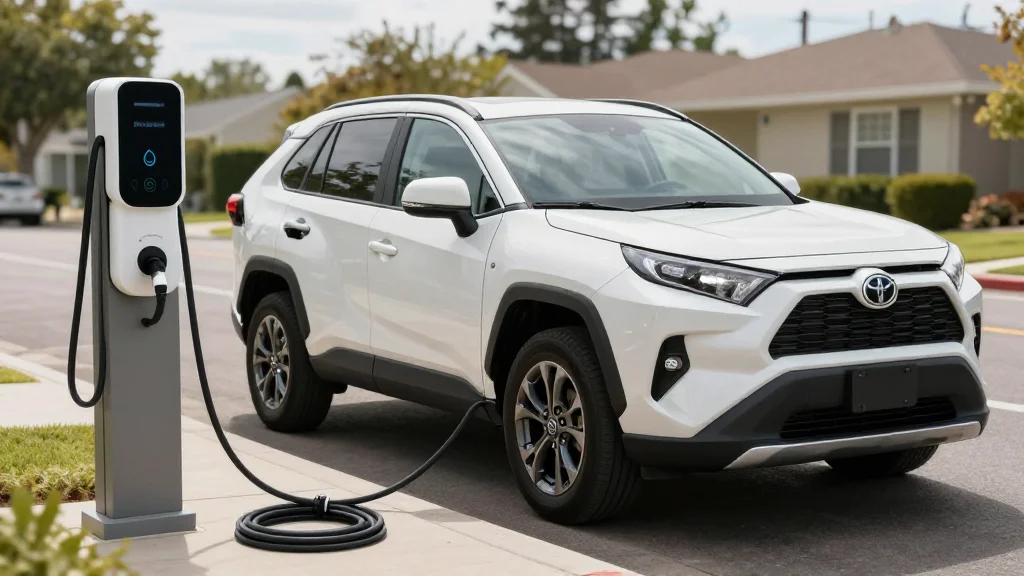
Toyota: RAV4 EV Isn't Happening Anytime Soon
Companies Mentioned
Why It Matters
Toyota’s decision signals that its EV rollout will prioritize purpose‑built models, shaping competitive dynamics in the midsize SUV segment and influencing dealer inventory planning.
Key Takeaways
- •Toyota has no near‑term RAV4 EV roadmap
- •Multi‑pathway strategy spreads EV risk across models
- •RAV4 hybrid and plug‑in versions remain core offerings
- •bZ series will carry Toyota’s most advanced BEV tech
Pulse Analysis
Toyota’s latest comments underscore a deliberate shift away from retrofitting its flagship RAV4 with a battery‑electric powertrain. Instead of forcing an EV conversion onto an existing architecture, the company is betting on a "multi‑pathway" approach that lets gas, hybrid, and pure‑electric models coexist. By channeling resources into purpose‑built BEVs like the bZ series and the forthcoming Highlander EV, Toyota aims to avoid the compromises that can dilute performance, range, and cost efficiency. This strategy also allows the automaker to test different battery chemistries and software platforms without jeopardizing the sales momentum of its best‑selling SUV.
For the broader market, Toyota’s stance sends a clear message to competitors and suppliers: the race to electrify every model may be premature. While rivals such as Ford and Volkswagen are rapidly expanding their EV lineups, Toyota is leveraging its hybrid expertise to maintain market share while gradually scaling BEV production. Consumers looking for an electric RAV4 will have to settle for the plug‑in hybrid variant, which offers up to 50 miles of electric‑only driving—sufficient for many daily commutes but still short of the range expectations set by dedicated EVs. Dealerships, therefore, must balance inventory between traditional RAV4 trims and the growing demand for hybrid and plug‑in options.
Looking ahead, Toyota’s focus on dedicated EV platforms could accelerate as battery costs decline and regulatory pressures intensify. The bZ series, positioned as the brand’s flagship electric line, will likely receive incremental upgrades that could eventually inform a future RAV4 EV, should market conditions warrant. Investors should monitor Toyota’s capital allocation toward battery technology and its partnership ecosystem, as these factors will dictate the speed at which the company can pivot to a more aggressive EV rollout. In the meantime, the RAV4’s hybrid pedigree remains a strong selling point, reinforcing Toyota’s reputation for reliable, fuel‑efficient SUVs in a transitioning automotive landscape.
Toyota: RAV4 EV Isn't Happening Anytime Soon
Comments
Want to join the conversation?
Loading comments...