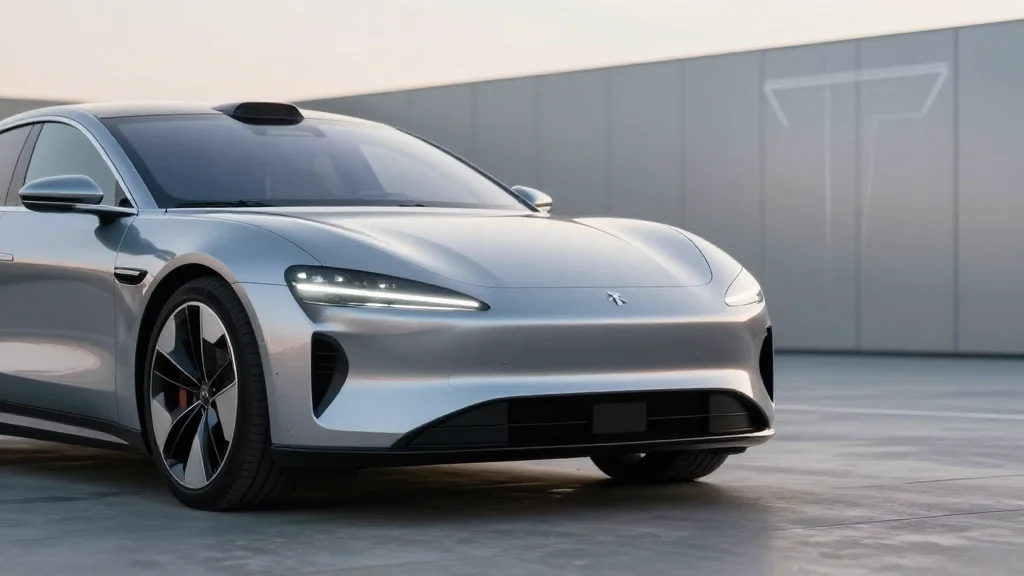
Toyota Shelves Lexus Electric Saloon Project Amid Weaker EV Market – Report
Companies Mentioned
Why It Matters
The decision signals Toyota’s pivot to higher‑volume EV SUVs, reshaping competition in the luxury electric segment and underscoring the pressure on niche EV models amid shifting policy incentives.
Key Takeaways
- •Lexus LF‑ZC electric saloon development cancelled, production delayed to 2027
- •Toyota redirects EV resources to SUVs and solid‑state battery research
- •Global EV sales rose 42% to over 190,000 units in 2025
- •Operating income dropped 21.5% to ¥3.76tn ($39.8bn) FY2026
- •US EV tax credits removed; EU delays 2035 ICE‑ban timeline
Pulse Analysis
Toyota’s abrupt halt of the Lexus LF‑ZC electric saloon highlights a broader industry recalibration as the global EV market loses steam. The luxury sedan, slated for gigacasting production in Aichi, was intended to showcase next‑generation manufacturing, yet the automaker now favors SUVs—segments with proven demand. By retaining gigacasting and solid‑state battery development, Toyota signals that the underlying technologies remain strategic, even if the specific vehicle platform is postponed.
The cancellation reverberates through the premium EV space, where rivals such as Mercedes‑EQ and BMW i are betting on high‑margin sedans. Toyota’s shift suggests that luxury electric sedans may struggle to achieve the volume needed for profitability, especially as the United States has withdrawn federal tax credits and the European Union has softened its 2035 internal‑combustion ban. For Lexus, the move could dilute its electric‑first image, but it also frees resources to accelerate EV SUV rollouts, aligning with consumer preferences for larger, versatile vehicles.
Financially, the decision dovetails with a 21.5% plunge in operating income to ¥3.76tn ($39.8bn) for FY2026, driven by tariff costs and currency pressures despite a 5.5% revenue rise to ¥50.68tn ($536bn). By concentrating on higher‑margin, higher‑volume models, Toyota aims to protect its bottom line while still expanding its electrified portfolio, which now exceeds five million units globally. Continued investment in solid‑state batteries could eventually deliver a breakthrough that reconciles luxury performance with cost efficiency, keeping Toyota competitive in the evolving EV landscape.
Toyota shelves Lexus electric saloon project amid weaker EV market – report
Comments
Want to join the conversation?
Loading comments...