UK Car Market Posts Strong March Growth as EV Adoption Hits Record Levels
Why It Matters
The data signals that consumer appetite for EVs is accelerating, but cost headwinds could stall the UK’s decarbonisation timetable and affect automaker investment strategies. Policymakers risk missing climate goals if they do not adjust incentives amid rising expenses.
Key Takeaways
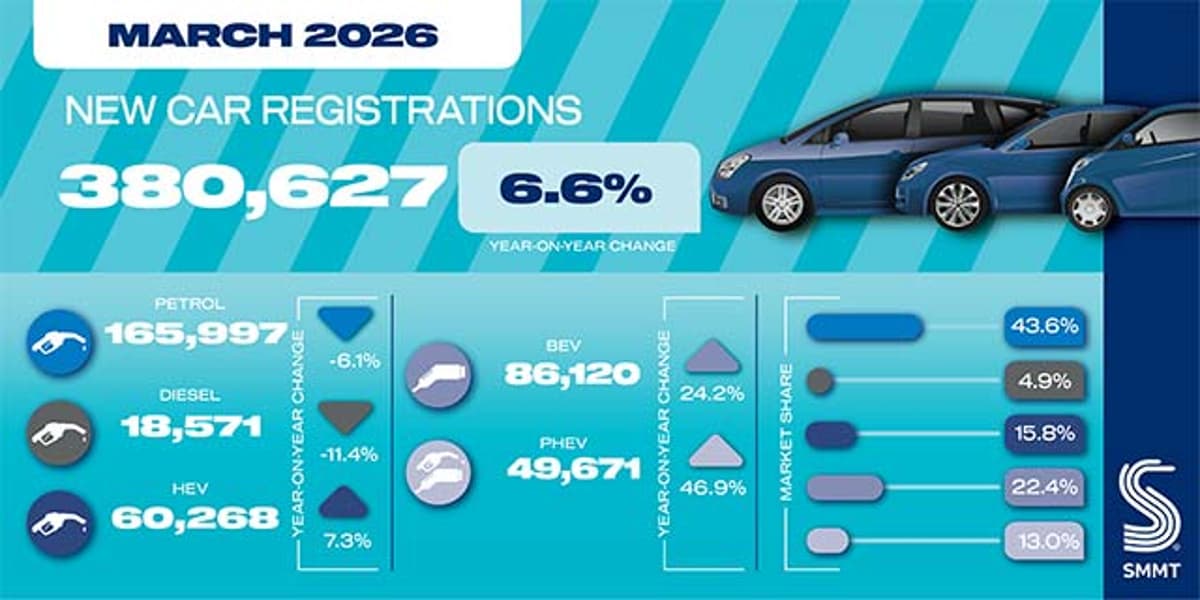
- •Registrations up 6.6% to 380,627, best March since 2019
- •BEV sales jump 24.2% to record 86,120 units
- •Battery costs rise over 30%, squeezing EV margins
- •Industry urges policy review to meet 33% ZEV target
Pulse Analysis
The March 2026 surge in UK car registrations reflects a broader rebound in consumer confidence after a period of economic uncertainty. While private buyers drove a 10.1% jump in retail sales, the business fleet segment posted an 18.8% increase, underscoring a diversified demand base. This balanced growth provides a healthier foundation for manufacturers to scale production, especially as they navigate supply‑chain constraints that have lingered since the pandemic.
Electrified vehicles now account for over half of all new registrations, with battery‑electric models alone capturing 22.6% of the market. The rapid climb in plug‑in hybrid share to 13% illustrates that consumers are willing to adopt intermediate technologies while waiting for broader charging infrastructure. Yet, the sector faces a cost squeeze: battery prices have risen more than 30% above earlier forecasts, and industrial electricity is roughly 80% higher than 2021 levels. These expense pressures translate into tighter margins for OEMs and could force manufacturers to rely more heavily on discounts and incentives, potentially eroding long‑term profitability.
Policymakers are at a crossroads. The UK’s Zero Emission Vehicle mandate aims for 33% EV adoption by 2026, a threshold still out of reach given current BEV market share. Industry calls for a reassessment of timelines and incentive structures are growing louder, especially as geopolitical tensions, such as the Iran crisis, threaten to further inflate energy and component costs. A calibrated policy response—balancing fiscal support with realistic targets—will be essential to sustain the momentum, protect consumer purchasing power, and keep the UK competitive in the global automotive transition.
UK Car Market Posts Strong March Growth as EV Adoption Hits Record Levels
Comments
Want to join the conversation?
Loading comments...