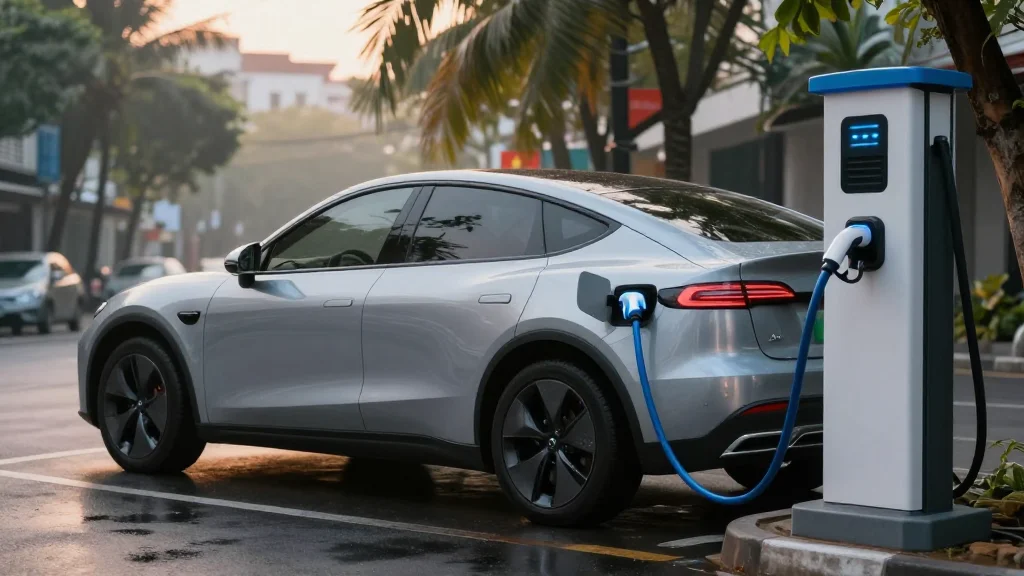
Vietnam Considers Extending Reduced BEV Tax Rates Until 2031
Why It Matters
Keeping BEV taxes low sustains rapid adoption, bolstering Vietnam's energy security and cementing its leadership in regional electric mobility.
Key Takeaways
- •BEV tax rates stay 1‑3% until 2030, then rise 20231
- •ICE vehicle tax remains 10‑150%, widening price gap
- •VinFast sold 175,000 domestic BEVs in 2025, Southeast Asia leader
- •Tax extension counters Middle East oil price volatility
- •Seats 0‑9 taxed 3%, 10‑16 at 2%, 17‑24 at 1%
Pulse Analysis
Vietnam’s decision to extend preferential BEV tax rates reflects a broader strategy to decouple its transport sector from volatile oil markets. By locking special consumption tax at 1‑3% for vehicles up to 24 seats until 2030, the government creates a clear price advantage over internal‑combustion models, which still face 10‑150% levies. This policy leverages fiscal tools to accelerate electrification, aligning with the country’s climate commitments and reducing reliance on Middle East crude imports that have surged amid geopolitical tensions.
For manufacturers, the tax certainty is a catalyst for scaling production and investment. VinFast, Vietnam’s flagship EV maker, already shipped over 175,000 units domestically, positioning the nation as Southeast Asia’s EV hub. The extended tax window encourages local suppliers to deepen battery‑cell partnerships, while foreign investors see a more predictable regulatory environment. As a result, vehicle pricing remains competitive, fostering consumer uptake and supporting the development of charging infrastructure across major cities.
Regionally, Vietnam’s policy could set a benchmark for neighboring economies still grappling with high ICE taxes and limited incentives. By demonstrating that fiscal incentives can drive mass-market adoption, the country may inspire similar measures in Thailand, Indonesia, and the Philippines, accelerating the Southeast Asian transition to zero‑emission mobility. The move also underscores how governments can use tax policy to hedge against external oil shocks while advancing sustainable growth objectives.
Vietnam considers extending reduced BEV tax rates until 2031
Comments
Want to join the conversation?
Loading comments...